The first time I met my mother-in-law, Patricia, there was no warmth in her greeting. Instead of curiosity or kindness, she looked at me as though she were carefully evaluating something that might not belong in her carefully ordered world. At our wedding reception she hugged my husband, Dave, briefly, then turned her attention to me. Her eyes moved slowly from my shoes to my hair before she commented—rather sharply—on my white dress. Apparently she believed that color should have belonged to her alone that day. In that moment, I had the unsettling feeling that I had just been introduced to a challenge that would last far longer than the wedding.
Patricia rarely raised her voice or caused dramatic scenes. Her style was quieter and far more calculated. She preferred subtle remarks and carefully placed comments that could be dismissed as harmless but carried unmistakable meaning. When she visited our home, she would walk through the rooms with a calm, almost regal composure, running a finger along shelves and doorframes as if conducting a silent inspection. If she found dust, she would not say a word. Instead, she would give a thin, polite smile that conveyed everything she wanted to say without actually speaking it.
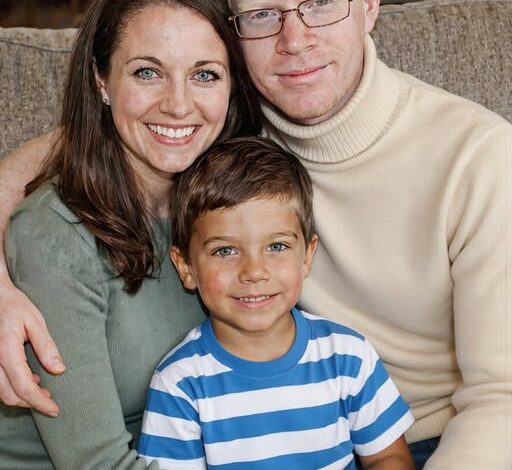
Over time, her most persistent criticism centered on my son, Sam. By the time he was five years old, Sam was a lively child with dark curls, warm olive skin, and big brown eyes—features he clearly inherited from my side of the family. Dave, however, looked completely different, with blond hair, fair skin, and striking blue eyes. Most people understand that genetics can produce a wide range of appearances within families, but Patricia treated the difference as evidence for suspicion.
At family dinners and holidays, she had a habit of making comments that sounded casual but carried pointed implications. She would remark on how little Sam resembled Dave or wonder aloud whether the timeline of his birth was “absolutely certain.” For five years I endured it quietly. I stayed polite for Dave’s sake and for his father, Robert, who was a gentle and thoughtful man who usually avoided conflict. But everything changed when the situation escalated from subtle insults to something far more serious.
When Robert was diagnosed with a terminal illness, the atmosphere in the family shifted dramatically. Conversations that once revolved around ordinary things began focusing on treatments, doctors, and the limited time left. Around the same time, Patricia’s comments about Sam grew more direct. Robert had spent decades building a successful manufacturing company, and discussions about his estate naturally began to surface. Patricia became increasingly focused on what she called “protecting the family legacy.”
One afternoon I overheard her speaking with Dave in another room. She insisted that before Robert finalized his will, the family needed certainty—absolute proof that Sam was truly Robert’s grandson. I stepped into the room before she finished speaking. When I confronted her, she calmly suggested that if I had nothing to hide, a DNA test should not be a problem. Dave immediately rejected the idea, but Patricia delivered an ultimatum: if he refused the test, she would persuade Robert to reconsider the inheritance arrangements.
That was the moment my patience finally ran out. For years I had tolerated her comments, but threatening my son’s place in the family crossed a line. I agreed to the test, surprising Dave. What Patricia didn’t know was that I had ordered a far more detailed analysis than a simple paternity test. The laboratory conducted a multi-generational DNA study comparing the relationships between parents, children, and grandparents. I was confident in the truth, and I wanted evidence so thorough that Patricia would never be able to question it again.
Two weeks later, the results arrived. I read them several times in silence before sealing the report back in its envelope. Patricia insisted the results be revealed at Sunday dinner with the entire family present. She clearly expected the evening to confirm her suspicions.
The dining room was arranged carefully that night, with the envelope placed prominently on the table. Sam sat beside me, happily drawing dinosaurs on a napkin, completely unaware of the tension surrounding him. Robert looked tired but attentive, watching quietly as Patricia picked up the envelope and began reading the report.
At first she looked confident. Then her expression changed—first confusion, then unmistakable shock. Her voice trembled as she claimed the results must be wrong. Before she could hide the paper, Robert reached across the table and took it from her. He read the report slowly and in complete silence.
Finally he handed the page to Dave and asked him to read a particular section. Dave scanned the document, his expression shifting from uncertainty to disbelief. The test confirmed exactly what I already knew: Sam was unquestionably his son. But there was another result within the broader analysis.
According to the extended DNA comparison, Robert was not Dave’s biological father.
The room fell completely silent. Patricia tried to insist the results were meaningless, but Robert calmly asked her how long she had known. When she hesitated, he asked again. Eventually she admitted the truth had been hidden for many years. Dave sat back in stunned silence, realizing that the accusations directed at me for half a decade had come from someone hiding a far deeper secret herself.
Robert rose slowly from the table. He apologized to me for the way I had been treated and then turned to Sam, gently ruffling his hair. He said that regardless of any report, Sam was part of the family. Sam simply looked up from his drawing and asked whether dessert was still happening, breaking the tension with the innocence only a child can bring.
Robert passed away four months later. In his final weeks, he spent as much time as possible with Sam, watching him draw and play with quiet satisfaction. For Robert, family had never been about biology alone. It was about presence, loyalty, and love. He had raised Dave as his son every single day of his life, and that truth mattered far more than any test result.
Patricia’s attempt to question my place in the family ended up revealing a truth she had kept hidden for decades. In the end, the experience taught me something important: the strongest families are not defined by perfect histories or shared DNA, but by the people who choose to stand beside one another, even when the truth is complicated.