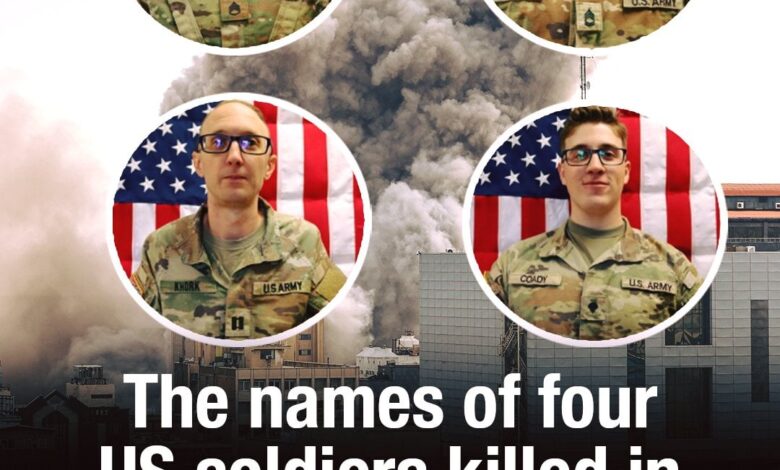
They represented a quiet cross-section of America’s resolve: a veteran captain who had spent years leading soldiers through the uncertainty of conflict, two hardened sergeants whose experience had been forged through multiple deployments, and a 20-year-old reservist who had only just begun to step into adulthood. Each came from a different background, a different town, and a different chapter of life, yet all shared the same willingness to answer a call that asked them to serve far from home. They stepped forward knowing that the missions they would carry out would rarely be seen, rarely discussed, and often never fully understood by the public they were sworn to protect.
Their assignment placed them in the shadowed corners of a distant conflict—work defined by long hours, high stakes, and the constant awareness that danger could emerge without warning. Operation Epic Fury, the mission that ultimately claimed their lives in Kuwait, was the kind of operation that rarely makes headlines in detail. It was built on planning, coordination, and the quiet professionalism of those tasked with carrying it out. For the people involved, however, it was never just another operation. It was a responsibility they carried with the seriousness that comes from understanding the weight of service.
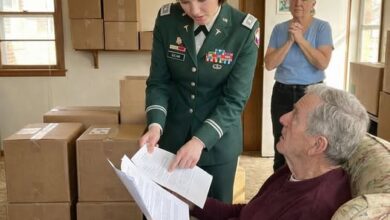
When news of their deaths reached home, the impact traveled across thousands of miles and into the most intimate spaces of everyday life. In living rooms, kitchens, and small hometown streets, families and friends were forced to confront a loss that felt both distant and immediate. Phone calls were made that no family ever wants to receive. Doors were knocked on by uniformed officers carrying words that would forever divide life into “before” and “after.” In a matter of moments, futures that had once seemed certain were replaced with an emptiness that no ceremony or speech could fully heal.
Behind the public tributes—the folded flags, the polished medals, the solemn ceremonies—were lives that had been full of ordinary moments and personal dreams. There were unfinished college degrees and plans for future careers. There were birthdays that had been marked on calendars, vacations that had been talked about but never taken, and countless everyday conversations that suddenly became memories. Text messages remained unanswered on phones, reminders of words that would never be exchanged again.
At family tables, there would now be empty chairs where laughter once echoed. Parents would remember the first steps, school graduations, and the quiet pride they felt watching their children grow into the people they became. Spouses would hold on to small everyday details—the sound of a familiar voice, the comfort of shared routines, the plans they had made for years that will now unfold differently. Friends would replay old stories, recalling late-night talks, inside jokes, and the sense that time together would always be there.
For the youngest among them, the 20-year-old reservist, the loss carries a particular weight. His adult life had barely begun to take shape. There were ambitions still forming, opportunities still waiting, and decades of experiences that should have followed. Yet even at that young age, he chose to serve alongside those with far more experience, demonstrating a courage that comes not from years lived, but from conviction.
Their names—Cody, Nicole, Noah, and Declan—now carry a deeper meaning than they once did. They are spoken with reverence in the communities that raised them and among the fellow service members who knew them. They are etched into memorials, repeated in ceremonies, and remembered in the quiet moments when people pause to reflect on the cost of service.
As the broader conflict continues and the headlines move forward, their stories remain a reminder that every geopolitical decision, every strategy discussed in distant conference rooms, ultimately touches individual lives. Policies and operations may be measured in objectives and outcomes, but the true cost is always counted in human terms—families changed forever, communities mourning together, and futures that will never fully unfold.
Their sacrifice stands as both a tribute and a warning. It honors the courage of those willing to serve in difficult and dangerous roles, while also reminding us that behind every mission are people whose lives extend far beyond the battlefield. In remembering them, we are reminded that the price of conflict is never abstract. It is carried by real names, real stories, and the enduring love of those who will never forget them.