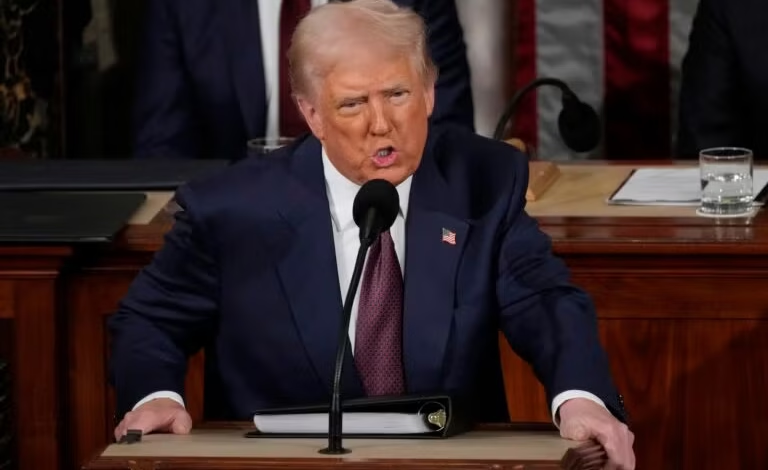
The instant poll conducted by CNN in partnership with SSRS suggested that Donald Trump’s State of the Union address did more than simply energize his core supporters—it reinforced their confidence and nudged some undecided viewers in a more favorable direction. Nearly two-thirds of those who watched reacted positively, and a noticeable share reported feeling more optimistic about the country’s direction after the speech than before it began.
That kind of shift, even within a limited audience, underscores the unique influence of a nationally televised address. These moments are less about changing deeply held beliefs overnight and more about shaping tone—projecting confidence, framing priorities, and offering a narrative that supporters can rally around. For viewers already open to the message, the speech served as validation; for some on the margins, it may have introduced just enough reassurance to tilt perception, if only slightly.
At the same time, the poll results come with an important caveat: the audience itself. State of the Union viewers tend to be more politically engaged and, in many cases, more aligned with the sitting president to begin with. That means the speech functioned largely as reinforcement rather than broad persuasion. It strengthened existing views far more than it transformed opposing ones.
The divide becomes clearer when looking at the substance. On issues like immigration and the economy, supporters saw clarity, decisiveness, and momentum. Critics, however, pointed to gaps—missing specifics, unresolved contradictions, and a tone that didn’t fully address their concerns. The same words, delivered in the same room, produced sharply different interpretations depending on where the listener stood before the speech even began.
In that sense, the address was less a turning point and more a reflection. It highlighted how Americans can watch the same event and come away with entirely different conclusions about what leadership looks like and what “progress” means.
Rather than bridging divisions, the speech—and the reaction to it—revealed how firmly those divisions remain in place. It showed that while a president can shape the conversation for a night, the deeper question of the country’s direction is still being answered very differently across the same national audience.