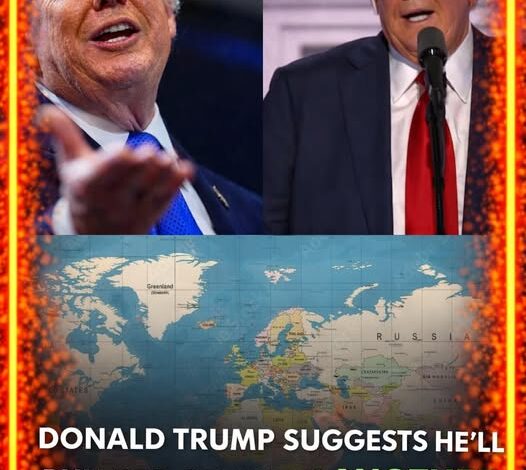
Donald Trump recently made an unexpected remark suggesting he might one day run for office in Venezuela—a comment delivered jokingly during a cabinet meeting, yet one that highlighted just how dramatically relations between Washington and Caracas have shifted in recent months.
Speaking at the White House on March 26, Trump moved from discussing oil revenues and diplomatic ties to a more personal tone, boasting about his perceived popularity in Venezuela. He joked that after his presidency, he could consider running for president there, even mentioning the possibility of challenging interim leader Delcy Rodríguez. While the room responded with laughter, the comment came amid a serious conversation about the evolving U.S.-Venezuela relationship and the future of the country’s leadership.
Though framed as humor, the remark reflects a deeper reality: Trump has become increasingly invested in portraying recent developments in Venezuela as both a political and economic success for the United States.
This shift began following a controversial U.S. operation in early January, which led to the removal of longtime Venezuelan leader Nicolás Maduro from power. According to reports, Maduro was captured during a raid in Caracas and later transported to the United States, where he now faces drug-related charges. In the aftermath, Delcy Rodríguez—previously vice president and a key figure within Maduro’s government—was sworn in as interim president.
The transition marked a dramatic turning point. What had long been a tense and adversarial relationship between the two countries quickly transformed into a more cooperative, though still closely scrutinized, arrangement.
Trump has consistently framed this new dynamic as a success story.
During the same March 26 discussion, he described the relationship with Venezuela as “amazing,” even comparing it to a “joint venture.” He emphasized the financial benefits, claiming that the United States had gained billions through its involvement. Secretary of State Marco Rubio echoed this sentiment, noting that Venezuela’s oil revenues had surged in the early months of the year, with funds being directed into controlled U.S. accounts rather than lost through corruption.
These statements are part of a broader narrative promoted by the administration: that the post-Maduro era is not only stabilizing Venezuela but also creating strategic and economic opportunities for the United States.
This narrative has been building steadily.
In February, Trump described U.S. relations with Venezuela as “very good” and indicated plans to visit the country. By early March, he had publicly praised Rodríguez’s leadership, crediting her with helping revive oil production and improve economic conditions. His tone marked a clear shift—from discussing military intervention to openly supporting the interim government that emerged from it.
Rodríguez herself remains a complex and controversial figure. Long associated with Venezuela’s socialist leadership, she has held numerous high-ranking roles, including vice president, foreign minister, and oil minister. While critics view her as a central figure in the previous regime, she has recently repositioned herself as a more pragmatic leader, advocating for economic reform, foreign investment, and renewed diplomatic engagement with the United States.
Economic factors are central to this evolving relationship.
Venezuela holds the world’s largest proven oil reserves, but years of sanctions, mismanagement, and underinvestment had severely reduced production. Recent data suggests a notable rebound, with output increasing significantly in just a few months. The U.S. has supported this recovery by easing certain restrictions and encouraging investment, particularly from American companies seeking access to Venezuela’s energy resources.
At the same time, diplomatic ties have been restored at an institutional level. The reopening of the U.S. embassy in Caracas—closed for years amid strained relations—signals a broader reset. Officials have described this move as the beginning of a new phase, one focused first on stabilization, then economic recovery, and eventually political transition.
Against this backdrop, Trump’s comment about running for office in Venezuela takes on a different tone.
While clearly delivered as a joke, it reflects how personally intertwined he has become with the narrative surrounding the country’s transformation. His remarks suggest not just political involvement, but a sense of ownership over the outcome—an unusual dynamic in international relations.
At the same time, the situation within Venezuela remains far from settled.
Reports indicate that protests have resumed, with students and activists calling for deeper democratic reforms, improved funding for public institutions, and the release of political prisoners. While Rodríguez promotes cooperation and economic growth, critics question whether meaningful structural change has truly taken place or if the system remains fundamentally the same under new leadership.
In this context, Trump’s claim that he is “the highest polling person” in Venezuela stands out.
It was intended as a lighthearted moment, but it touches on a deeper tension: the country’s future is still uncertain, and its political trajectory is now closely linked to external influence, particularly from the United States.
For now, there is no indication that Trump’s remark was anything more than a joke.
But it was not made in isolation.
It came after weeks of public praise for Venezuela’s interim leadership, renewed economic cooperation, diplomatic re-engagement, and ongoing legal action against Maduro. It emerged at a time when the United States is no longer a distant observer of Venezuelan politics, but an active participant shaping its direction.
In that sense, the comment serves as more than humor—it captures the unusual and evolving reality of a relationship that has shifted from confrontation to collaboration, and of a political moment where the boundaries between influence, leadership, and personal narrative are becoming increasingly blurred.