No one noticed this giant blooper in Little House on the Prairie Look closer and check the first comment below

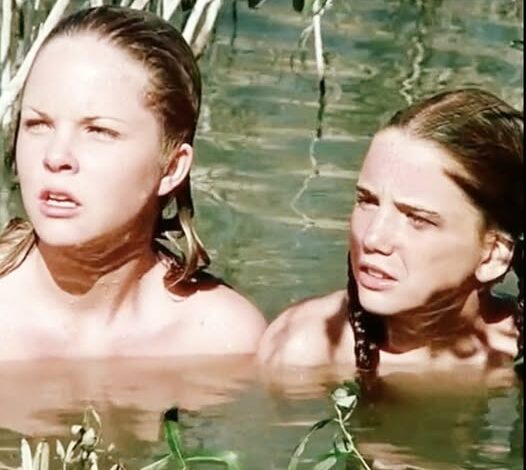
Little House on the Prairie may feel timeless and nearly perfect—but like any long-running show, it had its share of slip-ups, strange choices, and behind-the-scenes surprises.
For many of us, it’s still a comforting escape—a return to the late 1800s and the resilient world of the Ingalls family. Its core message—kindness, honesty, and the importance of family—still resonates just as strongly today.
But if you look a little closer, you’ll notice something else hiding beneath that polished surface:
A collection of mistakes, inconsistencies, and unexpected moments that make the show even more fascinating.
The Never-Ending Pregnancy
One of the more noticeable story hiccups comes in season seven, when Laura announces she’s pregnant.
Yet somehow… she still appears heavily pregnant well into the following summer.
It left viewers wondering: just how long was this pregnancy supposed to last?
It’s a classic example of inconsistent storytelling—where timelines don’t quite line up, and continuity quietly slips through the cracks.
Nellie’s Famous Hair (and the Truth Behind It)
Nellie Oleson’s iconic golden curls are unforgettable—but they weren’t easy to achieve.
At first, Alison Arngrim’s real hair was styled using heated curling irons—a long, uncomfortable process. Eventually, the production switched to a wig, secured with numerous pins and combs to maintain that perfect look.
Interestingly, Nellie’s role was also expanded far beyond the original books—proof that audiences couldn’t get enough of her mischievous, troublemaking presence.
Colonel Sanders… in the 1800s?
One of the most amusing historical errors appears in season eight.
In an episode involving a restaurant storyline, Colonel Sanders himself makes an appearance.
There’s just one problem:
- Little House is set in the 1870s–1880s
- KFC wasn’t founded until 1952
- And Colonel Sanders wasn’t even born until 1890
In other words… he showed up decades too early.
Time travel, apparently, wasn’t off the table in Walnut Grove.
Winter Without Coats
In the episode “Bless All the Dear Children,” set during Christmas in Minneapolis, characters are seen walking around in freezing conditions—without coats.
Anyone familiar with Minnesota winters knows how unrealistic that is.
The reason? It was filmed in Tucson, Arizona… in the summer.
Fashion That Didn’t Exist Yet
Some subtle wardrobe slips also made their way into the show:
- Caroline’s undergarments occasionally resemble modern bras—despite bras not being invented until 1912
- Hairstyles sometimes reflect 1970s trends more than 1800s authenticity
- Many men are clean-shaven, even though beards were extremely common in that era
These small details may seem minor, but they stand out once you notice them.
The “Train Scene” Slip
In one dramatic episode, Albert is nearly thrown off a moving train.
But sharp-eyed viewers spotted something unusual:
At one point, a clearly visible dummy is tossed from the train instead of a real person—creating an unintentionally funny contrast in an otherwise intense scene.
On-Screen Rivals, Off-Screen Friends
While Laura and Nellie were fierce enemies on screen, their real-life relationship couldn’t have been more different.
Melissa Gilbert and Alison Arngrim became close friends behind the scenes—having sleepovers, pulling pranks, and behaving more like sisters than rivals.
It’s a reminder that what we see on screen is often only part of the story.
Tensions Behind the Camera
Not all relationships were as easy.
Melissa Sue Anderson, who played Mary, was often described by co-stars as reserved or distant. Some attributed this to her protective upbringing and her tendency to keep to herself.
Meanwhile, a more serious behind-the-scenes conflict emerged when Michael Landon’s affair became known to the cast—deeply disappointing many who had looked up to him as a father figure.
The Traveling Quilt
Fans have also noticed a mysterious prop that seems to move from house to house:
A white quilt appears in multiple homes throughout the series—clearly reused across different sets.
Efficient? Yes.
Realistic? Not exactly.
A Close Call on Set
Dean Butler, who played Almanzo, had a terrifying experience during his first day of filming.
While driving a wagon for a scene, he lost control when the horses bolted toward a tree. Fortunately, a crew member intervened just in time.
It was a reminder that even simple-looking scenes could carry real danger.
The Mystery of Albert
Albert’s fate remains one of the show’s most debated questions.
After being diagnosed with leukemia in a later film, it’s implied—but never explicitly shown—that he dies.
Even the actor later admitted it was left intentionally unclear, leaving fans to interpret his ending for themselves.
A Finale That Forgot Time
In The Last Farewell, set in 1901, something feels… off.
Many characters appear unchanged in age, despite decades having passed. In reality, several would have been much older—or even gone.
It’s as if time itself slowed down in Walnut Grove.
Harriet Oleson’s Absence
One notable absence in the finale was Katherine MacGregor (Harriet Oleson).
Some say she was traveling in India due to spiritual pursuits. Others suggest a disagreement with Michael Landon may have contributed.
Either way, her absence left a noticeable gap.
The Charm of Imperfection
Despite all these errors—timeline slips, historical inaccuracies, and behind-the-scenes drama—Little House on the Prairie remains beloved.
Maybe even because of them.
These imperfections don’t take away from the show—they humanize it.
They remind us that even something cherished, something that feels timeless, is still made by people.
And sometimes, it’s those small flaws that make it even more memorable.
If anything, these moments give us a reason to look a little closer… and appreciate the magic all the more.