She Went Out for Candy and Never Came Back, What Happened Next Turned an Entire Neighborhood Into a Crime Scene

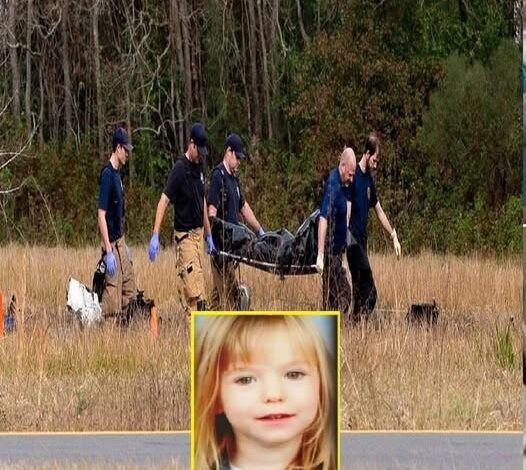
Perla had only planned to step out for a moment.
It was the kind of ordinary decision no one ever questions. A quick trip. A route she knew by heart. Somewhere she had gone countless times without a second thought.
She told her mother she’d be back soon.
Then she walked out the door.
No one could have known that such a simple moment would become the last time things felt normal.
At first, nothing seemed unusual. Ten minutes passed. Then twenty. Her mother glanced at the clock, still calm. Maybe Perla had stopped to talk to someone. Maybe there was a delay at the store.
But when thirty minutes stretched into an hour, something shifted.
The house didn’t feel the same anymore.
It felt… still.
Too still.
Her mother stepped outside, scanning the street, expecting to see Perla walking back like she always did. But the street looked exactly as it always had—cars passing by, distant voices, the familiar rhythm of the neighborhood continuing on.
Except Perla wasn’t there.
She called her name once, casually.
Then again, louder.
Silence answered.
That’s when the uneasiness began to grow.
At first, the calls were simple—friends, neighbors, anyone who might have seen her. No one had. No one had heard from her. Even the store confirmed she had never arrived.
By the time the sun started to set, it was no longer just a delay.
Something was wrong.
Fear doesn’t arrive all at once—it builds quietly, piece by piece, until it becomes impossible to ignore.
Her mother’s voice changed as she called out again, louder this time, breaking in a way that made neighbors step outside without needing an explanation.
Within hours, the neighborhood transformed.
It was no longer just a quiet street.
It became a place of searching.
People who barely knew each other began moving together, calling Perla’s name through backyards, alleyways, and empty lots. As darkness fell, flashlights appeared, cutting through shadows that suddenly felt deeper and more unsettling than before.
Every small sound drew attention.
Every movement sparked hope—and then disappointment.
Someone called the police.
Soon, patrol cars arrived, their flashing lights washing the neighborhood in red and blue. Officers went door to door, asking questions, gathering details that suddenly felt critically important.
What was she wearing?
What time did she leave?
Did anyone notice anything unusual?
The answers came slowly, incomplete and uncertain.
Nothing clear.
Her mother stood nearby, clutching the last sweater Perla had worn. She held it close, breathing in the faint scent that still lingered, as if it could somehow bring her daughter back.
But it couldn’t.
The night dragged on, heavy with worry.
Voices calling her name grew tired, then strained, but never stopped. The search continued, though it became quieter, more cautious—as if people were afraid of what they might discover.
Rumors began to spread before facts could catch up.
Someone mentioned a car.
Another thought they heard something earlier.
A stranger had supposedly been seen.
Each detail passed from one person to another, changing slightly each time, growing heavier with fear.
And fear doesn’t stay contained.
By morning, everything felt different.
The same streets no longer felt safe. Doors stayed locked. Curtains remained drawn. Conversations became hushed, careful, uncertain.
Posters appeared almost instantly.
Perla’s face—bright and smiling—was placed on poles, windows, and fences. Her name printed boldly beneath it, along with a number to call.
She was everywhere.
And yet nowhere at all.
The search continued for days.
Investigators followed every lead, reviewed footage repeatedly, and reconstructed timelines that still refused to make sense. Interviews stretched on, but answers remained out of reach.
That kind of silence—where nothing is found—can feel heavier than bad news.
Families in the neighborhood began changing their routines. Children who once walked freely were now accompanied everywhere. Even short trips became something that required caution.
Lights stayed on late into the night.
Doors were checked, then checked again.
Even laughter sounded different—quieter, uncertain.
Time passed, but nothing truly moved forward.
The posters began to fade under sun and rain, but no one removed them.
No one was ready to.
Because taking them down would mean accepting something too painful to face.
Her mother never stopped searching.
Day after day, she walked the same streets, calling her daughter’s name into the same spaces where Perla once laughed and played. Sometimes others joined her. Sometimes she walked alone.
People offered comfort, kind words, hope.
But hope had changed.
It wasn’t bright or reassuring anymore. It was something stubborn, something that held on simply because letting go felt impossible.
As time moved on, the neighborhood adjusted—but it never truly returned to what it once was. Something invisible had shifted, something that couldn’t be undone.
People still spoke about Perla.
Not just as a missing girl, but as the moment everything changed.
Because sometimes, it isn’t only one life that’s affected.
Sometimes, an entire community learns how fragile normal really is.
And it all began with a simple promise:
“I’ll be right back.”
She never came back.