UNLOCK YOUR MIND, What You See First in This Viral Image Reveals the Hidden Secrets of Your True Personality!

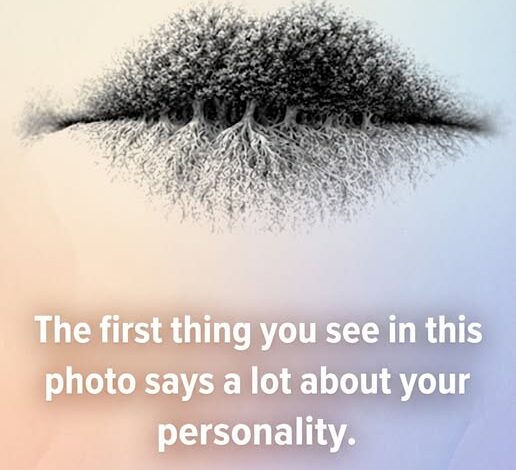
The human brain is extraordinary—constantly processing, filtering, and interpreting the world in ways we rarely stop to question. We tend to believe that what we see is objective reality, a direct translation of what’s in front of us. But in truth, perception is deeply personal. It’s shaped by memory, emotion, personality, and subtle cognitive patterns we carry without realizing it. That’s why something as simple as an image can reveal more about us than we expect.
When you look at a visual illusion or ambiguous image, your brain doesn’t passively observe—it chooses. Within seconds, it highlights one element over others, quietly revealing how you prioritize information. That first impression isn’t random. It reflects how your mind organizes the world.
If your eyes were immediately drawn to the lips, it often suggests a personality that values calm, balance, and emotional harmony. You’re likely someone who prefers simplicity over chaos and avoids unnecessary conflict. You don’t feel the need to complicate things or chase constant stimulation—instead, you move through life with a steady, grounded presence.
People around you probably see you as dependable and calming. You’re the one others turn to when things feel overwhelming, because you listen without judgment and respond with quiet clarity. But there’s a subtle trade-off in this strength. In focusing so much on maintaining peace for others, you may sometimes overlook your own needs. Your nature is giving—but it’s important to make sure that care flows both ways.
If, instead, you noticed the trees first, your attention leans outward. You’re likely energized by people, environments, and the dynamics within them. You notice what others miss—the tone of a conversation, the energy in a room, the unspoken shifts in behavior.
This awareness often translates into strong social intuition. You’re expressive, observant, and naturally attuned to connection. You enjoy growth, movement, and new experiences. Life, for you, is something to engage with fully—not just observe from a distance.
But with that outward focus can come a tendency to overlook quieter details—your own internal state, or the slower, less visible processes beneath the surface. Your strength is in your presence and awareness of others; your balance comes from turning that awareness inward from time to time.
And if your attention went straight to the roots, your mind likely operates on a deeper, more analytical level. You’re drawn to structure, meaning, and the unseen forces beneath things. While others focus on what’s visible, you instinctively look for what supports it.
You may be someone who values understanding over quick conclusions. You think things through, connect patterns, and reflect before acting. Conversations that stay on the surface don’t hold your attention for long—you’re more interested in ideas, systems, and the reasons behind them.
This depth gives you clarity and resilience, but it can also lead to overthinking. When you’re always searching for meaning, it can be hard to simply experience things as they are. Your strength lies in insight—but your balance comes from allowing moments that don’t need to be analyzed.
What makes all of this so compelling is that there’s no single “correct” way to see the image. Each interpretation is valid because each one reflects a different way of experiencing the world. The image doesn’t change—but perception does.
And that’s the real takeaway.
In everyday life, we constantly interpret situations through our own internal lens. Two people can experience the same moment and walk away with completely different understandings. Recognizing this can shift how we relate to others. It reminds us that disagreement isn’t always about right or wrong—it’s often about perspective.
These kinds of visual reflections aren’t meant to define you, but to make you aware. They offer a small glimpse into how your mind works, and how that influences your reactions, relationships, and choices.
Because in the end, perception isn’t just about what you see—it’s about how you see. And how you see shapes everything.