Remote Forest Investigation Sparks Debate Over Wildlife Protection and Public Responsibility

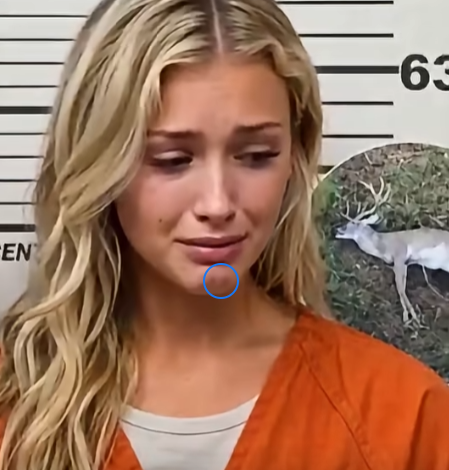
What happened in that forest now sits at the uneasy crossroads of law, ethics, and emotion. At first, the story seemed to invite a simple reaction: outrage, confusion, sympathy, or disbelief, depending on which detail reached people first. But as investigators began to clarify the timeline, the case became far more complicated. Authorities say the animal was already dead before the woman ever arrived, a distinction that matters deeply in the eyes of the law. Yet her actions around the remains were still serious enough to draw the attention of wildlife officers, forensic specialists, and prosecutors from more than one agency.
That distinction has become the center of the public debate. There is a difference between causing harm to a protected animal and mishandling what nature, accident, or another force has already taken. But that difference does not make the second act meaningless. Wildlife laws often extend beyond the moment of death because animal remains can still carry legal, ecological, cultural, and evidentiary significance. A carcass may be part of an active investigation. It may belong to a protected species. It may contain clues about poaching, disease, vehicle strikes, environmental hazards, or broader threats to the ecosystem. To move it, disturb it, collect from it, or treat it as a personal object can interfere with more than people realize.
That is where the emotional complexity enters. Many people feel a powerful pull toward wild animals, especially when they encounter them unexpectedly. Curiosity, grief, fascination, and even reverence can rise quickly in a quiet place. A person may see beauty where the law sees evidence. They may see a natural relic where officers see a protected specimen. They may believe they are honoring the animal, preserving a memory, or acting from harmless interest. But intention does not always determine legality. In the natural world, touching what seems abandoned can still cross a line.
As wildlife officers, forensic experts, and prosecutors continue to sift through the evidence, residents are left to confront a harder truth: loving nature is not the same as understanding the rules that protect it. Many people enter forests, parks, and trails with genuine respect, but respect must be informed by knowledge. Protected land is not simply an open space where personal instinct decides what is acceptable. It is governed by regulations meant to preserve wildlife, protect habitats, support investigations, and prevent human interference from turning one incident into a larger harm.
The case has forced hikers, families, hunters, photographers, and online commentators to ask uncomfortable questions. How far can personal curiosity go before it becomes intrusion? When does fascination with an animal become possession? If an animal is already dead, who has the right to decide what happens next? Is the forest a place where nature belongs to everyone, or a place where the public’s access comes with strict limits? These questions do not always have emotionally satisfying answers, but the law often draws boundaries precisely because emotion can blur them.
Online, the debate has taken on a life of its own. Some people argue that because the animal was already dead, the woman should not be treated as though she caused the original harm. Others insist that disturbing remains is itself serious, especially if the animal was protected or if the scene needed to be preserved. Between those positions lies the more difficult reality: a person can be innocent of killing an animal and still responsible for what they did afterward. The law does not only ask what began the harm. It also asks what happened once someone chose to intervene.
For investigators, the forest is not only scenery. It is a scene filled with information. Tracks, drag marks, wounds, weathering, scavenger activity, tissue condition, and the position of remains can all matter. Once a person disturbs that scene, even with no violent intent, facts can be lost. That is why authorities often urge the public not to touch injured, dead, or unusual wildlife, but to document from a safe distance and report what they find. The impulse to get closer may be human. The safer and more lawful choice is often to step back.
For the community, the story has become a warning about the gap between private feeling and public responsibility. A quiet trail can make people feel far removed from courts, agencies, and regulations. But the absence of buildings does not mean the absence of law. Forests are watched not only by cameras, rangers, and patrols, but by legal systems designed to protect what cannot speak for itself. Those systems may feel harsh in individual cases, yet they exist because without them, wildlife becomes vulnerable to impulse, exploitation, and careless handling.
Until the legal process ends, many questions will remain unanswered. Prosecutors may decide which charges, if any, are appropriate. Experts may determine what evidence was compromised and what facts can still be established. The woman’s intentions may be weighed against the seriousness of her actions. The public may continue to debate whether the response was justified or excessive. But the broader lesson is already clear.
Nature is not a museum, a souvenir shop, or a private stage for personal meaning. It is a living system governed by relationships most people only partly understand. Even in death, a wild animal may still belong to that system, to an investigation, or to laws created to prevent deeper harm. To love the natural world is not only to admire it, photograph it, or feel moved by it. It is also to know when not to touch.
The forest now stands as both sanctuary and warning. Its silence can feel peaceful, but that silence does not mean anything found there is free to claim. Its trails may invite wonder, but they also demand restraint. What happened there reminds everyone who enters wild places that respect is measured not by emotion alone, but by discipline. Sometimes the most reverent act is not to interfere, not to collect, not to possess, but simply to witness, report, and walk away.