As reports of airstrikes over Tehran dominated international headlines, Spain chose not to support the military operation. The Spanish government announced that its territory and military facilities would not be used to assist in the strikes, distancing itself from the unfolding conflict.
Officials in Madrid explained that their decision was rooted in respect for the United Nations Charter and international law, principles they said guide Spain’s foreign policy. According to government representatives, any military action must have clear legal justification under international frameworks.
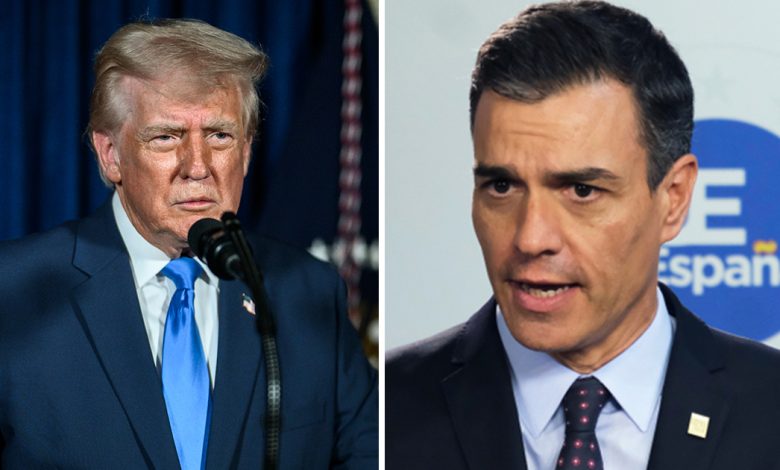
The decision quickly drew criticism from some voices in the United States. Former U.S. President Donald Trump publicly condemned Spain’s position and warned that the disagreement could affect economic and trade relations between the two countries.
Trump’s remarks added another layer of tension to the diplomatic situation, as discussions about security cooperation began to spill into broader political and economic debate.
Spanish Prime Minister Pedro Sánchez responded firmly to the criticism, reiterating his government’s stance. In a statement addressing the controversy, he emphasized that Spain’s priority is maintaining peace and adhering to international legal standards.
“Our position is clear: no to war,” Sánchez said, explaining that Spain’s decision reflects its commitment to diplomacy and lawful international conduct.
According to the Spanish government, the refusal to support the operation was not directed against any particular ally but rather aimed at preserving national principles and avoiding involvement in actions lacking clear international authorization.
The disagreement has also highlighted broader differences in how European and American leaders sometimes approach international conflicts. While Spain maintains its position based on legal and diplomatic considerations, the debate underscores the complex balance between alliance politics, national sovereignty, and global security concerns.