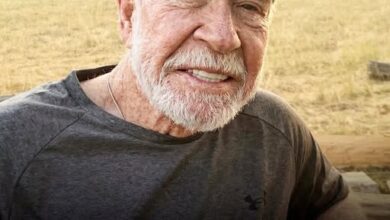
The discovery of 84-year-old Nancy Guthrie in a remote area of the Arizona desert has brought a heartbreaking end to a disappearance that had deeply unsettled the Catalina Foothills community. What initially began as a routine welfare check quickly escalated into an intensive search effort, ultimately leading investigators to uncover circumstances that point toward a deliberate and troubling crime. While her family now has answers about her fate, those answers have come with the weight of a growing homicide investigation, as authorities work to reconstruct what happened in her final hours.
Nancy Guthrie was widely known in her neighborhood as a sharp, independent woman who had spent decades as a dedicated educator. Even in her later years, she maintained a steady daily routine, one that made her sudden absence immediately noticeable. When she failed to respond to calls and her car remained untouched in her driveway, concern spread quickly. At first, those close to her feared a medical emergency, but the untouched condition of her home raised deeper concerns. Within a short time, local authorities shifted their response from a simple welfare check to a coordinated search operation.
The Catalina Foothills region presented significant challenges for search teams. The area blends residential communities with stretches of rugged Sonoran Desert, where dense vegetation and uneven terrain can easily conceal both people and evidence. Deputies and volunteers worked in organized lines, navigating rocky washes and thick desert brush. Aerial units scanned from above, but extreme temperatures and difficult terrain limited how effective those efforts could be, forcing teams to rely heavily on ground searches during the cooler hours of the day.
As the physical search continued, investigators also began reviewing digital evidence. Surveillance footage from nearby homes revealed a concerning detail: a masked individual moving cautiously near Nancy’s property around the time she disappeared. This discovery shifted the direction of the case, suggesting that her disappearance may not have been accidental. Detectives began expanding their review of security footage, tracking movements of vehicles and individuals in the surrounding area.
A critical development came from the analysis of phone data. Investigators identified a brief signal from a prepaid mobile device near a trailhead in the area during the early hours of the morning Nancy went missing. The phone was only active for a short time, making it difficult to trace, but the timing and location helped narrow the search area significantly. By combining this information with surveillance data, authorities were able to focus their efforts on a more specific section of desert.
Search teams were eventually directed to a remote wash a few miles from Nancy’s home. There, in a concealed area partially hidden by natural terrain, they made the tragic discovery of her body. The site showed signs of deliberate concealment, indicating that efforts had been made to prevent detection. This detail has become a key focus of the investigation, as it may provide insight into the level of planning involved.
Forensic teams spent extended time at the location, carefully collecting evidence and documenting the scene. Specialists examined the surrounding environment, including soil and vegetation, to better understand how the area had been altered. While officials have not released full details, the investigation remains active as they work to determine the exact circumstances of her death.
The impact on the community has been profound. Residents who once felt a strong sense of security are now grappling with uncertainty and grief. Nancy’s legacy as a teacher and community member has led to an outpouring of remembrance, with neighbors and former students honoring her life. At the same time, there is a shared desire for answers and accountability.
Investigators are continuing to examine all aspects of Nancy’s life, including recent interactions and possible connections that could help identify who was responsible. They are also working to trace the origin of the prepaid phone and gather additional evidence from surveillance and witness accounts.
As the case moves forward, authorities remain focused on building a clear and accurate understanding of what happened. While the search for Nancy has come to an end, the effort to seek justice on her behalf is ongoing. For those who knew her, the priority is remembering the life she lived. For investigators, the goal is ensuring that those responsible are identified and held accountable.