The Dangerous Red Spot, Why You Should Never Use Toilet Paper With Suspicious Stains And The Chilling Secret Hidden In Public Restroom Stalls

For most people, using a public restroom is just another routine inconvenience—something you deal with quickly and try not to think about too much. Over time, we all develop little habits to make the experience more bearable: hovering instead of sitting, layering toilet paper as a barrier, or scanning for the least questionable stall. But while most of our attention goes to obvious concerns like dirty seats or wet floors, experts are increasingly pointing out a less noticeable detail that could pose a real health concern.
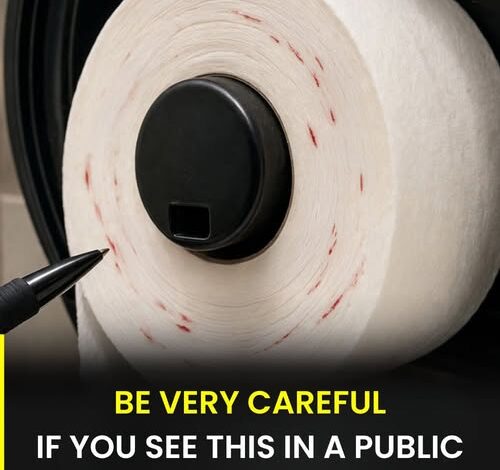
Picture this: you’re in a busy location—an airport, a gas station, maybe a shopping center. You step into a stall, reach for the toilet paper, and as the roll turns, you notice faint reddish or rust-colored spots scattered across the paper. At first glance, it might seem harmless—maybe a stain from a spill or a minor defect in the paper. But in some cases, these marks may indicate that the roll has been contaminated.
Health and safety professionals explain that shared restroom items—especially those left exposed—can sometimes come into contact with bodily fluids or unclean hands. In rare situations, individuals may misuse materials like toilet paper in ways that leave behind traces of blood or other contaminants. Because toilet paper rolls are often designed to spin freely, any substance on the outer layer can transfer across multiple sheets, increasing the chances that someone else will come into contact with it.
While the likelihood of contracting serious illnesses from such exposure is generally low, it’s not entirely impossible—particularly if there are cuts or abrasions on the skin. Bloodborne pathogens like Hepatitis B or C require very specific conditions to spread, but basic hygiene precautions are still important. Beyond that, there are more common risks to consider. Public restrooms are environments where bacteria and viruses can easily spread, especially in humid conditions.
Another factor many people overlook is what’s known as the “toilet plume.” When a toilet is flushed, tiny droplets containing bacteria can become airborne and settle on nearby surfaces. If toilet paper is stored in an open dispenser, it can be exposed to this mist, making it more susceptible to contamination. Over time, this can lead to the buildup of microorganisms, particularly if the restroom isn’t cleaned regularly.
Experts emphasize that our skin does provide a natural barrier against many germs, but it isn’t foolproof. Certain bacteria can survive on surfaces long enough to be transferred through contact, especially in damp conditions. That’s why visible signs—like unusual stains or moisture on toilet paper—shouldn’t be ignored.
If you ever come across a roll that looks questionable—whether it has discoloration, dampness, or anything that just doesn’t seem right—the safest choice is simple: don’t use it. Instead, move to another stall or find an alternative restroom if possible. It may feel inconvenient in the moment, but it’s a small step that can reduce unnecessary risk.
It’s also helpful to let staff or maintenance know when something seems off. Reporting issues allows facilities to address them quickly, helping protect others who might use the space after you. Many locations are now switching to fully enclosed dispensers for this exact reason—to minimize exposure and keep hygiene standards higher.
Ultimately, staying safe in public restrooms comes down to awareness and simple habits. Pay attention to your surroundings, trust your instincts, and don’t ignore signs that something might be unclean. It’s not about fear—it’s about being mindful in shared spaces where you have limited control.
The next time you reach for a roll of toilet paper, take a quick look before using it. That extra second of attention can make a difference. In everyday situations like this, small precautions go a long way in protecting your health and maintaining peace of mind.