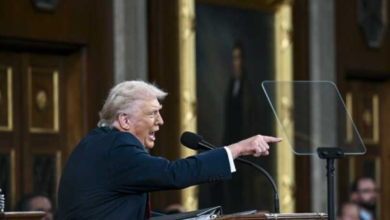
THE HIDDEN CLOAK, WHY A SINGLE LINE IN THIS NEW POLICY DOCUMENT HAS THE ENTIRE NATION ASKING ABOUT THE PRESIDENT

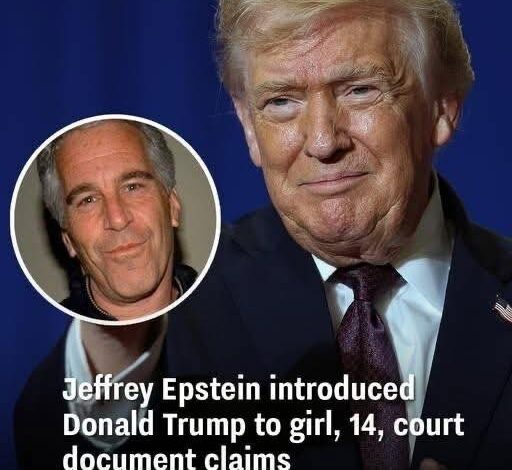
In the world of high-stakes politics, silence is rarely empty. More often, it is deliberate—and sometimes far more revealing than any statement made aloud. A recently released government document has stirred intense discussion in the capital, not because of bold reforms or controversial proposals, but because of what it conspicuously leaves out. Across page after page of dense, carefully constructed language, the President’s name appears only once. That absence has transformed what would normally be a routine filing into something far more provocative: a kind of political inkblot test, inviting interpretation from every direction.
Documents of this scale are never accidental. Every sentence is reviewed, revised, and approved through layers of legal scrutiny and communications strategy. Nothing significant slips through unnoticed. So when a detail as central as the President’s presence is reduced to a single, almost hidden mention, it raises an unavoidable question: why? This is not oversight—it is design.
The scarcity of references suggests a shift not in policy, but in presentation. It may reflect an intentional move toward depersonalizing governance—placing institutions, agencies, and systems at the forefront rather than the individual at the top. In that reading, the omission signals restraint, perhaps even an attempt to recalibrate the relationship between leadership and visibility. But there is another interpretation, equally compelling: that minimizing the President’s presence serves as a form of insulation. By stepping back from the document’s language, the administration creates distance from any potential backlash while retaining influence behind the scenes.
That single mention, then, becomes disproportionately important. When something is rare, it draws attention. Analysts dissect the phrasing, the placement, even the tone of that lone reference, searching for clues about intent. Is it symbolic? Procedural? Strategic? The line carries weight not because of what it says, but because of everything around it that remains unsaid.
Some observers have described this approach as a kind of “invisible authorship”—a leadership style that asserts control without overtly claiming it. In this framework, authority is not diminished but diffused, embedded within the machinery of government rather than tied to a single figure. It’s a subtle way of maintaining presence while avoiding the scrutiny that often accompanies personalization in politics. Others, however, see it less charitably. To them, the absence reads as calculated ambiguity—a way to preserve credit for success while creating plausible distance from failure.
Unsurprisingly, the reaction has been swift and polarized. Online platforms and media outlets have turned the omission into a focal point of debate. Critics argue that it reflects a strategy of shielding—an attempt to keep the President out of direct association with potentially contentious outcomes. Supporters counter that it represents a return to substance over spectacle, a deliberate effort to reduce the emphasis on personality that has come to dominate modern political discourse.
Regardless of which interpretation one favors, the effect is undeniable. In a document where precision is everything, absence becomes a form of communication in its own right. The lack of repetition amplifies significance. What is not said becomes just as important as what is.
In many ways, this moment illustrates a broader truth about contemporary governance. In an era saturated with information, where every word is analyzed and every statement can spark a reaction, restraint itself becomes a powerful tool. Silence can guide perception just as effectively as speech—sometimes more so.
This document, then, is more than a bureaucratic artifact. It is a lesson in how power can be expressed indirectly, how presence can be maintained without visibility, and how meaning can emerge from omission. The “missing” President is not truly absent—but the choice to appear that way has reshaped the conversation.
And in doing so, it has reminded everyone watching that in politics, what isn’t written can echo just as loudly as what is.