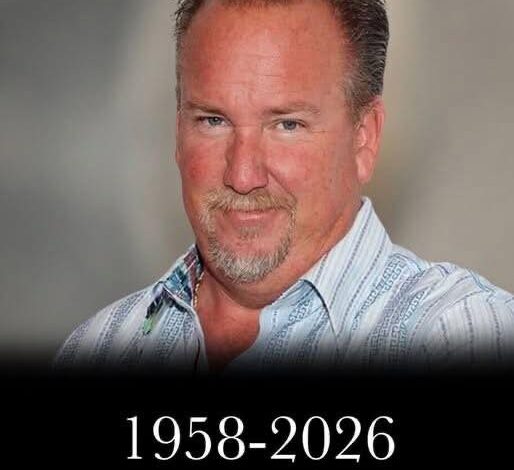
Darrell Sheets carved out a place in reality television that few personalities could have filled quite the same way.
On Storage Wars, he did not simply bid on abandoned lockers. He turned storage auctions into suspense, strategy, and theater. Every unit became a gamble. Every raised hand carried risk. Every sealed door seemed to promise either disaster or treasure.
That was exactly why viewers remembered him.
Known as “The Gambler,” Darrell brought a kind of electricity to the show’s early years. He trusted instinct more than caution and rarely seemed afraid of the consequences. Where others hesitated, calculated, or backed away, Darrell often leaned forward. He treated uncertainty not as something to avoid, but as the entire point of the game.
That fearlessness helped define the rhythm of Storage Wars.
The show worked because each locker felt like a mystery. Behind one door might be junk, dust, broken furniture, and regret. Behind another might be rare collectibles, artwork, antiques, or the kind of discovery that could change a bidder’s entire month. Darrell understood that tension better than almost anyone. He knew how to make a bid feel like a cliffhanger.
His confidence could be brash.
His decisions could be risky.
His personality could fill a room before the auction even began.
But that was part of the appeal.
Darrell did not approach the business like a quiet reseller carefully protecting every dollar. He approached it like someone who understood that reward often lives on the other side of discomfort. His nickname was not just branding. It reflected the way he moved through the world of auctions — bold, loud, intuitive, and willing to bet on what others could not see.
For audiences watching at home, that made him compelling.
A storage locker is, by nature, an unknown story. The contents are hidden. The owner is gone. The value is uncertain. Bidders are forced to make decisions based on fragments: a visible box, the shape of furniture beneath a tarp, the quality of a tool chest, the way items are stacked, or simply a feeling that something valuable might be buried beneath the mess.
Darrell turned that uncertainty into entertainment.
He made viewers feel the pressure of the moment: the quick math, the rising bids, the danger of overpaying, the thrill of trusting a hunch. When he won a locker, the excitement was not only about what might be inside. It was about whether his confidence had been genius or recklessness.
That tension became part of his legacy.
But Darrell Sheets was never memorable only because he took risks.
His presence on Storage Wars also revealed something more grounded beneath the showmanship, especially through his relationship with his son, Brandon. Their partnership gave the series an emotional dimension that went beyond bidding wars and profit margins.
With Brandon beside him, Darrell was not just “The Gambler.”
He was a father.
Their scenes together showed a different side of him — still competitive, still outspoken, still willing to take bold chances, but also protective, instructive, and proud. Through Brandon, viewers saw the business not merely as a hustle, but as something passed down through experience.
Darrell taught by doing.
He showed his son how to read a room, how to study a locker, how to trust instinct without ignoring reality, and how to accept that every win carries the memory of previous losses. In that world, knowledge was not always formal or polished. It came through repetition, mistakes, long days, hard lessons, and the willingness to keep showing up.
Their teamwork became one of the quieter strengths of the show.
Reality television often thrives on conflict, and Storage Wars certainly had plenty of rivalry, ego, and sharp exchanges. But the bond between Darrell and Brandon offered something steadier. It showed generational trust. A father bringing his son into a rough, unpredictable trade. A son learning not only how to make money, but how to understand his father’s world.
There was pride in that dynamic.
Sometimes it appeared in jokes.
Sometimes in frustration.
Sometimes in small looks exchanged after a good find or a risky purchase.
Darrell could be loud with everyone else, but with Brandon there was often something more personal underneath. He wanted him to succeed. He wanted him to learn. He wanted him to see what he saw when those storage doors rolled open — not just piles of forgotten belongings, but possibility.
That is what made their relationship resonate.
At its core, the storage auction business is about finding value where others have stopped looking. It is about walking into spaces filled with abandoned things and believing there may still be something worth saving. In a way, that idea mirrored the father-son story on the show. Darrell was not only teaching Brandon how to spot valuables. He was teaching him how to trust himself inside uncertainty.
That lesson reached beyond television.
Long after specific lockers, bids, and discoveries fade from memory, viewers remember Darrell’s energy. They remember the way he could turn a dusty unit into a make-or-break moment. They remember the confidence, the risk, the grin of someone who knew the gamble might fail but took it anyway.
And they remember Brandon standing beside him, learning the trade one locker at a time.
Darrell Sheets helped give Storage Wars its early pulse because he understood that the show was never only about objects. It was about suspense, instinct, personality, and the strange emotional charge of not knowing what waits behind a closed door.
But his deeper legacy rests in something more human.
He showed that even a rough-and-tumble business built on abandoned spaces could become a story about connection. About teaching. About family. About passing down not just skills, but courage.
Darrell bet big on lockers.
Sometimes he won.
Sometimes he lost.
Sometimes the gamble paid off in spectacular fashion.
But the most lasting image is not simply of a man chasing treasure behind metal doors.
It is of a father standing beside his son, showing him how to take chances, how to read the unknown, and how to believe that hidden value can still be found in places most people have already forgotten.