The Man Who Lost Billions And Faced Total Financial Ruin Only To Rise From The Ashes And Become The Most Powerful Leader On Earth

The story of success is often told as a straight line—steady progress, clear milestones, and eventual arrival. But some public figures follow a far less predictable path, shaped by reversals, reinvention, and constant exposure to scrutiny. Donald Trump’s trajectory is one of those cases: a career marked not by uninterrupted ascent, but by cycles of expansion, setback, and recovery that have kept him at the center of public attention for decades.
From early on, his approach to business and public life was closely tied to visibility. Entering the highly competitive world of New York real estate, he built not only projects but a recognizable personal brand. His name became part of the product itself, attached to buildings, deals, and a broader image of success. In a crowded marketplace, that visibility helped distinguish him, ensuring that even criticism contributed to his public profile.
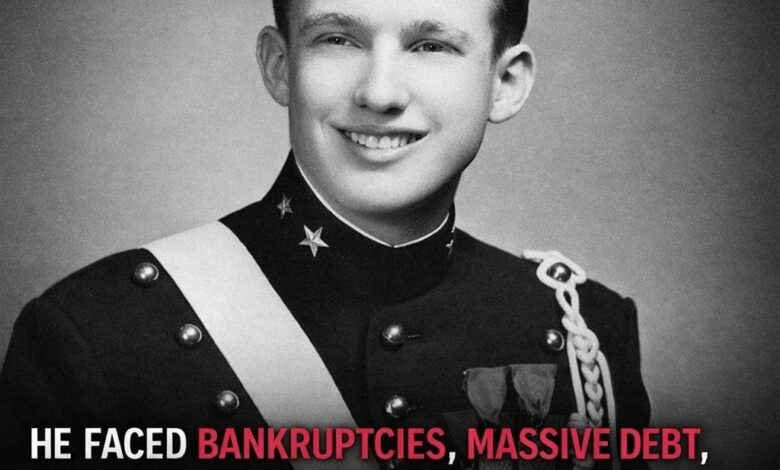
That emphasis on brand became especially significant during periods of financial strain. In the late 20th century, a series of business challenges—including high debt levels and bankruptcies tied to specific ventures—placed his finances under pressure. During that time, his ability to negotiate with lenders and maintain a public image of confidence played a role in how those situations were managed. Rather than disappearing from view, he remained visible, continuing to position himself as a viable figure in business and media.
A major shift in his public identity came with his move into television. The Apprentice introduced him to a national audience in a new role—less as a developer and more as a decision-maker and personality. The format amplified certain traits: decisiveness, direct communication, and a focus on winning. This exposure broadened his recognition beyond business circles and helped reshape how many people perceived him.
When he entered politics, that visibility became a central advantage. His campaign approach differed from traditional models, relying heavily on direct communication and extensive media coverage. While initially met with skepticism, it resonated with segments of the electorate who felt disconnected from established political structures. His eventual election reflected a combination of factors—message, timing, media dynamics, and voter sentiment—rather than a single defining element.
His presidency was marked by strong reactions, both supportive and critical. Supporters viewed his leadership as a challenge to established norms and institutions, while critics raised concerns about tone, policy, and adherence to traditional standards of governance. The level of polarization surrounding his tenure reflected broader divisions within the country, which extended beyond any one administration.
Looking at the broader arc of his career, a few themes stand out. Persistence is one, but so is adaptability—particularly in how public image and media presence can influence outcomes. His path illustrates how visibility, branding, and communication can play significant roles in shaping both business and political trajectories in the modern era.
At the same time, interpretations of that journey vary widely. For some, it represents resilience and the ability to navigate setbacks. For others, it raises questions about the relationship between perception and substance, and the impact of highly personalized leadership styles on public institutions.
Ultimately, the significance of his story depends on how it is understood. It can be viewed as an example of reinvention in a media-driven age, or as a case study in the evolving nature of influence, power, and public trust. Either way, it reflects a shift in how success is defined—not only by outcomes, but by the ability to remain relevant, visible, and engaged over time.
In that sense, the narrative is less about a single rise or fall, and more about the ongoing interaction between individual ambition, public perception, and the changing landscape in which both operate.