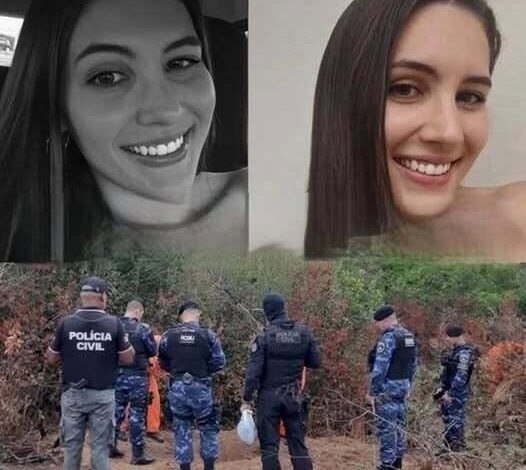
The final hours of Carolina and Luiza’s lives have become the center of an intense and painstaking investigation, one being built slowly from scattered fragments of evidence, witness accounts, digital records, and unanswered questions. What began as a search filled with urgency and hope has now turned into a careful effort to understand how an ordinary day became the last chapter in the lives of two young women deeply loved by their family, friends, and community.
Detectives are working to reconstruct the twins’ movements with as much precision as possible. Every place they may have visited, every person they may have spoken to, and every decision made in those final hours is being examined. Investigators are reviewing phone records, messages, surveillance footage, vehicle movements, and witness statements in the hope of establishing a clear timeline. Each detail, no matter how small, could help explain what happened before tragedy struck.
For authorities, the work is methodical. They must separate fact from rumor, evidence from assumption, and confirmed information from speculation. Security cameras are being reviewed frame by frame. Digital activity is being analyzed. Witnesses are being interviewed and, in some cases, re-interviewed as investigators look for missing pieces or inconsistencies. The goal is not only to determine where Carolina and Luiza were, but also to understand whether they were alone, whether they met someone, whether they were in danger, or whether an unexpected event changed the course of their day.
At this stage, officials are considering every possibility. They are working to determine whether criminal activity was involved, whether an accident occurred, or whether some other circumstance led to the heartbreaking outcome. No lead is being dismissed without review. Every timeline is being checked. Every report is being weighed against the evidence already collected. The investigation remains active, and for those waiting for answers, every passing hour feels painfully heavy.
But for Carolina and Luiza’s family, this investigation is not simply a legal process or a matter of procedure. It is the only path they have toward understanding a loss that has broken their world apart. The uncertainty that once fueled the search has now turned into a grief that is difficult to describe. The desperate phone calls, the shared posts, the updates from authorities, and the hope that someone might bring good news have been replaced by a silence no family should ever have to endure.
Their home, once filled with familiar voices and daily routines, now carries the weight of absence. Ordinary spaces have become painful reminders. A bedroom, a favorite chair, a message left unread, a piece of clothing, a photograph on a shelf—each object now holds more meaning than it once did. The family is left not only mourning Carolina and Luiza, but also trying to make sense of the suddenness with which life changed.
That same grief has spread across the community. Neighbors, friends, classmates, and even strangers who followed the search have been deeply affected. Many had joined efforts to find the sisters, sharing information, distributing flyers, checking updates, and holding onto hope. Now, those same people are gathering for a different reason. The search has ended, but the need to come together has not.
Where posters once asked for help, flowers now appear. Where people once stood waiting for hopeful news, candles now flicker in their memory. The transformation from searching to mourning has been difficult for many to accept. It is one thing to fear a tragic outcome; it is another to face it.
At a growing memorial, photographs of Carolina and Luiza are surrounded by bouquets, handwritten notes, candles, stuffed animals, and messages of love. In the pictures, they are smiling, laughing, standing together, and living moments that once seemed ordinary. Now, those images carry a heartbreaking tenderness. They remind everyone who sees them that the twins were not just names in a case or faces in a news report. They were daughters, sisters, friends, and young women with personalities, dreams, memories, and futures that should have continued.
Friends gather near the memorial to share stories. Some speak through tears. Others stand quietly, unable to find words. They remember Carolina and Luiza as they were in life, not only as they are now being discussed in public. They talk about their laughter, their bond, their habits, their kindness, and the way they made others feel seen. They remember private jokes, school memories, shared plans, and ordinary days that have now become precious.
That act of remembering is important. In cases marked by tragedy and uncertainty, public attention can quickly shift toward mystery. People begin searching for explanations. Rumors spread. Theories develop. Strangers debate possibilities without knowing the full truth. The circumstances of a person’s death can begin to overshadow the life they lived.
But those who loved Carolina and Luiza are determined not to let that happen.
They know the twins were more than their final hours. Their lives were not defined by the investigation now surrounding them. They were defined by the relationships they built, the people they loved, the joy they brought, and the memories they left behind. Their story did not begin with tragedy, and it should not be remembered only through tragedy.
As investigators continue their work, the community remains suspended between grief and uncertainty. Answers have not yet fully arrived, and even when they do, they may not bring the peace people hope for. Some truths explain what happened without easing the pain. Some conclusions close one chapter while opening a lifetime of mourning. Still, the search for truth matters. It matters for their family. It matters for their friends. It matters for a community that wants to understand how two lives could be lost so suddenly.
Their loved ones deserve clarity. They deserve honesty. They deserve to know what happened to Carolina and Luiza, not through speculation or rumor, but through evidence and truth. Until that day comes, every update from authorities carries weight. Every new detail is met with both hope and dread.
In the meantime, vigils and memorials have become places of comfort and remembrance. People gather not because they have the right words, but because presence itself can become a form of support. Candles, flowers, prayers, and quiet embraces cannot undo the loss, but they can remind the family that they are not carrying the grief alone.
Each candle lit in Carolina and Luiza’s memory becomes a small act of resistance against forgetting. Each story shared helps preserve who they were. Each spoken memory keeps their names from being swallowed by silence. In the face of tragedy, the community is choosing to honor their humanity.
Their deaths are a painful reminder of how quickly life can change. A normal day can become a final memory. A simple outing can become the beginning of unbearable questions. Families can move from hope to heartbreak in a matter of hours, left trying to understand a reality they never imagined would become theirs.
And yet, even in the middle of sorrow, there is evidence of something powerful. There is love. There is the love of a family still searching for answers. The love of friends determined to remember them fully. The love of a community that came together first in hope and now in mourning. That love cannot change what happened, but it can shape how Carolina and Luiza are remembered.
For investigators, the mission remains clear: find the truth. Build the timeline. Follow the evidence. Answer the questions that still haunt the case.
For those who loved Carolina and Luiza, the mission is different but just as important: protect their memory. Speak their names. Tell their stories. Remember their laughter, their dreams, their bond, and the lives they lived before tragedy entered the picture.
Until answers come, the candles will continue to burn. The flowers will continue to grow around their photographs. Friends and family will continue to gather, cry, remember, and hold one another up.
Carolina and Luiza’s story is now surrounded by grief and investigation, but it does not belong only to tragedy. It belongs to everyone who loved them, everyone who remembers them, and everyone determined to make sure they are seen not only for how their lives ended, but for the beauty, warmth, and meaning they brought into the world while they were here.