The Secret Life Of A Golden Icon Why Farrah Fawcett Almost Became A Nun And The Hidden Heartbreak Behind The Most Famous Poster In History

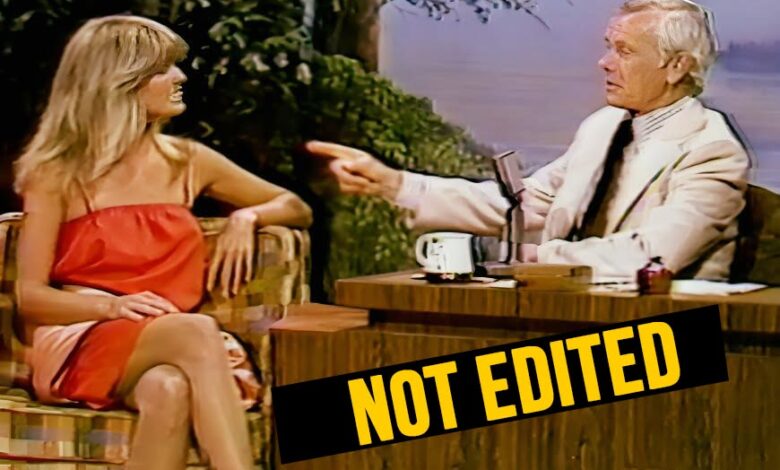
Farrah Fawcett didn’t just rise to fame in the 1970s—she became one of its defining images. In a time before constant media exposure turned celebrities into everyday headlines, she existed almost as a symbol rather than just a person. With her role on Charlie’s Angels, she captured a kind of effortless charm that felt both glamorous and familiar. Her smile, her energy, and especially her iconic hairstyle made her instantly recognizable, while that famous red swimsuit poster turned her into a global sensation. Yet behind that radiant image was a woman navigating the difficult space between who the world expected her to be and who she truly was.
Long before Hollywood, her story began in Texas, rooted in a life shaped by strong values and tradition. Raised in a devout Catholic household, Farrah grew up with a deep sense of faith and structure. As a teenager, she even briefly considered joining a convent, drawn to the idea of simplicity and clarity during a time when life felt uncertain. Though that path didn’t last, it revealed something important about her—a desire for peace that would remain with her long after fame found her.
As she grew older, that balance between tradition and independence became more complicated. She admired the life her mother lived, finding comfort in the idea of home, routine, and family. At the same time, she felt pulled toward something bigger—a need to explore, to build a life beyond those familiar boundaries. Her beauty, which opened doors, also brought a kind of pressure she didn’t always enjoy. Being constantly noticed, constantly observed, made her self-aware in ways that often conflicted with her naturally private nature.
Her move to Los Angeles was meant to be temporary at first, encouraged by those who saw her potential. But it quickly turned into something more. Early appearances, including television game shows, introduced her to audiences, but it was that now-legendary photograph—the red swimsuit poster—that changed everything. It wasn’t just the image itself, but the choices behind it. Farrah opted for a one-piece swimsuit rather than something more revealing, shaping an image that felt strong, natural, and confident instead of overly manufactured. That decision helped define how she would be seen—and how she would present herself.
Despite becoming a beauty icon, her personal approach remained simple. She often styled her own hair and makeup, relying more on instinct than elaborate routines. The famous “Farrah Flip” wasn’t the result of expensive styling—it was something she created herself. That authenticity made her more relatable, allowing people to see not just a star, but someone who still felt grounded.
Her personal life, however, was rarely simple. Her marriage to Lee Majors began with intense connection but eventually strained under the weight of two demanding careers. At the same time, her decision to leave Charlie’s Angels after just one season surprised many. Walking away from such massive success was risky, but for Farrah, it was necessary. She wanted to be taken seriously as an actress, not just admired as an image. Though the industry pushed back, she proved herself through more challenging roles, earning respect for her ability to step beyond expectations.
In the years that followed, her life remained under public attention, shaped by relationships, creative pursuits, and the constant presence of the spotlight. Yet she also found ways to step outside of it. Sculpture became an outlet, a quieter form of expression that allowed her to create without scrutiny. Through it all, her connection to family—especially her mother—remained central, grounding her in a world that rarely stood still.
In her final years, Farrah allowed the public to see a different side of her life. Her battle with cancer was not hidden or softened—it was shared openly, revealing the reality of illness with honesty and strength. The woman once known for her carefree image became something deeper: a reflection of resilience, vulnerability, and determination. She faced her diagnosis with a quiet resolve, refusing to let it define her completely.
By the end of her journey, Farrah Fawcett was no longer just the face of an era. She had become something more meaningful—a woman who moved beyond the image that made her famous, showing that true strength isn’t always loud or visible. It’s often found in endurance, in honesty, and in the ability to remain yourself even when the world expects something else.