The Unexpectedly Powerful True Story of Andrew McCarthy: How an Iconic 1980s Actor Rose to Fame Overnight, Battled Intense Personal Struggles Behind Hollywood Glamour, Rebuilt His Life Through Sobriety and Creative Reinvention, and Ultimately Emerged as a Respected Director, Writer, and Survivor With a Journey Far More Compelling Than Any Film He Ever Made

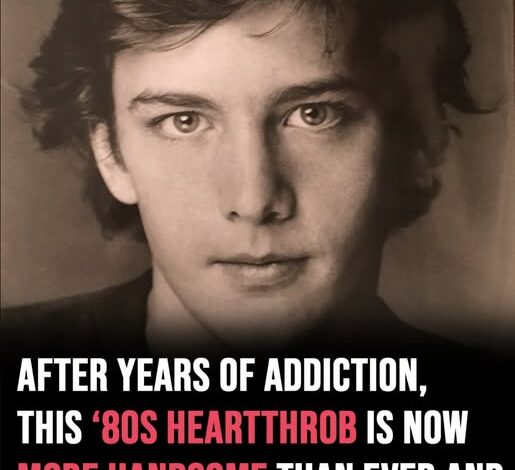
Andrew McCarthy’s face became closely associated with 1980s cinema. With his thoughtful gaze, quiet presence, and understated charm, he quickly became one of the most recognizable actors of his era. Yet behind the teen heartthrob image created by his films was a far more complicated personal story. Long before he was linked to the group of young actors later called the “Brat Pack,” he was simply a young man from New Jersey trying to figure out where he belonged. His journey—from uncertainty to fame, from addiction to recovery, and eventually from actor to director and writer—reveals a life shaped less by glamour and more by resilience and reinvention.
Early Life and an Uncertain Start
Andrew McCarthy was born on November 29, 1962, in Westfield, New Jersey. He was the third of four brothers in a middle-class household. His father worked in the investment field, while his mother was employed at a local newspaper. Nothing about his upbringing suggested that he would one day become a Hollywood star.
Growing up, McCarthy was known for being introspective and somewhat reserved. During high school, he often felt out of place socially. Although he participated in theater, he struggled with a sense of not quite fitting in. Ironically, that feeling of quiet isolation later became part of the image audiences recognized in many of his roles—the sensitive outsider navigating a noisy world.
After finishing high school, McCarthy enrolled in New York University’s acting program. However, academic structure didn’t appeal to him. He has admitted that he rarely attended classes. Eventually, after two years, the university expelled him. What might have seemed like a failure at the time turned out to be an unexpected turning point.
An Unlikely Break into Film
Only weeks after leaving NYU, McCarthy attended an open casting call for the film Class, which starred Jacqueline Bisset. With little expectation of success, he joined hundreds of hopeful young actors auditioning for a role.
To his surprise, he was called back—and eventually cast in the film. Suddenly he found himself working alongside an established Hollywood star in scenes that included intimate moments. Reflecting on the experience years later, he joked that one week he was a struggling student and the next he was acting opposite Jacqueline Bisset.
NYU later offered to allow him to return and count the film as an independent study project—provided he paid tuition. McCarthy declined and chose instead to pursue acting full-time.
Becoming Part of the “Brat Pack”
As his career gained momentum, McCarthy became associated with a group of young actors who dominated many coming-of-age films during the mid-1980s. The media labeled them the “Brat Pack,” a nickname that included stars like Emilio Estevez, Rob Lowe, Demi Moore, and Molly Ringwald.
Some of McCarthy’s most recognizable films from this era include:
- St. Elmo’s Fire
- Pretty in Pink
- Mannequin
- Less Than Zero
- Weekend at Bernie’s
Although the label helped boost their fame, many of the actors—including McCarthy—resented it. They felt the name suggested arrogance or irresponsibility. Regardless, the films resonated strongly with audiences and became defining works of the decade.
In Pretty in Pink (1986), McCarthy portrayed Blane, the quiet and sincere love interest opposite Molly Ringwald. His calm, understated performance helped make the character memorable. Yet he later admitted that he filmed much of the movie while hungover, something viewers would never suspect from his composed screen presence.
Struggles Hidden Behind Success
Despite the success of his career, McCarthy was privately battling alcoholism. His drinking began in high school and intensified as his fame grew. The pressures of acting—public attention, emotional exposure, and constant scrutiny—made him deeply uncomfortable. Alcohol became a way to cope.
He later explained that drinking gave him a sense of confidence he didn’t naturally feel.
“It made me feel bold and in control,” he once said, even though those feelings were temporary.
During film productions, he often struggled with headaches, fatigue, and nausea. To the public he appeared relaxed and charismatic, but behind the scenes his life was increasingly unstable. Although he also experimented with drugs, he has said that cocaine mostly fueled his drinking rather than becoming its own addiction.
A Critical Turning Point
In 1989, shortly before working on Weekend at Bernie’s, McCarthy attempted to quit drinking. However, maintaining sobriety proved difficult, especially while working in environments where alcohol was easily available.
During one film shoot, a co-star casually offered him a beer. As he reached for it, his hands began shaking uncontrollably. The moment frightened him, showing just how close he was to relapse.
For several years afterward he struggled to maintain control. Eventually he experienced a terrifying episode in which he collapsed in a bathroom after drinking heavily. The incident convinced him that he needed professional help.
At age 29, McCarthy entered rehabilitation. That decision marked a turning point in his life and began a long-term commitment to sobriety.
Reinventing Himself After Hollywood Fame
Following rehab, McCarthy distanced himself from the party culture of Hollywood and began rethinking his future. Acting alone no longer felt fulfilling. He wanted to explore new creative directions.
A Career Behind the Camera
McCarthy gradually moved into directing, where he discovered a passion for storytelling from a new perspective. Over time he became a respected television director, working on popular series such as:
- Orange Is the New Black
- Gossip Girl
- The Blacklist
- Good Girls
His directing style earned praise for its emotional sensitivity and strong pacing—qualities that had also shaped his acting.
Success as a Travel Writer
Another unexpected path opened when McCarthy began writing about travel. His articles appeared in respected publications including National Geographic Traveler, The New York Times, and Men’s Journal.
In 2010 he received the Travel Journalist of the Year award, confirming his reputation as a talented writer. McCarthy often explains that travel and acting share a common purpose: both are ways of exploring the world and telling meaningful stories.
Travel also brought him a sense of clarity and presence that had been missing during his earlier struggles.
Family and Personal Life
In 1999, McCarthy married Carol Schneider, a former college girlfriend with whom he had reconnected years later. They welcomed a son, Sam, in 2002 before divorcing in 2005.
He later married Irish writer and filmmaker Dolores Rice in 2011. Together they have two children, Willow and Rowan. Today McCarthy lives a relatively grounded life in New York and often speaks about the importance of family and fatherhood.
Despite the continued popularity of his 1980s films, he says he does not feel deeply nostalgic about that period of his life. While fans celebrate those movies, he sees them simply as one chapter in a much longer journey.
Reflecting on His Early Fame
Unlike many actors who revisit their early work with nostalgia, McCarthy maintains some distance from his Brat Pack years. He appreciates the affection audiences still have for films like Pretty in Pink and St. Elmo’s Fire, but he doesn’t see them as defining his identity.
As he has explained, those movies represent the audience’s memories more than his own.
A Career Beyond the Brat Pack
Over the decades, McCarthy has built a diverse and enduring career. He has appeared in more than 40 films, directed dozens of television episodes, written acclaimed travel books, and established himself as a thoughtful storyteller.
His journey demonstrates that lasting success often requires reinvention. What once seemed like effortless charm on screen was, in reality, the performance of a young man navigating deep personal struggles. The man audiences see today is someone who rebuilt his life with intention and clarity.
Conclusion
Andrew McCarthy’s life story extends far beyond the roles that made him famous in the 1980s. From an uncertain student to a Hollywood star, from addiction to sobriety, and from actor to director and writer, his journey reflects persistence and personal growth.
His story reminds us that the most meaningful transformations often happen away from the spotlight. Rather than a tale of perfection, McCarthy’s life is a story of resilience—the courage to confront personal struggles, redefine success, and build a fulfilling life beyond fame.