TRAGEDY AT AINTREE AS JOCKEY WHIPS DYING HORSE ACROSS FINISH LINE IN SHOCKING FINAL SECONDS OF LIVERPOOL RACE THAT LEFT VIEWERS IN TEARS

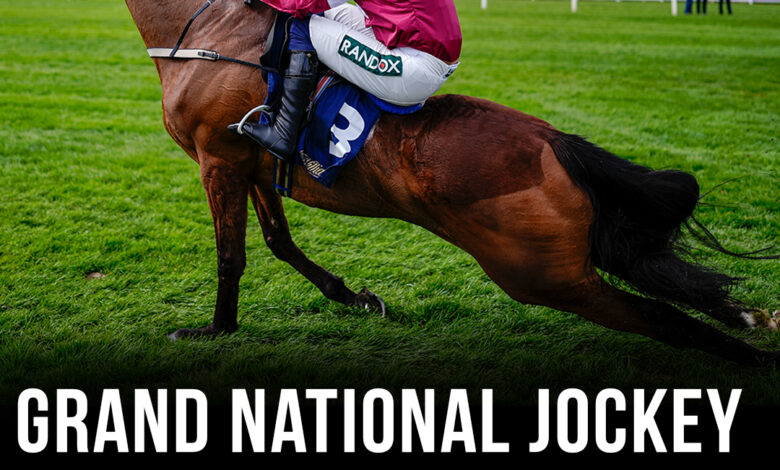
The final, agonizing moments of Gold Dancer’s last race have shaken the sporting world and reignited fierce debate over the ethics of modern horse racing. In a scene described as both horrifying and deeply tragic, the seven-year-old gelding dragged his failing hind legs across the finish line at the Aintree Festival before collapsing moments later. The incident, which occurred on April 10, 2026, came just a day before another horse, Get On George, lost his life at the same venue—adding to a growing death toll that has intensified calls from animal welfare groups to end the sport altogether. Spectators looked on in stunned silence as Gold Dancer pushed forward under the whip, despite a disastrous final jump that had already inflicted catastrophic damage—unseen by the crowd at the time.
The tragedy unfolded at the last fence of the Mildmay Novices’ Chase. Gold Dancer had been running strongly and appeared on course for victory until he reached the final obstacle. Upon landing, his hind legs slipped sharply, splaying outward in a disturbing display that signaled severe injury. To experienced observers, it was a moment that should have halted the race immediately. Yet in the high-pressure environment of Aintree, the momentum continued. According to James Given, director of equine health and welfare for the British Horseracing Authority, the horse seemed to regain composure quickly, taking a few strides before accelerating toward the finish.
Unaware of the full extent of the injury, jockey Paul Townend urged the horse on, using his whip to maintain the lead. Gold Dancer responded with the determination typical of elite racehorses, crossing the line four lengths ahead. Only after the race ended did the severity of the situation become apparent. Within seconds, the horse lost coordination. Townend dismounted immediately as veterinary teams rushed in, raising screens to shield the public from the unfolding scene.
Behind those screens, the outcome was grim. Gold Dancer had suffered a catastrophic fracture to his lower spine—effectively a broken back sustained during the final jump. The injury was beyond treatment, and the decision was made to euthanize him at the track. Eddie O’Leary, racing manager for the owners, expressed sorrow but defended the jockey, stating that the horse had felt balanced and responsive during the run-in. Officials later concluded that the horse showed no obvious signs of distress while galloping straight to the finish.
Despite this, the lack of disciplinary action has done little to quell public outrage. Animal welfare organizations, including PETA, argue that Gold Dancer’s death highlights the inherent dangers of the sport. They contend that the combination of speed, distance, and large obstacles creates conditions where horses are pushed beyond safe limits. Data from Animal Aid indicates that dozens of horses have died at Aintree since 2000, reinforcing claims that such incidents are not rare anomalies but predictable outcomes of the sport’s structure.
The conversation has since expanded beyond this single incident to the broader ethics of jump racing. Critics argue that similar levels of harm in other contexts would be considered outright animal cruelty. Advocacy groups are calling for boycotts and urging the public to reconsider their support. They claim that tradition and spectacle often mask the risks and suffering involved.
Statistics paint a sobering picture. While racing authorities note improvements in safety over time, jump racing still carries a significantly higher fatality rate than flat racing. At major events like Aintree, multiple fatalities in a single weekend are not uncommon. For critics, this raises a fundamental question: can any level of entertainment justify such risks?
For those who witnessed it, the image of Gold Dancer struggling to the finish line remains deeply unsettling. It has become a powerful symbol of the physical toll placed on racehorses and the pressures of competition. The incident has prompted renewed discussion about whether rules, track design, or welfare measures need urgent reform—or whether the sport itself can continue in its current form.
As the racing world reflects, the deaths of Gold Dancer and Get On George cast a long shadow over the future of the Aintree Festival. Public concern is growing, and calls for change are becoming harder to ignore. Gold Dancer’s final race may come to represent a turning point—one that forces a reckoning between long-standing tradition and evolving attitudes toward animal welfare.