A Night of Music Turns Into a Moment of Cultural Debate
What was expected to be an evening focused on music and celebration quickly took on a more contentious tone. Even before the ceremony’s major awards were announced, Chappell Roan’s bold fashion choice on the red carpet had already ignited widespread discussion online and in entertainment media.
Her striking dress became a lightning rod for commentary, transforming the red carpet from a showcase of style into a broader conversation about artistic expression, public image, and cultural boundaries.
Trevor Noah’s Joke Shifts the Atmosphere
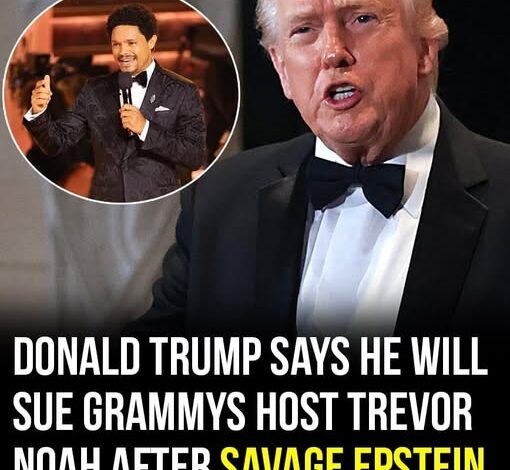
As the ceremony progressed, host Trevor Noah took the stage and delivered a joke that immediately drew strong reactions from the audience.
The punchline referenced both Greenland and Epstein Island—an unexpected pairing that initially triggered laughter inside the venue. However, as the audience and viewers at home reflected on the remark, the humor quickly intersected with more serious undertones.
Noah’s line also mentioned prominent political figures, including Donald Trump and Bill Clinton, while referencing recently discussed materials connected to Jeffrey Epstein. While the room responded with laughter in the moment, the implications of the joke soon sparked broader reactions beyond the event itself.
Humor Meets a Sensitive National Conversation
The timing of the joke added another layer of complexity. Discussions surrounding documents tied to Epstein had already been circulating heavily in news coverage and political commentary.
Because of that context, the remark felt less like a simple comedic aside and more like a reflection of ongoing national debates. At the same time, legal experts and officials have repeatedly emphasized that an individual’s name appearing in such documents does not necessarily indicate involvement in wrongdoing.
This tension—between satire and the seriousness of the subject—quickly fueled conversation across social media and news outlets.
Trump Responds Strongly
Soon after the moment gained attention, Donald Trump responded publicly.
Speaking to reporters while traveling on Air Force One and later addressing the issue online, Trump argued that he was being targeted by what he described as a coordinated attempt to damage his reputation.
He suggested that multiple individuals and organizations were participating in what he characterized as a political smear effort.
Criticism Directed at Several Figures
In his remarks, Trump criticized several people he believed were contributing to the situation. Among them was author Michael Wolff, as well as representatives connected to Epstein’s estate.
He also blamed political opponents he described as part of the “radical left” and directed particular criticism toward Trevor Noah for the joke made during the ceremony.
Trump indicated that the situation could potentially lead to legal action, warning that lawsuits might be pursued in response to what he sees as defamatory claims.
A Reflection of Broader Political Divisions
The exchange quickly spread across media platforms, reinforcing existing divisions in the political and cultural landscape.
For some observers, the moment illustrated how comedy and satire often intersect with serious political controversies. For others, it raised questions about where the boundaries should lie when sensitive issues are referenced in entertainment settings.
Ultimately, the incident highlighted the increasingly blurred line between pop culture events, political discourse, and public accountability.
What began as a night intended to celebrate music soon evolved into another chapter in the ongoing debate over media influence, political narratives, and the role of humor in addressing controversial topics.