Donald Trump’s message arrives at a moment when the global energy conversation is no longer confined to diplomatic briefings or strategic think tanks. For ordinary people, the consequences are visible every time they pull up to a gas pump and watch the numbers climb higher than they did the week before. Rising fuel prices have a way of transforming distant geopolitical tensions into immediate household concerns. What once sounded like a far-off maritime dispute is now felt directly in wallets, grocery bills, transportation costs, and the broader price of living.
At the center of the growing tension is the Strait of Hormuz, one of the most critical chokepoints in the global energy system. Roughly a fifth of the world’s traded oil passes through this narrow corridor each day, making it a vital artery for international commerce. Recent reports of naval mines appearing in surrounding waters, combined with delays and rerouting of oil tankers, have transformed the strait from a routine shipping route into a potential flashpoint. Maritime security concerns have intensified after warnings from Iran that vessels connected to United States or its allies could face retaliation if tensions escalate further.
In practical terms, that means shipping companies are becoming increasingly cautious, insurers are raising premiums for vessels passing through the region, and energy markets are reacting with volatility. Each small disruption—whether a delayed tanker, a military patrol, or a diplomatic threat—sends ripples through global oil prices. Those ripples quickly turn into waves felt by drivers, airlines, and industries that depend heavily on fuel.
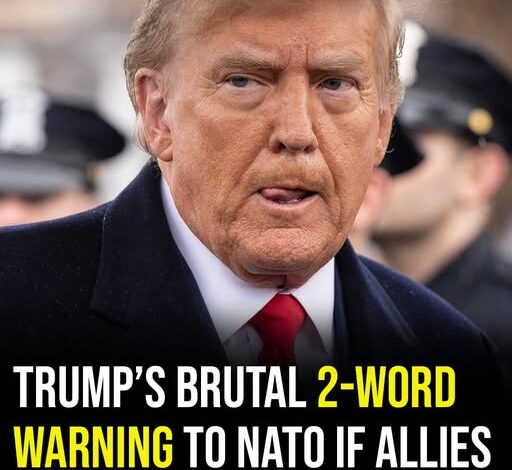
Against this tense backdrop, Trump has also directed attention toward the role of long-standing Western alliances, particularly the North Atlantic Treaty Organization. By publicly questioning whether NATO partners would stand firmly beside the United States during a potential crisis in the region, he has revived a debate that has existed within the alliance for years: how responsibilities and risks should be shared among member states.
Trump’s comments appear designed to apply pressure. By highlighting what he perceives as hesitation among some allies, he is signaling that collective security commitments should translate into concrete support when strategic interests—like protecting shipping lanes—are at stake. The argument is that if global trade and energy supplies depend on open waterways, then maintaining that stability should be a shared burden, not one carried primarily by Washington.
However, critics warn that the strategy carries its own risks. Publicly challenging allies can sometimes produce the opposite of the intended effect, especially if governments feel they are being pushed into confrontation before diplomatic options have been fully explored. In times of crisis, alliances rely heavily on trust, coordination, and carefully calibrated messaging. When disagreements spill into public view, they can expose fractures that adversaries might exploit.
Meanwhile, the situation at sea continues to shape the larger narrative. The Strait of Hormuz is not merely a narrow stretch of water on a map; it is one of the most strategically significant passages in the modern world. A disruption there could ripple through global supply chains, push energy costs higher, and intensify economic pressures already affecting many countries.
As oil prices edge upward and tensions simmer across the region, the question facing policymakers is becoming increasingly complex. It is no longer only about safeguarding a shipping lane or deterring potential attacks. The deeper challenge is whether the international alliances built over decades to manage crises like this can withstand the strain of political pressure, economic anxiety, and shifting global power dynamics.
In that sense, the unfolding moment is about more than tankers, mines, or military patrols. It is a test of how nations cooperate when vital interests collide. The outcome will determine not just the security of a single waterway, but the resilience of the partnerships that have long been expected to keep such crises from spiraling into something far larger.