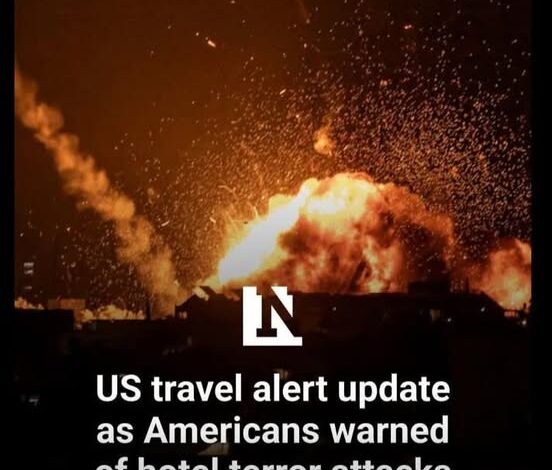
The international security environment has entered a period of heightened uncertainty following the emergence of direct military tensions involving the United States, Israel, and Iran. In early March 2026, the U.S. Department of State issued urgent travel advisories that go beyond routine warnings, reflecting growing concerns about the safety of American citizens overseas. Among the most striking elements of these alerts is a warning about international hotels—long viewed as safe havens for travelers—which officials now believe could become potential targets in retaliatory attacks.
The current crisis began in late February 2026 after coordinated military strikes occurred on Iranian territory. The situation has since evolved into a broader regional confrontation. U.S. authorities now warn that Iranian-backed groups and allied militias may shift their focus toward so-called “soft targets.” Unlike heavily fortified military bases or diplomatic compounds, civilian locations such as hotels, shopping areas, and transportation hubs are often more accessible and symbolically powerful targets.
For the millions of Americans who travel internationally each year, the newly issued “Worldwide Caution” advisory is a reminder that geopolitical conflicts can quickly alter the risk landscape abroad. In certain areas, particularly across the Middle East, the advisory suggests that travelers should reconsider their presence or make plans to leave if conditions worsen.
Heightened Risk in the Gulf Region
Security concerns are especially pronounced in the Gulf Cooperation Council (GCC) region, including countries such as the United Arab Emirates, Qatar, and Bahrain. These nations have long been viewed as relatively stable hubs for tourism, business, and international conferences. However, regional tensions have created a more unpredictable environment.
Cities like Dubai and Abu Dhabi, known for their large luxury hotel districts, are central to global travel and commerce. Their prominence and high international visibility also make them potential symbolic targets in times of conflict. Authorities warn that attacks aimed at civilian infrastructure could be designed to generate global attention while disrupting economic stability.
Evacuation Warnings and Travel Restrictions
For Americans currently in high-risk areas, the State Department has issued stronger guidance than usual. In several locations, citizens are being advised to depart as soon as commercial travel options remain available. Level 4 travel advisories—“Do Not Travel”—have been issued for multiple countries due to the rapidly changing security situation.
Air travel disruptions are already complicating departure plans. Airlines operating in the region have suspended or rerouted flights because of airspace closures and security concerns, reducing the number of available evacuation routes. Travelers who cannot immediately leave have been advised to follow shelter-in-place precautions and remain alert for emergency alerts or instructions from local authorities.
Additional Security Concerns
Beyond the risk of direct attacks, officials also warn about the potential for civil unrest, kidnappings, and extremist violence in areas affected by instability. In countries such as Pakistan, for example, the U.S. government has authorized the departure of non-essential personnel and family members due to escalating security risks.
Public locations—including shopping areas, transportation hubs, and hotels—are specifically highlighted as places where attacks could occur without warning. Because conditions can change rapidly, areas considered safe one day may become unsafe the next.
Impact on American Travelers
The evolving situation has created anxiety among American expatriates and travelers abroad. U.S. citizens are being advised to maintain a low profile, avoid displaying clear markers of nationality, and remain aware of their surroundings. Security experts also recommend varying routines and avoiding predictable travel patterns in high-risk regions.
This guidance reflects a broader shift in international travel dynamics. For many years, globalization made international movement relatively seamless. In today’s environment, geopolitical tensions can quickly transform previously routine destinations into areas of concern.
Economic and Industry Effects
The travel advisories are also affecting the global tourism and hospitality sectors. Stock prices for major travel companies have fluctuated as investors react to the uncertainty. At the same time, insurers have begun reassessing war-risk coverage for certain regions, making it more difficult and expensive for businesses to operate in conflict-adjacent zones.
Hotels themselves are adapting by strengthening security protocols, increasing surveillance, and reviewing emergency procedures for guests and staff.
Preparing for Uncertainty
With the conflict still evolving, officials emphasize the importance of preparation and communication. American citizens abroad are encouraged to register with the Smart Traveler Enrollment Program (STEP) so that the U.S. government can provide updates and emergency notifications. Travelers are also advised to maintain contact plans with family members and monitor official advisories closely.
While the future trajectory of the crisis remains uncertain, the current alerts underscore how quickly global security conditions can change. For travelers and expatriates alike, vigilance and awareness are now essential as governments work to navigate a tense and rapidly developing geopolitical situation.