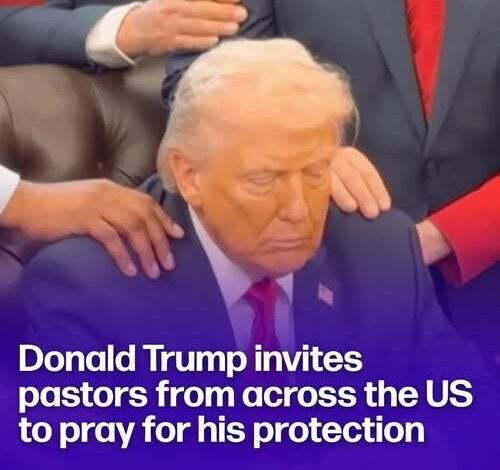
In that now widely shared Oval Office moment, the image of pastors placing their hands on a sitting president during a tense international standoff became more than just a photograph—it became a powerful symbol interpreted in very different ways. For supporters, the scene represented humility in leadership at a moment when American troops and regional allies were facing real and immediate threats across the Middle East. To them, the prayer for wisdom, protection, and clarity wasn’t political theater; it was a sincere appeal for guidance during a time when every decision carried enormous consequences. In their eyes, it showed a leader acknowledging the weight of responsibility and seeking something greater than himself while navigating a dangerous global situation.
For others watching, however, the moment stirred concern. Critics questioned the blending of visible religious authority with the gravity of military and diplomatic decision-making. They saw the quiet circle of prayer in the Oval Office as sharply at odds with the reality unfolding overseas—missile strikes, rising tensions, and the possibility of broader conflict. To them, the image raised difficult questions about the role of faith within government power, particularly when decisions could shape the lives of millions beyond U.S. borders.
Yet beneath both reactions—whether praise or criticism—there was a shared undercurrent of anxiety. The photograph captured more than a political gesture; it reflected the intense pressure surrounding a moment when lives, alliances, and regional stability hung in the balance. Every move made in Washington had the potential to echo across an already fragile region, where long-standing tensions could quickly ignite into something far larger.
In that sense, the image became a mirror for the nation’s divisions and its hopes at the same time. Some saw faith and humility guiding leadership through crisis. Others saw a troubling symbol of blurred boundaries between belief and state authority. But nearly everyone could recognize the gravity of the moment itself: a reminder that in times of global uncertainty, the choices made behind the closed doors of power carry consequences far beyond the room where they begin.