The decision to authorize military strikes against Iran has triggered not only a new wave of tension in the Middle East but also a significant fracture within the political movement that helped define Donald Trump’s rise to power. For years, the foundation of Trump’s appeal rested heavily on a promise that resonated deeply with many of his supporters: the United States would avoid new foreign wars, prioritize domestic interests, and refuse to sacrifice American lives in distant conflicts that seemed disconnected from national security.
That message—often summarized by the slogan “America First”—became one of the central pillars of the political identity surrounding Trump and the broader MAGA movement. It was a rejection of what many supporters viewed as decades of costly overseas interventions. During campaigns and speeches, Trump repeatedly emphasized that previous administrations had entangled the country in conflicts that drained resources and cost American lives without delivering clear benefits.
The recent strike on Iranian targets has therefore ignited an intense debate among some of Trump’s most visible allies and commentators. For critics within his own political sphere, the move appears to contradict the anti-interventionist posture that helped build his coalition.
Prominent media personality Tucker Carlson, who has often been sympathetic to Trump’s political agenda in the past, sharply criticized the decision, describing the attack as “disgusting and evil.” His comments quickly circulated across social media and political commentary outlets, fueling discussion among conservative audiences about whether the strike represented a departure from the movement’s original principles.
Other voices within the conservative media landscape echoed similar concerns. The Hodge twins, widely known online for their political commentary and support of Trump in previous years, described the action as the “biggest fall from grace” they had witnessed from a leader they had once strongly defended. Their criticism highlighted a sense of betrayal felt by some supporters who believed Trump’s presidency would mark a decisive break from the interventionist policies associated with earlier administrations.
Representative Marjorie Taylor Greene also entered the debate, reacting strongly to a public opinion poll that asked Americans about acceptable levels of U.S. casualties in a potential conflict. Greene’s comments reflected a broader unease among segments of the political base who fear that escalation with Iran could draw the United States into a prolonged and costly confrontation.
These reactions strike at the heart of Trump’s political brand. The MAGA movement has long framed itself as skeptical of foreign entanglements and deeply protective of American service members. Many supporters rallied behind Trump precisely because he promised to avoid the kinds of wars that defined earlier decades of U.S. foreign policy.
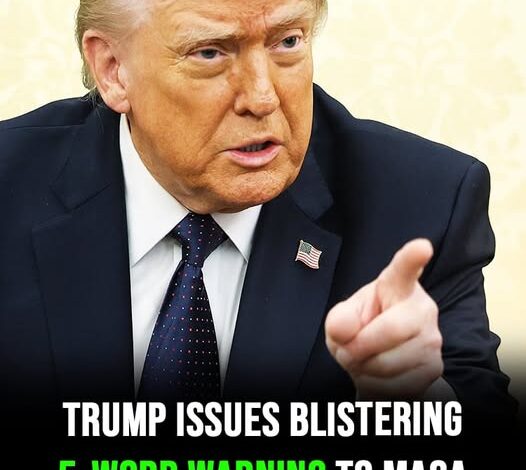
At the same time, Trump himself has responded to the criticism with characteristic defiance. Rather than acknowledging a contradiction, he has framed the strikes as a necessary step to prevent Iran from developing nuclear weapons. In his view, the action was not a departure from his principles but a strategic decision aimed at protecting American security and maintaining global stability.
Speaking to supporters and reporters, Trump argued that decisive action now could prevent a far larger and more dangerous conflict in the future. He described the strike as a temporary but necessary “detour,” suggesting that failing to confront Iran’s nuclear ambitions could ultimately lead to greater instability.
Trump also dismissed concerns that the move would permanently alienate his political base. According to him, the MAGA movement remains fundamentally tied to his leadership. “MAGA is Trump,” he said, insisting that the majority of his supporters continue to back his decisions and trust his judgment on national security.
In his remarks, Trump suggested that critics within the movement often express frustration in the moment but eventually return to supporting him. “They always come back,” he said, implying that the internal backlash would fade once supporters recognized what he views as the strategic necessity of the strike.
Whether that confidence proves accurate remains an open question. Political movements built around a central message can face challenges when actions appear to diverge from that message. For some supporters, the idea of military escalation—even in the name of deterrence—conflicts with the anti-war sentiment that originally drew them to Trump’s leadership.
The broader geopolitical context further complicates the situation. Tensions with Iran have long been one of the most volatile elements of Middle Eastern politics. Any military action in the region carries the risk of retaliation, regional escalation, or the involvement of additional international actors.
For policymakers and analysts, the debate now centers on whether the strike will deter Iran’s nuclear ambitions or instead provoke a wider confrontation. Supporters of the operation argue that demonstrating strength is necessary to prevent adversaries from testing American resolve. Critics worry that even limited strikes can spiral into extended conflicts that are difficult to control.
Within Trump’s political coalition, the discussion reflects a deeper ideological divide between two strands of conservative thought. One emphasizes aggressive deterrence and the use of force to prevent emerging threats. The other prioritizes avoiding foreign entanglements and focusing national resources on domestic priorities.
Both perspectives have existed within the movement for years, but the strike has brought their tension into sharper focus than before.
Public opinion will likely play a decisive role in shaping how this internal conflict evolves. If the situation with Iran stabilizes quickly and avoids significant American casualties, some critics may soften their opposition. However, if the conflict expands or results in a sustained military engagement, the fracture within Trump’s base could deepen.
For now, the debate continues to unfold across media platforms, political commentary shows, and social networks. Supporters and critics alike are grappling with the same fundamental question: whether the strike represents a strategic necessity consistent with Trump’s leadership style or a turning point that challenges the movement’s original promise.
Trump, for his part, remains confident that his supporters will ultimately stand behind him. But the stakes surrounding the decision—both politically and militarily—mean that the outcome of this moment could shape not only international relations but also the future direction of the political movement that has defined his influence for nearly a decade.