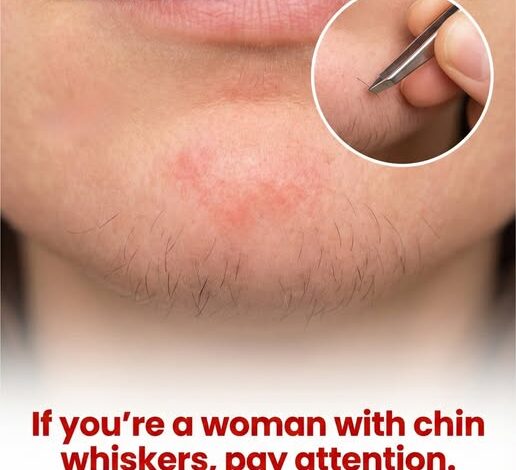
Many women experience a quiet moment of surprise the first time they notice a coarse hair appearing on the chin. It can feel unexpected, especially if facial hair has never been part of one’s usual appearance. Yet this experience is far more common than people often realize. In reality, occasional chin hairs are a normal biological occurrence for many women and are usually tied to natural hormonal changes, genetics, and the body’s normal aging process rather than any serious health problem.
Hair growth patterns are influenced heavily by hormones—specifically a group called androgens, which include hormones such as testosterone. Although androgens are often associated with men, they are naturally present in women as well and play important roles in the body. Hair follicles, particularly those on the face, can be sensitive to even small shifts in these hormone levels. When the balance between estrogen and androgens changes slightly, the fine, soft hairs that normally exist on the face (known as vellus hair, sometimes called “peach fuzz”) may gradually become thicker and darker. These thicker strands are called terminal hairs, and they often appear in areas like the chin, jawline, or upper lip.
For many women, these hormonal shifts occur gradually over time. One of the most common periods when facial hair becomes more noticeable is during perimenopause and menopause. As estrogen levels naturally decline with age, the relative influence of androgens increases. This doesn’t mean androgen levels necessarily rise dramatically—it simply means the balance shifts enough that hair follicles respond differently.
Other life changes can also influence hormone balance. For example, starting or stopping hormonal birth control may temporarily alter the body’s hormone levels. Changes in thyroid function can also affect hair growth patterns in some people, since the thyroid helps regulate metabolism and many other bodily systems.
In most cases, finding a few stray chin hairs is simply a cosmetic change and not a sign of illness. Genetics plays a large role as well. Some families naturally tend to have thicker or darker body hair, and women may notice similar patterns appearing as they get older. If relatives such as mothers, aunts, or grandmothers experienced similar changes, it is likely part of normal hereditary traits.
Occasionally, more noticeable or widespread facial hair growth can be linked to medical conditions that affect hormone levels. One of the most commonly discussed conditions is polycystic ovary syndrome (PCOS). PCOS can lead to higher androgen levels in some individuals, which may cause increased hair growth on the face or body. However, PCOS usually involves a combination of symptoms rather than a single sign. These can include irregular menstrual cycles, persistent acne, or metabolic concerns.
Because of this, the presence of one or two chin hairs alone is very unlikely to indicate a medical disorder. Doctors typically evaluate a pattern of symptoms rather than isolated cosmetic changes. If someone does notice sudden, rapid, or extensive facial hair growth along with other physical changes, it can be helpful to consult a healthcare professional to rule out underlying hormonal conditions.
As conversations around health and body awareness become more open, many people are recognizing that small physical changes like this are simply part of the body’s natural evolution. Bodies change over time in response to hormones, stress, environment, and age. Learning about these processes can help replace anxiety or embarrassment with understanding.
Managing chin hair is largely a matter of personal preference. Some women choose to remove the hairs as part of their regular grooming routine. Methods such as tweezing, waxing, threading, or shaving are common and generally safe when done carefully. For those who want longer-term reduction, professional treatments such as laser hair removal or electrolysis can target hair follicles and reduce regrowth over time.
Others may simply leave the hairs alone, especially if they are few and not bothersome. The key point is that the choice is entirely personal. Modern health education increasingly emphasizes body autonomy—the idea that individuals should feel comfortable making decisions about their bodies without shame or social pressure.
The broader lesson behind something as small as a chin hair is actually quite meaningful. It highlights how the human body is constantly adapting and changing. Rather than remaining static, our biological systems respond continuously to age, hormones, and environment.
For many women, the first time they notice a chin hair may feel like a small turning point, a reminder that the body evolves over time. But with accurate information and perspective, what once might have seemed alarming becomes simply another routine detail of human biology.
Ultimately, a stray chin hair is usually just that—a minor, normal part of the body’s ongoing changes. Understanding the science behind it allows people to approach the experience with confidence rather than concern. As conversations around women’s health become more open and informed, experiences that once felt isolating are increasingly recognized as ordinary aspects of the human experience.