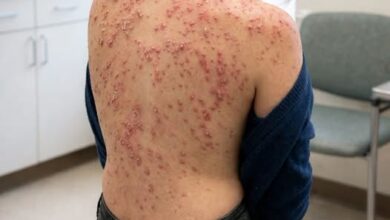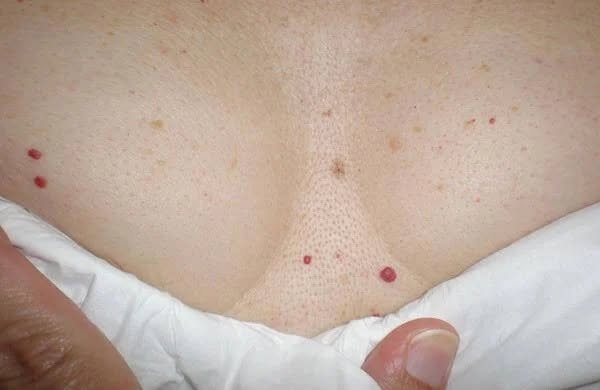
You’ve probably noticed them at some point—tiny, bright red dots appearing almost out of nowhere on the skin.
On the arms. The chest. The back. Sometimes even the neck or shoulders.
At first glance, they don’t seem particularly alarming. They can look like small moles, tiny blood spots, or little marks left behind by irritation.
Many people ignore them for years.
Others only notice them when they suddenly appear in larger numbers.
And that’s when the questions begin.
What are they? Where did they come from? And should you be worried?
The Most Common Explanation: Cherry Angiomas
In most cases, these red spots are known as cherry angiomas.
They are small, benign growths made up of clusters of tiny blood vessels located just beneath the surface of the skin. Despite their noticeable appearance, they are generally harmless and extremely common.
Doctors also refer to them by several other names, including:
- Senile angiomas
- Capillary angiomas
- Campbell-De Morgan spots
- Microangiomas
They are typically very small—often just 1 to 2 millimeters in diameter—though some may gradually grow larger or become more raised over time.
Their color can range from bright red to dark red or even purplish tones, depending on the density of the blood vessels involved.
Most importantly, they are non-cancerous and usually do not require any medical treatment.
Millions of people develop them naturally throughout their lives.
Why Do These Red Spots Appear?
While the exact cause isn’t fully understood, researchers and dermatologists have identified several strong contributing factors.
1. Natural Aging
The most common factor is simply time.
Cherry angiomas become increasingly common after the age of 30 or 40. As the skin ages, blood vessels can become more fragile and prone to dilation.
For many people, these spots gradually increase in number as part of the normal aging process.
2. Genetics
Family history also plays a significant role.
If close relatives have cherry angiomas, there is a higher likelihood of developing them as well. In some cases, people notice them much earlier in life due to inherited vascular tendencies.
3. Sun Exposure
Long-term exposure to ultraviolet (UV) radiation may contribute to their development.
Over time, sun exposure can:
- Weaken skin structure
- Accelerate aging (photoaging)
- Affect small blood vessels
- Increase visible vascular changes
This is why angiomas are often found on areas that receive regular sun exposure, such as the chest, shoulders, arms, and upper back.
4. Hormonal Changes
Hormonal fluctuations can also influence their appearance.
Some individuals notice new red spots during periods of hormonal change, including pregnancy. Shifts in circulation and hormone levels may affect how small blood vessels behave under the skin.
5. Sudden Appearance of Multiple Spots
While cherry angiomas are typically harmless, a sudden eruption of many new spots over a short period is less common and may warrant attention.
In rare cases, this pattern—sometimes called eruptive angiomas—has been associated with:
- Certain medications
- Chemical exposure
- Liver-related conditions
- Other underlying health changes
It does not automatically indicate a serious problem, but it is a good reason to consult a healthcare professional for evaluation and reassurance.
How Doctors Identify Them
In most situations, diagnosis is straightforward.
A dermatologist can usually identify a cherry angioma with a quick visual examination. Their appearance is often distinctive enough that no additional testing is required.
However, they may sometimes need to distinguish them from other skin conditions such as:
- Petechiae (tiny blood spots under the skin)
- Certain moles
- Vascular malformations
- Rare skin tumors or lesions
If a spot changes rapidly, bleeds, becomes painful, or looks unusual, further evaluation is recommended.
When Should You Be Concerned?
Although cherry angiomas are usually harmless, certain changes should not be ignored.
It’s a good idea to seek medical advice if you notice:
- Rapid growth of a spot
- Frequent bleeding
- Pain or tenderness
- Changes in color or shape
- Irregular or uneven borders
- Sudden appearance of many new spots
These signs don’t necessarily indicate something serious—but they do justify a professional check to rule out other conditions.
Can They Be Removed?
Yes.
Even though they are harmless, many people choose removal for cosmetic reasons, especially when they appear on visible areas like the face, neck, or chest.
Dermatologists may use several safe procedures, including:
- Laser therapy
- Electrocautery (burning the vessel)
- Cryotherapy (freezing)
- Minor surgical removal
These treatments are typically quick and minimally invasive, often completed in a single visit.
Is It Possible to Prevent Them?
There is no guaranteed way to completely prevent cherry angiomas, especially since genetics and aging play such a strong role.
However, healthy skin habits may help slow overall skin aging and support vascular health:
- Wearing sunscreen daily
- Limiting excessive sun exposure
- Staying well hydrated
- Eating antioxidant-rich foods
- Avoiding smoking
- Maintaining a balanced lifestyle
While these steps won’t eliminate the possibility of developing angiomas, they can support overall skin health over time.
The Bottom Line
Cherry angiomas are one of the most common and harmless skin changes people experience as they age.
Although their sudden appearance can be surprising, they are usually benign and not a cause for concern.
Still, the skin often reflects what is happening beneath the surface of the body. Paying attention to new or changing spots is always a smart habit—not out of fear, but out of awareness.
Because most of the time, these tiny red dots are nothing more than a natural part of aging skin.
But occasionally, they can serve as a gentle reminder to take a closer look at your overall health.
And that’s why noticing them matters.