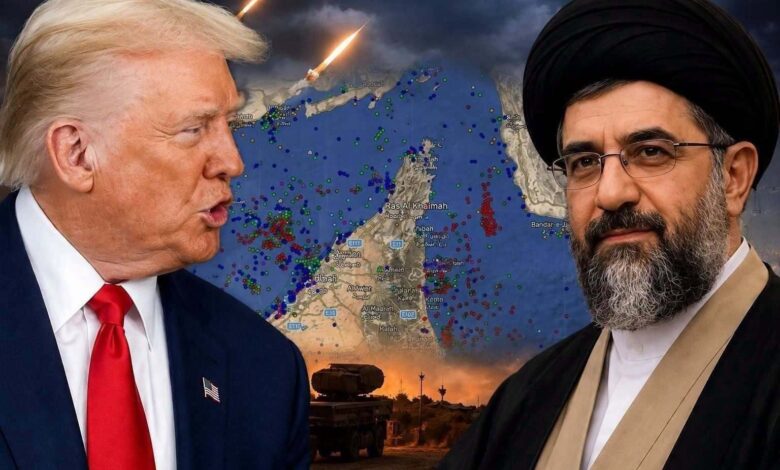
U.S. officials say there are growing concerns that Russia is now providing Iran with intelligence related to the location and movements of American forces across the Middle East. If accurate, the development would mark a notable expansion of Moscow’s indirect involvement in regional tensions and could further complicate an already fragile security environment.
According to these officials, the information reportedly includes details about the positioning of U.S. naval vessels, military aircraft, and radar installations operating throughout the region. Such intelligence, even if shared in fragments or indirectly, could improve Iran’s ability to monitor American military activity more closely, anticipate operational patterns, and better understand how U.S. forces are deployed across key strategic areas such as the Persian Gulf and surrounding airspace.
While there is no indication that Russia is directly participating in any military operations or strikes, officials caution that this type of support could still have significant consequences. By improving Iran’s situational awareness, Moscow could be indirectly influencing how Tehran assesses risks, plans potential responses, or interprets U.S. movements during periods of heightened tension. In effect, even without direct engagement, Russia could become a factor shaping the strategic calculations on the ground.
The timing of these allegations is particularly sensitive. The Middle East remains highly volatile, with U.S. forces stationed across multiple countries facing persistent threats from missile strikes, drone attacks, and actions carried out by Iran-aligned groups. In such an environment, even small improvements in targeting intelligence could increase the danger to personnel and assets, while also raising the risk of miscalculation between opposing forces operating in close proximity.
U.S. officials also emphasize that the concern is not only about immediate tactical advantages, but about the broader strategic implications. If Iran is receiving more precise or timely information about American deployments, it could adjust its behavior in ways that make deterrence more difficult. This might include altering the timing or location of operations by its allied groups, or strengthening defensive and offensive postures in areas where U.S. forces are most active.
Moscow has not publicly responded to these claims, and there is currently no independent confirmation that Russian intelligence services are actively sharing such data. Nonetheless, the allegations are being taken seriously in Washington, where analysts view them as part of a wider pattern of increasing geopolitical competition between the United States and Russia that extends beyond the war in Ukraine.
Officials also note a contrast in the behavior of other major powers. China, for instance, is not currently believed to be offering similar operational intelligence to Iran. While Beijing maintains diplomatic and economic relations with Tehran, its involvement appears to be more restrained in military terms. Russia, by comparison, is seen as potentially more willing to engage in forms of cooperation that could have direct implications for U.S. military operations abroad.
If the reports prove accurate, the situation could force changes in how U.S. forces operate across the region. That might include altering deployment patterns, increasing operational security, limiting exposure of movement data, and adopting more cautious planning procedures to reduce the risk of sensitive information being exploited. Even the perception that such intelligence is being shared could lead to adjustments in how openly or predictably U.S. assets move.
Beyond the immediate military concerns, there is also a broader diplomatic dimension. Analysts warn that any confirmed Russian role in providing intelligence to Iran could deepen global tensions and further link separate regional conflicts into a wider strategic confrontation involving multiple great powers. What begins as indirect assistance in one theater could ripple outward, affecting negotiations, alliances, and crisis management in others.
Ultimately, the concern among U.S. officials is that the Middle East crisis is no longer being shaped solely by local actors. Instead, it may be increasingly influenced by external powers seeking to gain leverage against the United States without entering open conflict. If that trend continues, even indirect actions like intelligence-sharing could carry consequences that extend far beyond the immediate battlefield, raising the risk of escalation in an already unstable region.