After my husband was hospitalized, my five-year-old mentioned a “new mommy” in his life — and what I uncovered next completely stunned me

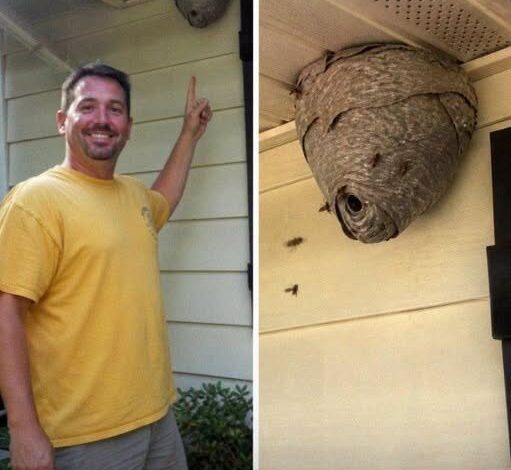
My husband came terrifyingly close to dying after being attacked by a swarm of aggressive wasps.
One moment, we were standing in our backyard on what should have been an ordinary Sunday morning. The next, Daniel was on the ground, covered in stings, gasping for air while I screamed into the phone for help. By the time the ambulance pulled away from our house, our five-year-old daughter, Evie, was sobbing in the doorway, and I was shaking so badly I could barely stand.
I thought that would be the worst moment of my life.
I was wrong.
Overnight, everything became my responsibility. I had to work, answer calls from doctors, manage insurance forms, take care of our home, feed the dogs, comfort our daughter, and sit beside my husband’s hospital bed pretending I was not falling apart. I was so exhausted that I sometimes forgot whether I had eaten, slept, or even changed clothes.
Then, one evening, Evie looked up at me with a quiet seriousness no child should have and said, “Another mommy kisses Daddy when you’re at work.”
My stomach dropped.
For one horrifying second, the entire world narrowed to those words.
Another mommy.
Kisses Daddy.
At the hospital.
I thought I was about to uncover an affair while my husband lay weak and injured in a hospital bed. I drove there with my hands clenched around the steering wheel, my heart hammering against my ribs, certain I was about to find another woman sitting beside him.
But what I found was far worse than betrayal.
It began, like so many disasters do, with something small.
The wasp nest first caught my attention on a warm afternoon when I opened the back door to let our dogs outside. A low, angry buzzing drifted from the far side of the house, sharp enough to make me pause. When I stepped onto the porch and looked toward the eaves near the shed, I saw it.
A gray, swollen nest tucked beneath the roofline.
It was bigger than I expected. Bigger than any nest I had ever seen that close to a home.
Evie had already become afraid of that part of the yard. She refused to play near the fence and cried whenever one of the wasps came near the patio.
“That nest has to go,” I told Daniel that evening. “Those wasps are huge, and Evie is terrified.”
Daniel barely looked up from his phone.
“Don’t worry,” he said. “I’ll handle it.”
I assumed he meant he would call someone.
That was my mistake.
By then, I should have known better than to trust Daniel’s confidence. He was a good man in many ways, but he had a stubborn streak that could turn dangerous. He hated admitting he needed help. He hated paying professionals for something he believed he could learn from a three-minute video online. Plumbing, wiring, car repairs, pest control—he always thought he could figure it out.
Most of the time, his mistakes were inconvenient.
This time, they nearly killed him.
Early Sunday morning, while the sky was still pale and the house was quiet, Daniel shook me awake.
“I found an easy solution online,” he said.
I blinked at him, still half-asleep.
“For what?”
“The nest. The video said you spray it before sunrise while they’re all inside. They’re slower when it’s cool. Then you knock it down. Simple.”
I sat up immediately.
“Daniel, no. We should call a professional.”
He sighed like I was being ridiculous.
“For a wasp nest?”
“It’s not just a wasp nest,” I snapped. “It’s huge. And you’re allergic.”
“I’m not that allergic.”
“You carry an EpiPen.”
“That’s just a precaution.”
I stared at him in disbelief.
Looking back, I wish I had fought harder. I wish I had taken the spray can from his hand. I wish I had called someone myself the first day I saw the nest. But regret is cruel because it only becomes clear after the damage is already done.
A short time later, I was standing barefoot in the damp grass, holding the can of spray while Daniel dragged the ladder across the yard.
“Are you absolutely sure this is safe?” I asked.
He smiled at me from the second rung.
“Relax. I know what I’m doing.”
Those were the last calm words I heard from him that morning.
Some memories blur when fear takes over.
Others sharpen until they feel carved into your bones.
I remember the scrape of the ladder against the siding.
I remember the hiss of the spray.
I remember the nest twitching.
Then the buzzing exploded.
It was not the ordinary sound of insects. It was violent, furious, alive. A black, shifting cloud burst from the nest and surged toward Daniel’s face.
“Daniel!” I screamed. “Get down!”
He jerked backward, swatting at his head.
The ladder shifted.
His foot slipped.
For one awful second, he seemed suspended between the wall and the ground.
Then he fell.
The sound his body made when it hit the earth still wakes me up some nights.
The wasps descended on him immediately.
He tried to roll away, but they were everywhere—on his shirt, his neck, his hands, his face. He slapped at them wildly, gasping and choking as he tried to get up. I grabbed the garden hose and sprayed toward him, screaming for him to crawl to the garage.
He made it only a few feet before collapsing onto one knee.
From inside the house, Evie began shrieking.
“Daddy! Daddy!”
“Stay inside!” I screamed.
I dropped beside Daniel, terrified to touch him but more terrified not to. His face was already swelling. His lips looked wrong. His eyes were wide and glassy with panic.
“Look at me,” I begged. “Daniel, stay with me.”
He tried to speak, but only a strained wheeze came out.
My hands shook so hard I nearly dropped the phone while calling 911.
By the time the ambulance arrived, Daniel was barely breathing.
The paramedics moved fast. They gave him medication, loaded him onto the stretcher, and rushed him away while I stood in the driveway covered in grass, water, and terror.
At the hospital, the doctors told me Daniel had suffered a severe allergic reaction along with injuries from the fall. His blood pressure had dropped dangerously low. His airway had started to close. He had bruised ribs, a concussion, and damage to one shoulder. They stabilized him, but he was heavily medicated and barely conscious.
For the first time in our ten-year marriage, I truly believed I might lose him.
I stayed beside his bed that first night, listening to the machines breathe and beep around him. I watched his swollen face, his bandaged arms, the IV lines running into his body, and I kept thinking about our argument that morning.
I should have stopped him.
I should have done more.
By morning, guilt and exhaustion had hollowed me out.
I drove home to shower, get Evie ready for school, feed the dogs, answer work emails, and begin sorting through insurance paperwork. Then I went back to the hospital. Then home again. Then back. Every hour seemed to bring another call, another form, another decision.
By the second day, I no longer felt like a person.
I felt like a machine built only to keep everyone else from falling apart.
That was when Marjorie appeared.
Daniel’s mother walked into the hospital waiting room carrying two coffees and a paper bag filled with sandwiches. She looked more composed than I felt, dressed neatly as always, her silver hair pinned back, her expression soft with concern.
“You look exhausted,” she said.
I gave a weak laugh.
“That obvious?”
“Painfully.”
Then she handed me a coffee and sat beside me.
“Let me help.”
I stared at her, unsure I had heard correctly.
Marjorie and I had never had a dramatic, shouting kind of relationship. Our tension was quieter than that. It lived in small comments and careful smiles. She had a way of making me feel like I was never quite good enough for Daniel. My house was never clean enough. My cooking was too plain. My parenting was too gentle or too strict, depending on the day. She never attacked directly. She simply observed, suggested, corrected.
So when she offered help, I did not know whether to feel grateful or suspicious.
“I can sit with Daniel while you work,” she said. “And I can pick Evie up from kindergarten. You can’t keep doing all of this by yourself.”
The kindness in her voice nearly broke me.
I had been holding myself together with caffeine, fear, and stubbornness. One sincere offer of support made the wall inside me crack.
“Thank you,” I whispered. “I really don’t know how I’m going to get through the week.”
Marjorie squeezed my hand.
“This is what family is for.”
For the first time since the accident, I allowed myself to believe maybe something good could come from all of this. Maybe the fear had softened old resentments. Maybe Marjorie and I could finally become something closer to family than polite enemies.
The next few days were still difficult, but they became manageable.
Marjorie sat with Daniel while I worked. She picked Evie up from school. She sent updates throughout the day.
He managed some soup today.
The swelling is going down.
He asked about you, but I told him you were taking care of everything at home.
Every message made me feel grateful.
Every favor made me trust her a little more.
Evie seemed comfortable with her too. When I picked her up in the evenings, she would tell me Grandma bought her a snack, or Grandma let her watch cartoons, or Grandma took her to see Daddy for a few minutes after school.
I did not love the idea of Evie spending time in the hospital, but Daniel brightened whenever he saw her. And Marjorie assured me the visits were short.
“She needs to see he’s okay,” Marjorie said. “Otherwise her imagination will make it worse.”
That sounded reasonable.
Everything sounded reasonable when I was too tired to question it.
Then, on the sixth evening after the accident, I was helping Evie into her pajamas when she went quiet.
Not sleepy quiet.
Thinking quiet.
She sat on the edge of her bed, clutching her stuffed rabbit, staring down at her feet.
“What’s wrong, sweetheart?” I asked.
She hesitated.
Then she looked up at me with wide, uncertain eyes.
“Mommy?”
“Yes?”
“Are you mad at Daddy?”
My heart tightened.
“No, baby. Why would I be mad at Daddy?”
She shrugged.
“Because another mommy kisses him when you’re at work.”
The room seemed to tilt.
I forced myself to stay calm.
“What did you say?”
Evie’s lower lip trembled, as if she thought she had done something wrong.
“Another mommy kisses Daddy. Grandma said not to tell because it would make you sad.”
A cold wave moved through me.
I sat very still.
“What other mommy?”
“The one with the yellow hair.”
Blonde.
My mind immediately began building a terrible picture.
A woman visiting Daniel while I was at work. Someone Marjorie knew about. Someone she was helping hide from me. Someone kissing my husband while he lay injured and vulnerable in a hospital bed.
I asked Evie a few more gentle questions, but she only repeated the same details. The woman had yellow hair. She kissed Daddy. Grandma told Evie not to say anything.
By the time Evie fell asleep, my hands were trembling.
I wanted to call Daniel, but he was still weak and often asleep by evening. I wanted to call Marjorie, but something stopped me. If she was hiding this, she would only lie.
So I got in the car and drove to the hospital.
Every mile made my anger sharper.
By the time I reached the parking lot, I was no longer exhausted. I was burning.
I walked through the sliding doors, past the front desk, and down the hallway toward Daniel’s room. My shoes sounded too loud against the floor. My chest felt tight. I pictured opening the door and finding some woman leaning over him, touching him, whispering things that belonged to me.
But when I reached his room, I stopped.
The door was partly open.
Inside, Daniel was asleep.
Marjorie stood beside his bed.
And there was a blonde woman with her back to me.
She was not kissing him.
She was holding a syringe.
For a moment, my brain refused to understand what I was seeing.
The woman leaned over Daniel’s IV line with practiced focus while Marjorie stood watch near the curtain. My husband shifted weakly, his face pale, his breathing shallow.
“What are you doing?” I said.
Both women spun toward me.
The blonde woman froze.
Marjorie’s face went white.
For one long second, nobody moved.
Then Marjorie stepped toward me.
“You shouldn’t be here.”
Her voice was not surprised.
It was annoyed.
That frightened me more than anything.
I looked at the syringe in the woman’s hand.
“What is that?”
The blonde woman opened her mouth, but no sound came out.
I reached for the call button beside Daniel’s bed and pressed it over and over.
“Nurse!” I shouted. “Someone get in here!”
Marjorie grabbed my wrist.
“Stop it. You don’t understand.”
I yanked away from her.
“Then explain it.”
Her expression changed. The soft, concerned mother-in-law I had been relying on vanished, and something colder appeared underneath.
“He was going to leave you everything,” she said.
The words hit me like a slap.
“What?”
“Daniel changed his will last year,” she said, her voice shaking now. “Everything goes to you and Evie. The house. The accounts. His father’s property. All of it.”
I stared at her, unable to process what she was saying.
The blonde woman backed toward the door.
A nurse rushed in, followed by another staff member. I pointed at the syringe.
“She was putting something in his IV.”
Everything happened quickly after that.
Security came. The blonde woman was stopped before she reached the elevator. Hospital staff removed the IV line and began checking Daniel. Someone called the police. Marjorie kept insisting it was a misunderstanding, but her calm had cracked. She was crying, then yelling, then trying to blame the blonde woman, who turned out not to be hospital staff at all.
She was a private caregiver Marjorie had hired years earlier for a relative.
Not a nurse.
Not authorized to be there.
And not there to help my husband.
Later, investigators told me the syringe contained medication that could have dangerously slowed Daniel’s breathing, especially in his weakened condition. Had Evie not said what she said, had I waited until morning, had I trusted Marjorie one more night, Daniel might not have survived.
The truth came out in pieces.
Marjorie had been in financial trouble for years. Debts, loans, unpaid taxes—things Daniel had not known the full extent of. She had expected to inherit family property through him someday, or at least believed she could pressure him into helping her. But after Evie was born, Daniel had changed everything legally to protect me and our daughter.
Marjorie saw that as betrayal.
His accident had given her an opportunity.
She had stepped in not out of love, but access.
The updates she sent me were not kindness. They were cover.
And the “other mommy” Evie saw kissing Daniel was not a mistress. It was the blonde woman leaning close to his face, pretending to comfort him, while Marjorie taught my daughter to stay quiet.
That detail still haunts me most.
Not the money.
Not the syringe.
Not even the betrayal.
It was the fact that she looked at my little girl and asked her to carry a secret that could have cost her father his life.
Daniel recovered slowly. Physically, at least.
Emotionally, none of us were the same.
He struggled with guilt for trusting his mother. I struggled with guilt for trusting her too. Evie had nightmares for months, and we had to explain in the gentlest way possible that grown-ups should never ask children to keep scary secrets.
Marjorie was arrested. The blonde woman cooperated with investigators, though I never fully believed she was only following instructions. There were court dates, statements, legal meetings, and painful conversations I still wish we had never needed to have.
But Daniel lived.
That is what I return to when the anger rises.
He lived.
Because our daughter spoke.
Because one small sentence from a five-year-old shattered a lie none of us knew we were living inside.
People sometimes ask if I still think about the wasp nest.
I do.
But not in the way they expect.
The nest was dangerous because we could see it too late and underestimated what was inside. Marjorie was the same. For years, I noticed the buzzing—the criticism, the control, the resentment hidden beneath politeness—but I told myself it was harmless. Family tension. Nothing more.
I was wrong.
Some threats hang in the open.
Others smile at you in hospital waiting rooms and bring you coffee.
Now, when Evie tells me something that sounds strange, I listen. Completely. Immediately. Children do not always understand what they are seeing, but they often know when something feels wrong.
And sometimes, the smallest voice in the room is the one that saves everyone.