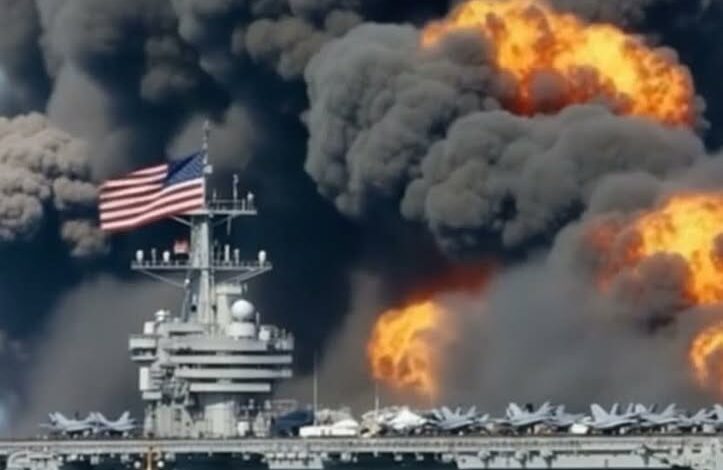
Why Verification Matters During Conflict: Understanding Reports from Beit Shemesh and Beyond
In today’s digital world, information can move faster than almost any official response.
A video can be uploaded within seconds. A photograph can travel across continents before authorities have even reached the scene. A short post with dramatic wording can be shared thousands of times before anyone knows whether it is accurate. During moments of military conflict, this speed can create the illusion of understanding while the facts are still incomplete.
That is why verification matters.
In times of crisis, the public does not merely need information quickly. It needs information that can be trusted. When missiles are launched, sirens sound, buildings are damaged, and civilians are injured, the difference between confirmed reporting and rumor becomes more than a journalistic concern. It becomes a matter of public safety, emotional stability, and historical truth.
Recent reports concerning missile attacks in Israel, including incidents around Beit Shemesh and nearby areas, offer an important reminder of how difficult it can be to separate verified facts from speculation during rapidly developing events.
As tensions involving Israel, Iran, and other regional actors intensified, social media platforms quickly filled with urgent claims. Posts appeared using phrases such as “Breaking News,” “Just Now,” and “Urgent Update.” Some included dramatic images or videos. Others cited unnamed officials, anonymous witnesses, or vague sources without providing clear evidence.
For people watching from afar, the flood of information could feel overwhelming.
Some reports were later confirmed.
Others were incomplete.
Some were misleading.
And some spread before anyone had enough information to know whether they were true.
That is the central challenge of modern conflict reporting. The problem is no longer a lack of information. The problem is the overwhelming amount of information competing for attention before facts can be verified.
Separating Facts from Rumors
During fast-moving crises, rumors often travel alongside legitimate news. In some cases, they travel even faster because they are dramatic, emotional, and easy to share. A short, alarming claim can feel more urgent than a careful statement from officials. A blurry video can seem more convincing than a written report, even when the video’s location, date, and context remain unknown.
This creates a difficult environment for the public.
People want answers immediately.
They want to know where an attack happened, how many people were harmed, whether additional strikes are expected, and whether loved ones may be in danger. That urgency is understandable. But urgency can also make people more vulnerable to misinformation.
In the case of reports from Beit Shemesh and surrounding areas, claims spread quickly across online platforms. Some posts described severe damage. Others made specific assertions about buildings, shelters, casualties, and military developments. Yet not all of those claims were supported by official statements or reliable reporting at the time they appeared.
That does not mean every unverified claim is false.
It means caution is necessary.
Responsible reporting requires a distinction between what is known, what is believed, and what remains under investigation. Without that distinction, speculation can harden into public belief before the evidence is clear.
The Beit Shemesh Attack
One of the most serious confirmed incidents involved a ballistic missile strike in the Beit Shemesh area.
According to verified reports, the attack was connected to Iranian missile launches and caused casualties and injuries. Emergency responders moved quickly to the affected area, while officials began assessing the damage and working to understand the full impact on civilians and infrastructure.
The incident highlighted the danger faced by ordinary people during missile attacks. Civilians do not experience conflict as an abstract political event. They experience it through sirens, shelters, shattered glass, damaged homes, injuries, fear, and loss.
Authorities also pointed to the importance of Israel’s civil defense systems, including warning alerts and shelter infrastructure. These systems are designed to give civilians precious time to take cover when incoming threats are detected. In many cases, such systems can reduce the number of casualties, even when the attack itself causes serious damage.
But civil defense is not a guarantee of complete protection.
Shelters can reduce risk, but they cannot erase it. Warning systems can save lives, but they cannot prevent every injury. Missile defense technologies can intercept threats, but no defense network is perfect under sustained pressure.
The Beit Shemesh incident therefore became both a story of damage and a reminder of the systems designed to limit that damage.
Questions About Structural Damage
As often happens after major attacks, conflicting reports soon emerged about specific damage to nearby structures.
Some social media accounts claimed that a synagogue had collapsed onto a shelter beneath it. The claim spread quickly because it was dramatic, frightening, and emotionally powerful. However, subsequent reporting from established news organizations was more cautious. While damage in and around a synagogue area was reported, definitive confirmation of the exact structural claim remained unclear.
That distinction matters.
Saying that a building was damaged is not the same as saying it collapsed.
Saying that a shelter area was affected is not the same as confirming the full sequence of structural failure.
In a crisis, details like this are not minor technicalities. They shape public understanding of what happened. They influence fear, anger, policy debates, and international reaction. If inaccurate information spreads widely, it can distort the reality of an event before investigators have completed their work.
Responsible reporting does not require ignoring serious claims. It requires labeling them properly.
If something is confirmed, it should be stated clearly.
If something is reported but not independently verified, that should be made clear too.
If authorities are still investigating, the public should be told that the situation remains under review.
Based on currently available information, the most responsible wording is that the missile strike affected an area involving a synagogue and nearby shelter spaces where civilians had sought protection, while further structural assessments and official findings remain important for clarifying the full extent of the damage.
Part of a Larger Regional Crisis
The Beit Shemesh incident did not occur in isolation.
It formed part of a wider regional crisis involving Israel, Iran, and international actors, including the United States and European governments. Military actions, diplomatic negotiations, security concerns, and humanitarian warnings have all shaped the broader situation.
In such an environment, each incident carries significance beyond the immediate location. A missile strike is not only a local emergency. It can become part of a wider military calculation, a diplomatic confrontation, or an international debate about escalation and restraint.
Government officials often emphasize national security and the need to protect civilians from attacks. Humanitarian organizations, meanwhile, continue urging all parties to prioritize civilian protection and avoid actions that deepen suffering. These priorities do not always sit easily beside one another, especially when violence escalates quickly.
That is why accurate reporting becomes even more important.
When the stakes are high, misinformation can inflame tensions, harden public opinion, and make diplomacy more difficult. A false claim can travel across borders. An old video can be treated as new evidence. A rumor can fuel anger before facts are known.
In regional conflicts, information itself becomes part of the battlefield.
The Importance of Civil Defense
Recent events have also renewed attention on emergency preparedness.
Warning sirens, shelters, reinforced rooms, emergency alerts, and missile defense systems all play critical roles in protecting civilians during attacks. These systems are often discussed in technical terms, but their purpose is deeply human: to give people a chance to survive.
The effectiveness of civil defense depends on many factors.
Distance from the impact site matters.
The strength and design of the shelter matters.
The amount of warning time matters.
The scale and intensity of the attack matter.
The ability of civilians to reach safety quickly matters.
Even when all systems function as intended, the danger does not disappear completely. A missile impact can still cause blast damage, falling debris, fires, structural instability, and injuries to people who had only seconds to react.
Still, emergency planners consistently identify shelters and warning systems as essential tools for reducing civilian harm. The Beit Shemesh attack showed why these systems remain vital, while also demonstrating their limits.
Preparedness can save lives.
But it cannot make war safe.
The Social Media Challenge
One of the defining features of modern conflict is the speed at which online content spreads.
During a crisis, users share images, videos, eyewitness claims, maps, casualty figures, and emotional reactions in real time. Some of this material can be valuable. Eyewitnesses may document important events before journalists arrive. Local residents may provide early clues about damage or emergency response.
But social media also creates serious risks.
Old footage can be presented as new.
Images from unrelated conflicts can be misidentified.
Videos can be shared without location or date.
Anonymous claims can circulate without evidence.
Rumors can gain credibility simply because they are repeated often.
The more shocking a claim is, the more quickly it may spread. Unfortunately, shocking claims are not always accurate claims.
This is why media literacy is essential during conflict. Viewers should ask basic questions before accepting or sharing information:
Who is the source?
Is the information confirmed by officials or reputable news organizations?
Is the image or video clearly dated and located?
Are multiple reliable outlets reporting the same detail?
Does the post rely on emotional language instead of evidence?
Has the claim changed as more facts emerged?
These questions do not eliminate uncertainty, but they help slow the spread of misinformation.
Why Responsible Reporting Matters
The language used during a crisis can shape public reaction.
A responsible report tells readers what is known and what is not known. It avoids presenting speculation as fact. It uses careful attribution, such as “according to officials,” “emergency services reported,” or “verified reports indicate.” This kind of wording may seem less dramatic, but it protects the public from false certainty.
That does not mean reporting should be vague or passive.
If casualties are confirmed, they should be reported.
If buildings are damaged, that should be stated.
If officials identify the source of an attack, that information matters.
But responsible journalism also recognizes that early reports can change. Initial casualty numbers may be revised. Damage assessments may become more precise. Eyewitness descriptions may be corrected. Military claims may require independent confirmation.
During conflict, accuracy is not a luxury.
It is a responsibility.
Careless reporting can cause panic. It can spread fear among families searching for loved ones. It can deepen hatred. It can create confusion for people trying to understand whether they are safe.
Careful reporting cannot remove the horror of violence, but it can help prevent confusion from making that horror worse.
The Human Cost
Behind every military update and political statement are ordinary people.
The attack in the Beit Shemesh area resulted in loss of life, injuries, and disruption to families and communities. People who had been going about their daily lives were suddenly forced into shelters, emergency rooms, damaged buildings, and moments of fear they may never forget.
This human cost should never be lost beneath arguments about verification.
Verification is not about minimizing suffering.
It is about honoring it accurately.
When lives are lost, those losses deserve to be reported with care. When people are injured, their experiences should not be turned into rumor. When communities are damaged, the facts should be established responsibly so that the public understands what happened without exaggeration or distortion.
The broader facts remain deeply serious.
People were harmed.
Families were affected.
Communities were shaken.
Civilians faced the terrifying reality of missile attacks.
Those truths are powerful enough without the need for unverified embellishment.
Looking Forward
The events surrounding Beit Shemesh demonstrate both the danger of modern warfare and the difficulty of understanding events as they unfold. They show how quickly attacks can become global news, how rapidly rumors can spread, and how important it is to wait for verified information before drawing firm conclusions.
They also highlight the importance of emergency preparedness, responsible journalism, and critical thinking.
For anyone following developments in conflict zones, the most reliable approach remains simple:
Seek information from credible sources.
Treat sensational claims cautiously.
Look for confirmation from official statements and established news organizations.
Recognize that verified facts often emerge more slowly than viral posts.
Distinguish between confirmed reports, eyewitness accounts, and ongoing investigations.
In moments of fear and uncertainty, patience can feel difficult. People naturally want immediate answers. But when lives, communities, and international tensions are involved, accuracy matters more than speed.
The Beit Shemesh reports are a reminder that modern audiences are not only consumers of information. They are also participants in how information spreads.
Every share, repost, comment, and headline choice matters.
During conflict, the goal should not be to react the fastest.
It should be to understand the clearest.
As the situation continues to develop, verification will remain essential—not only for understanding what happened in Beit Shemesh, but for making sense of the wider regional crisis and its consequences for civilians, governments, and the world beyond.