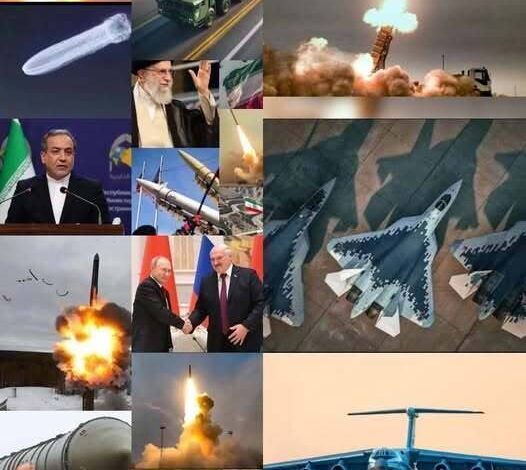
Is Europe Ready for War? Brussels Faces a Race Against Time
Since Russia’s full-scale invasion of Ukraine, the European Union has been forced to confront a reality once unthinkable: preparing for potential conflict on its own soil. Rising pressure from the United States and increasingly blunt warnings from military leaders have accelerated efforts to strengthen Europe’s defence capabilities. For decades, Europe relied on diplomacy, economic integration, and transatlantic security guarantees to maintain stability. Today, that confidence is fading.
A Continent Under Pressure
The sense of urgency didn’t emerge overnight. Russia’s invasion shattered long-standing assumptions about security. Political signals from Washington have grown increasingly clear: Europe must take more responsibility for its own defence.
EU leaders now face a dual challenge—deterring future aggression while maintaining unity at home. In December, member states approved a €90 billion loan package to support Ukraine. European Commission President Ursula von der Leyen announced several initiatives aimed at bolstering Europe’s deterrence capacity by 2030.
The rhetoric has been stark:
- Vladimir Putin warned there would be “no one left to negotiate with” if Russia fought.
- NATO Secretary General Mark Rutte cautioned that Europe could be Russia’s next target within five years.
- Germany’s Defence Minister Boris Pistorius warned that Europe may have already seen its “last summer of peace.”
Despite the political urgency, public readiness remains low. A recent Euronews poll of nearly 10,000 respondents found that 75% would not fight for the EU’s borders, 19% would, and 8% were unsure. Concern about Russian aggression is highest in countries closest to Russia, with top threat perception reported in:
- Poland: 51%
- Lithuania: 57%
- Denmark: 62%
Eastern Europe Takes the Lead
Countries on Europe’s eastern flank—Lithuania, Latvia, Estonia, Poland, Finland, and Sweden—have implemented visible measures to prepare both practically and psychologically. These include:
- Developing physical defensive barriers and “drone walls”
- Conducting resilience exercises and public drills
- Distributing emergency shelter maps and civil defence guides
- Introducing national defence education and safety programs in schools
Public interest reflects these concerns, with surges in online searches for “nearest shelter” and “what to pack for evacuation” in 2025.
Brussels’ Strategic Response
At the EU level, Brussels is coordinating its most ambitious defence effort in history. European defence spending surpassed €300 billion in 2024, with an additional €131 billion earmarked for aerospace and defence under the 2028–2034 budget. Central to this strategy is Readiness 2030, a roadmap endorsed by all 27 member states, aiming to:
- Enable troop and equipment movement across EU borders within three days in peacetime
- Reduce that to six hours during emergencies
- Establish a “Military Schengen” system to cut bureaucratic delays
Implementation involves upgrading around 500 critical infrastructure points, including bridges, tunnels, ports, and railways. Estimated costs range from €70 to €100 billion, funded through national budgets and EU programs.
ReArm Europe: Aligning Defence and Industry
Brussels launched ReArm Europe in 2025 to coordinate defence investments and industrial capacity. Its two key programs are:
- EDIP (European Defence Industry Programme): €1.5 billion for joint R&D and production, requiring participation from multiple EU countries or Ukraine
- SAFE (Strategic Armament Financing Envelope): €150 billion EU loan facility for joint weapons procurement at lower cost and faster speed
Together, these initiatives aim to overcome Europe’s fragmented defence sector, reduce duplication, and ensure interoperability across systems.
U.S. Pressure and European Pushback
The United States has intensified pressure, emphasizing that Europe must assume most conventional defence responsibilities by 2027. At the 2025 NATO summit, allies agreed to target 5% of GDP in defence spending by 2035, a threshold most countries are far from meeting.
European officials, including Valdis Dombrovskis, António Costa, and Kaja Kallas, have responded by advocating for greater European autonomy and rejecting external interference in internal political decisions, highlighting a growing transatlantic divide.
Structural Challenges
Experts caution that budgets and political will alone cannot solve Europe’s defence problem. Regulatory bottlenecks, slow procurement cycles, and fragmented industrial capacity remain significant obstacles. Brussels has begun fast-tracking reforms, simplifying funding rules, and speeding approval processes, but decades of underinvestment cannot be undone overnight.
The Path Ahead
Early demand for funding is strong: SAFE has already received requests for nearly 700 projects totaling close to €50 billion, covering air defence, missiles, drones, and maritime systems. Up to €22.5 billion in pre-financing may be released by early 2026.
Timelines are tight. Europe must modernize its defence industry, sustain support for Ukraine, and respond to increasingly explicit warnings from NATO and the United States. Officials now acknowledge that the central question is no longer whether Europe should act—but whether it can act fast enough.