THE AIRLINE FINE THAT HAS TRAVELERS DIVIDED: TURKEY’S NEW PENALTY FOR A COMMON IN-FLIGHT HABIT IS SPARKING GLOBAL DEBATE ABOUT SAFETY, ETIQUETTE, AND THE GROWING WAR AGAINST IMPATIENT PASSENGERS

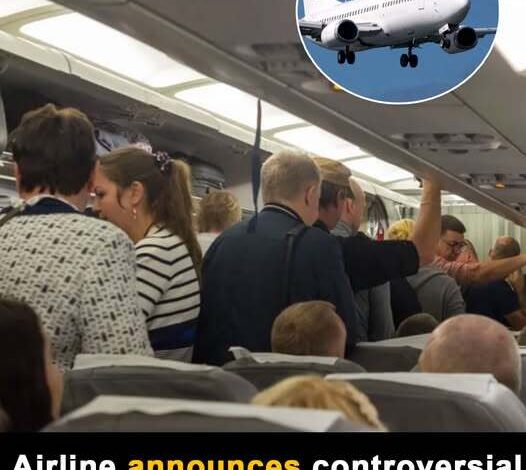
For as long as airplanes have been carrying passengers across the globe, one behavior has remained stubbornly consistent: the instant the wheels touch down, a portion of the cabin springs to life. Seatbelts snap open, people stand up while the aircraft is still moving, and overhead bins fly open as if the exit door might disappear at any second.
It’s a ritual so familiar that it’s become an inside joke among frequent flyers — and a constant headache for cabin crews.
Now, one country has decided that enough is enough.
Turkey Draws a Hard Line on Early Standers
Turkey has officially introduced a rule allowing airlines to fine passengers who stand up, open overhead bins, or ignore crew instructions before the plane has fully stopped. The policy marks the first nationwide attempt to formally punish one of air travel’s most common — and most criticized — habits.
Supporters say it’s a long-overdue move to restore order and safety in the cabin. Critics see it as another example of growing overregulation in modern air travel.
Either way, the change is already sending shockwaves through the global aviation community.
What Behavior Is Now Punishable?
The directive was issued by the Turkish Directorate General of Civil Aviation (DGCA), under the leadership of Kemal Yüksek.
Under the new rules, passengers may be reported and fined for:
- Unfastening seatbelts before the aircraft comes to a full stop
- Standing up while the plane is still taxiing
- Opening overhead compartments early
- Moving into the aisle out of turn
- Ignoring crew instructions about disembarkation order
Aviation officials argue that these actions, while often dismissed as harmless impatience, create real safety risks, particularly during taxiing — one of the most unpredictable phases of flight.
How Much Is the Fine?
According to reporting by The Washington Post, the administrative penalty can reach 2,603 Turkish lira, roughly $67 USD.
Authorities stress that the goal isn’t revenue, but deterrence. The fine is meant to send a clear signal: cabin rules are not suggestions.
Why This Became a Breaking Point
Anyone who flies regularly has witnessed the same scene play out again and again:
The aircraft touches down.
The engines roar.
The seatbelt sign stays on — and is promptly ignored.
Within seconds, passengers are standing, bags are shifting in overhead bins, and the aisle turns into a crowded bottleneck while the plane is still moving.
Cabin crews have long warned that this behavior can lead to injuries if the aircraft brakes suddenly. Falls, head strikes from falling luggage, and wrist injuries are not uncommon — and entirely preventable.
Turkey’s aviation officials say informal warnings simply weren’t working anymore.
Applause or Overreach? Passengers Are Split
Reaction to the policy has been sharply divided.
Many frequent flyers are thrilled, calling it a victory for common sense and courtesy. To them, the rule targets a behavior that:
- Raises stress levels
- Disrespects fellow passengers
- Slows orderly disembarkation
- Creates unnecessary safety risks
Others argue the punishment is disproportionate. They say passengers stand to stretch, not to cause trouble, and that better boarding and disembarkation systems could solve the issue without fines.
Some worry about what comes next — and whether airlines are gaining too much control over minor passenger behavior.
Airlines Are Already Enforcing It
Major carriers such as Turkish Airlines and Pegasus Airlines have begun training cabin crews to document violations.
Flight attendants now have the authority to report passengers, with fines processed after landing. Early feedback suggests the policy is already changing behavior — especially after travelers see consequences applied in real time.
Why Taxiing Isn’t as Safe as It Feels
Taxiing may seem calm compared to takeoff or landing, but it carries its own risks:
- Aircraft operate close to other planes and vehicles
- Pilots may need to brake suddenly
- Visibility can be limited
- Sharp turns are common
An unexpected stop can easily send a standing passenger off balance. Officials emphasize that the rule isn’t about manners — it’s about preventing injuries that never needed to happen.
A Signal of a Broader Global Shift
Turkey’s decision fits into a wider international trend. Airlines worldwide are responding to increases in:
- Passenger noncompliance
- Aggression toward crew
- Safety rule violations
- Viral incidents of unruly behavior
If Turkey’s approach proves effective, other countries may adopt similar penalties.
What Travelers Should Know Going Forward
If you’re flying to, from, or through Turkey:
- Stay seated until the plane fully stops
- Keep your seatbelt fastened until the sign turns off
- Don’t open overhead bins early
- Wait your turn to enter the aisle
- Follow crew instructions without argument
What was once tolerated impatience is now a fineable offense.
Final Thought
The penalty may be modest, but the message is unmistakable:
Patience is no longer optional in Turkish airspace.
For decades, standing early was an annoyance everyone endured. Turkey has transformed it into a rule with real consequences. Whether the rest of the world follows remains to be seen — but for now, if you’re flying through Turkey, staying seated could save you more than embarrassment.
Sit tight.
This time, the seatbelt sign truly means business.