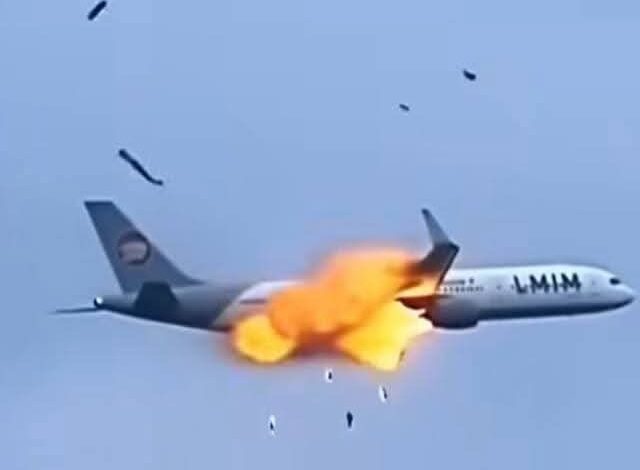
The international aviation community is closely monitoring a developing situation following a serious incident involving a commercial passenger aircraft. Early information indicates that the flight, which had more than 240 people on board including passengers and crew, experienced a critical emergency during a key stage of its journey. Preliminary indications suggest the problem occurred either shortly after departure or during the aircraft’s initial climb—an interval pilots refer to as a “critical phase of flight.” Because incidents during this period allow little time for recovery, emergency responders were rapidly deployed, and aviation authorities have begun securing the area to preserve crucial evidence.
In events like this, the first hours are often filled with scattered reports and widespread public concern. For investigators, however, this marks the beginning of a structured and methodical process designed to determine exactly what happened. Aviation accident investigations follow international guidelines established under Annex 13 of the Chicago Convention, which emphasize determining causes and preventing future accidents rather than assigning blame. Specialists from national safety boards, aircraft manufacturers, and engine companies typically arrive at the scene as part of what is often referred to as the “Go-Team.” One of their first priorities is locating and recovering the aircraft’s flight recorders—the Flight Data Recorder (FDR) and the Cockpit Voice Recorder (CVR)—commonly known as the “black boxes.” These devices contain detailed technical and audio records that provide critical insight into the aircraft’s final moments.
The investigation itself is broad and systematic, covering every possible factor that might have influenced the outcome of the flight. Analysts generally organize their work around three major categories: man, machine, and medium. The machine category focuses on the aircraft and its mechanical systems. Investigators will examine wreckage for structural weaknesses, inspect engines for indications of mechanical failure or bird strikes, and review the condition of flight control surfaces to determine whether they responded correctly to pilot commands. Because modern aircraft incorporate multiple redundant systems, specialists will also evaluate whether a cascade failure—a sequence of system breakdowns that overwhelmed available backups—may have occurred.
The medium refers to the environment in which the aircraft was operating. Meteorological data is carefully analyzed to determine whether severe weather conditions could have played a role. Investigators search for signs of hazards such as wind shear, microbursts, turbulence, or icing, any of which could affect aircraft performance during takeoff or climb. Air traffic control operations are also reviewed. Recordings and transcripts of communications between the cockpit and controllers help determine whether the crew reported any problems and whether instructions from the control tower were delivered clearly and promptly.
The human element, often the most complex component of any investigation, examines the role of the crew and operational factors. This includes reviewing the pilots’ training histories, certification records, work schedules, and medical evaluations. Specialists in Human Factors Analysis study how cockpit design, workload, and decision-making processes might have influenced the crew’s actions. In highly stressful situations, issues such as fatigue, confusion caused by automated flight systems, or breakdowns in Crew Resource Management (CRM)—the coordination and communication between pilots—can become significant factors.
As the inquiry progresses, investigators increasingly rely on the aircraft’s digital data systems. In addition to the physical flight recorders, modern airliners transmit operational data through systems such as ACARS (Aircraft Communications Addressing and Reporting System). This network relays technical information to airline maintenance centers, including engine performance and system alerts. By combining ACARS transmissions, satellite tracking data, and evidence from the wreckage, analysts can reconstruct the aircraft’s final minutes with remarkable precision.
The intense global attention surrounding such incidents reflects the enormous trust that passengers place in modern aviation. Every day millions of people travel by air, relying on the industry’s safety record—a record built through decades of investigation, engineering improvements, and regulatory oversight. Historically, each major accident has led to safety recommendations that reshape aviation standards. These changes have included improved aircraft design, enhanced pilot training, better warning systems, and stricter maintenance procedures. Lessons learned from past tragedies are ultimately incorporated into the regulations that make flying one of the safest modes of transportation in the world.
Authorities have urged patience as the investigation unfolds, particularly for the families awaiting answers. Aviation accident inquiries are deliberate and thorough processes that require time. A preliminary report is typically released within about thirty days, while the final report—containing detailed findings and recommendations—may take a year or longer to complete. Investigators must carefully analyze all available evidence before reaching conclusions, which is why speculation during the early stages can be misleading and potentially harmful to the integrity of the investigation.
Because aviation operates as a global network, the implications of any accident can extend far beyond the region where it occurred. If investigators identify a systemic flaw involving a particular aircraft model or component, regulatory agencies such as the Federal Aviation Administration (FAA) or the European Union Aviation Safety Agency (EASA) can issue Airworthiness Directives (ADs). These directives may require immediate inspections, modifications, or even the temporary grounding of aircraft fleets worldwide until safety concerns are resolved.
While the technical investigation continues, attention remains focused on the people who were aboard the aircraft. Behind every accident report are individuals, families, and communities seeking understanding. The aviation industry’s response—from engineers analyzing components to investigators documenting every detail—is driven by a single objective: ensuring that the lessons learned from tragedy contribute to safer skies in the future. When the final findings are eventually published, they will become part of the broader body of aviation knowledge, helping to prevent similar events and reinforcing the safety systems that underpin modern air travel.