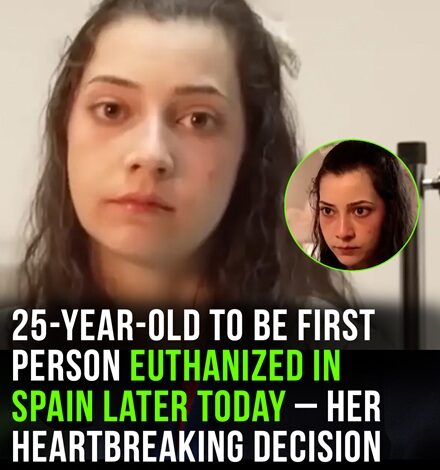
On March 26, 2026, Noelia Castillo Ramos, a 25‑year‑old woman from Barcelona, died through medically assisted euthanasia at a health care centre in Sant Pere de Ribes, Spain.
Her death followed a lengthy and closely scrutinized legal process, making her case one of the most notable applications of Spain’s euthanasia law since its passage in 2021.
The law, the Organic Law on the Regulation of Voluntary Euthanasia (LORE), allows adults who meet strict medical criteria to request medically assisted death when experiencing serious and incurable suffering they consider unbearable.
Born on November 14, 2000, in Barcelona, Noelia faced personal challenges from a young age, including ongoing mental health conditions. Over the years, she experienced chronic psychological suffering that significantly affected her quality of life.
In 2022, she suffered a serious accident that resulted in long-term physical impairments and persistent pain. Following her hospitalization, Noelia continued to experience significant physical and psychological discomfort.
Medical evaluations documented the persistence of her suffering. In 2024, she formally requested euthanasia under the LORE law. Her request went through a rigorous review process, including multiple evaluations by medical and legal authorities, to ensure it met the stringent legal criteria.
Her father opposed the request, questioning her decision-making capacity. The legal dispute lasted over 600 days, with multiple Spanish courts reviewing the case. Ultimately, the High Court of Justice of Catalonia upheld the original approval, and Spain’s Supreme Court, Constitutional Court, and the European Court of Human Rights all declined further appeals. These rulings confirmed that her choice met the legal requirements and was made voluntarily.
Throughout the process, Noelia spoke publicly about her decision, emphasizing that it was a personal choice based on her experience of suffering.
Under Spanish law, to qualify for euthanasia a person must be an adult with full capacity to make their own decisions, suffer from a serious chronic or incurable condition, and repeatedly express a voluntary desire to die after considering alternatives. Evaluations by health authorities and review committees are required to ensure all conditions are met.
Noelia’s application was found to meet these criteria. Physicians and a regional evaluation commission in Catalonia certified that her pain was chronic and intolerable and confirmed her legal capacity to make the decision.
The euthanasia procedure occurred on the afternoon of March 26, 2026, at the Sant Camil Hospital in Sant Pere de Ribes, near Barcelona. The process involved the administration of medications designed to induce deep sedation and a peaceful, painless passing. Noelia chose to be alone during the final moments, with her mother present until shortly before the procedure.
Her case has sparked significant public discussion in Spain and abroad. Supporters emphasize individual autonomy and the right of adults experiencing chronic suffering to make a personal choice about medically assisted death. Critics highlight the need for robust mental health and social support systems before considering euthanasia.
Noelia’s story has also contributed to broader debates on mental health care, chronic suffering, disability, and patient autonomy. Her case is one of the most publicized and legally significant uses of Spain’s euthanasia law and continues to be studied in ethical, legal, and medical contexts.
Her passing represents both a personal choice to end suffering and a reflection point for ongoing discussions about the balance between autonomy, medical ethics, and societal responsibilities in cases of chronic illness and persistent suffering.