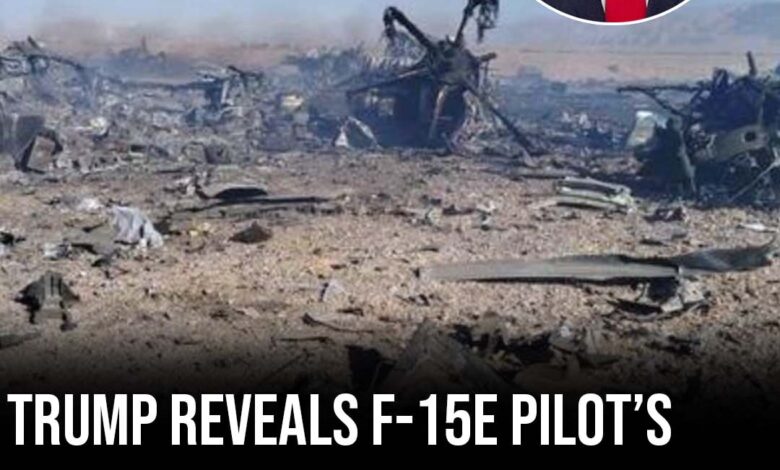
Alone, wounded, and unsure if anyone was still listening, the downed pilot held onto the last thing he had—his voice. Each transmission over the radio carried less of a command and more of a quiet plea, as if he were speaking into the void, hoping someone, somewhere, would believe him. Stripped of rank and certainty, he sounded human in the most fragile way possible—and that, ironically, made him harder to trust.
Far away in Washington, the situation unfolded very differently. What reached decision-makers wasn’t just a call for help—it was a puzzle layered with risk. Could it be genuine, or was it a trap designed to lure more lives into danger? Every word he spoke was weighed against intelligence reports, probabilities, and worst-case scenarios. The fear of being deceived clashed with the moral weight of possibly leaving a man behind.
Time stretched thin.
But what ultimately saved him wasn’t a single bold move or a dramatic order from above. It was something quieter—and far more powerful. Analysts leaned in instead of tuning out, choosing to re-examine the faint signal rather than dismiss it. Operators accepted the uncertainty and prepared to move anyway. Pilots flew into dangerous airspace not with guarantees, but with conviction that the risk was worth taking.
Piece by piece, decision by decision, doubt gave way to action.
And in the end, they found him—not as a ghost signal or a calculated illusion, but as a real man, battered and waiting, exactly where he said he was.
His rescue became more than a mission accomplished. It stood as a reminder of how fragile trust can be in moments of crisis, and how much courage it takes to act without certainty. In war, the battlefield isn’t only terrain—it’s judgment, hesitation, and the constant question of what is real.
Sometimes, the hardest fight isn’t against an enemy.
It’s against the fear of being wrong.