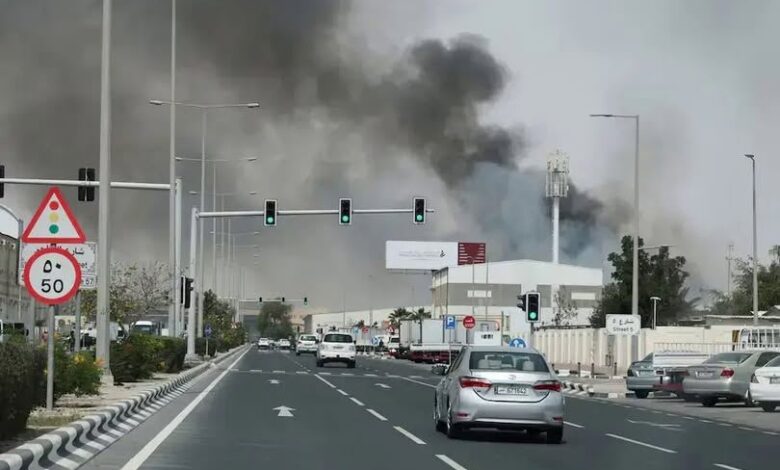
The geopolitical balance of the Middle East entered a new phase of uncertainty following an announcement from Tehran on March 9, 2026. Iranian state television reported that more than 40 missiles had been launched as part of what officials described as the seventeenth phase of a broader military operation called “Operation Honest Promise 4.” According to the statement, the strikes targeted positions associated with both Israel and the United States, marking a potentially significant escalation in an already tense regional environment.
The announcement came through Iranian state media, which often acts as the primary channel for messaging from the Islamic Revolutionary Guard Corps (IRGC). In its statement, the IRGC’s aerospace division—responsible for Iran’s missile and drone programs—claimed the missiles were aimed at what it referred to as “American and Zionist targets.” While the rhetoric follows familiar patterns in Iranian official statements, the scale and framing of the operation suggest an effort to portray the action as part of a sustained campaign rather than an isolated strike.
Iran’s aerospace force plays a central role in the country’s military strategy. It oversees a diverse arsenal that includes short-range ballistic missiles, medium-range ballistic missiles, and armed drones, many of which have been improved in recent years for greater accuracy. Analysts often note that these systems form a key component of Iran’s deterrence strategy, allowing the country to project power across the region without relying solely on conventional air forces.
Despite the seriousness of the announcement, key details remain unclear. Iranian reports did not provide precise information about the launch locations, the specific missile systems used, or confirmed impact sites. Independent monitoring organizations and satellite intelligence analysts have not yet publicly verified the scale of the launches or the damage that may have resulted.
Such information gaps are common during the early stages of military incidents. Governments frequently release statements aimed at shaping perceptions—both domestically and internationally—while the full scope of events remains uncertain.
The name “Operation Honest Promise” also carries symbolic significance. Similar language has been used by Iranian officials in past retaliatory actions. Analysts suggest that such terminology is intended to present military responses as part of a continuing strategic narrative, emphasizing resolve and continuity rather than spontaneous escalation.
Regional governments are watching the situation closely. Countries including Jordan, Saudi Arabia, and the United Arab Emirates maintain extensive security partnerships with both the United States and Israel, and any missile activity in the region raises concerns about broader instability. The Middle East already hosts numerous U.S. military facilities and allied defense systems designed to monitor and intercept potential threats.
As a result, even a limited strike can trigger extensive diplomatic and military consultations. Officials in Washington and Jerusalem are expected to assess the situation through early-warning systems, satellite monitoring, and intelligence networks before issuing formal statements regarding the event.
The broader strategic implications could extend beyond the immediate military dimension. Energy markets reacted quickly to the news, with traders closely monitoring potential risks to shipping routes in the Strait of Hormuz, a critical passage for global oil exports. Any sustained disruption in this region would have far-reaching economic consequences.
Some analysts also note that external military messaging can coincide with internal political dynamics. Governments under economic or political pressure sometimes emphasize national security narratives to reinforce domestic unity or demonstrate strength on the international stage.
For now, the situation remains fluid. The claims made by Iranian officials have yet to be independently verified, and responses from the United States, Israel, and regional partners are still developing. As more information becomes available, analysts will be watching closely to determine whether this event represents a limited exchange of signals or the beginning of a broader escalation.
What is clear is that the Middle East remains one of the most sensitive geopolitical regions in the world, where military actions—real or perceived—can rapidly influence diplomatic relations, security planning, and global markets.