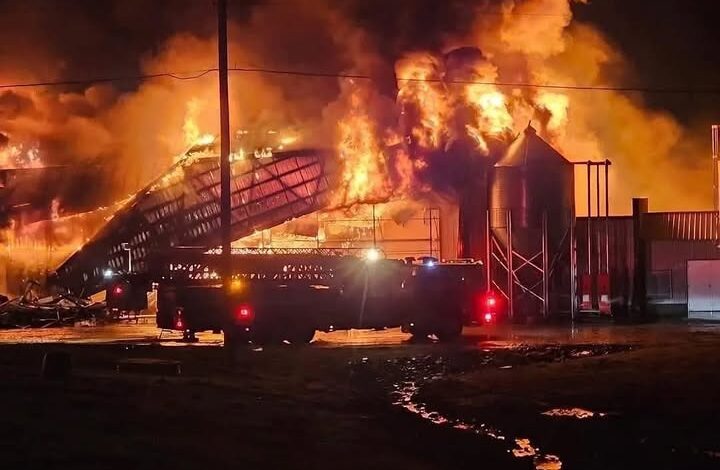
Today’s global environment is increasingly shaped by a network of geopolitical tensions that have raised concerns about the long-term stability of the international system. While the phrase “global conflict” often suggests a sudden and dramatic outbreak of war, the current situation is better understood as a series of interconnected pressure points. Each of these flashpoints carries the possibility of escalation, yet they remain governed by a delicate balance between deterrence and diplomacy. Across regions such as Europe, the Middle East, and the Indo-Pacific, international relations have entered a period of heightened sensitivity, influenced by military modernization, evolving alliances, and the ever-present risk of political misjudgment.
In Europe, the security framework that has supported relative stability since the end of World War II is facing its most serious test in decades. The war between Russia and Ukraine continues to dominate the continent’s strategic outlook. Despite repeated diplomatic efforts aimed at reaching a durable settlement, the conflict has largely evolved into a prolonged struggle of endurance. Russian forces attempt gradual territorial advances while long-range drones and missile strikes frequently target infrastructure far from the front lines. This sustained confrontation has created a tense atmosphere in which even minor incidents can carry significant strategic consequences.
Particularly concerning is the rising number of close military encounters near NATO’s eastern borders. Nations including Poland, Romania, and the Baltic states have reported multiple cases of Russian aircraft approaching or briefly entering their airspace, prompting quick responses from NATO patrols. Although these incidents have not escalated into direct clashes, they contribute to a pattern of pressure that raises the chances of an accidental confrontation. Analysts warn that in such a tense environment, even a small miscalculation or technical error could rapidly escalate into a broader crisis.
In response, countries along NATO’s northeastern frontier—such as Estonia, Latvia, Lithuania, Finland, and Poland—have begun strengthening their defense strategies. These efforts involve more than theoretical planning; they include concrete changes to border security and military preparedness. Some governments have reconsidered previous commitments to international defense agreements, arguing that the evolving security landscape requires greater flexibility. At the same time, developments in advanced weapon systems, including hypersonic missile technology, have forced defense planners to rethink traditional approaches to missile defense, although the practical capabilities of these weapons remain debated.
The Middle East presents a different but equally complex strategic picture. The region is marked by fragile ceasefires layered over deeper structural tensions. While diplomatic efforts—often involving the United States and other international actors—have managed to pause open hostilities at times, the underlying issues remain unresolved. The relationship between Israel and Iran continues to be a central source of instability. After a series of direct confrontations earlier this year, both sides appeared to step back from the brink of wider war, demonstrating that even intense rivalries are influenced by a shared understanding of the catastrophic consequences of escalation. Still, concerns surrounding Iran’s nuclear ambitions and the influence of regional armed groups mean that the possibility of renewed conflict cannot be ruled out.
At the same time, subtle shifts are occurring within the region. Some groups that once played major roles in regional instability are facing internal political changes and growing public calls for stability. These developments have prompted debates within several governments about the effectiveness of long-standing deterrence strategies. For global powers, the overriding objective remains the prevention of a conflict that could disrupt global energy supplies and draw multiple countries into prolonged confrontation. Although tensions remain high, many experts believe that most regional actors currently prefer maintaining a fragile stability rather than risking a full-scale war.
Meanwhile, the Indo-Pacific has become an increasingly important focal point for global security. The relationship between the United States and China—and the future of Taiwan—dominates strategic thinking in the region. Taiwan’s importance extends beyond politics; it also plays a crucial role in global trade and semiconductor production. As military activity in the South China Sea grows and exercises near Taiwan become more frequent, all sides maintain a heightened level of readiness. Unlike other regional conflicts, a crisis in the Indo-Pacific could directly involve the world’s two largest economies, creating immediate and far-reaching consequences for global stability.
Despite these multiple tensions, most strategic experts do not believe that a worldwide war is inevitable. Today’s global economy is deeply interconnected, and the consequences of large-scale conflict would extend far beyond traditional battlefields. Economic collapse, cyber disruptions, and the potential use of unconventional weapons act as powerful deterrents against open confrontation. As a result, many nations are engaged instead in what analysts describe as “gray-zone” competition—persistent rivalry that includes cyber operations, economic pressure, and strategic signaling while stopping short of direct military conflict.
In this environment, maintaining clear communication between nations is crucial. As military capabilities expand and alliances solidify, the risk of misunderstanding grows. History shows that many major wars have not begun with deliberate plans for global conquest but rather through a chain of miscalculations and escalating responses. Strengthening diplomatic dialogue and establishing reliable channels for crisis management are therefore essential to preventing local tensions from spiraling into wider conflict.
Ultimately, the challenge facing today’s leaders is to manage rivalry without allowing it to ignite into open warfare. Although headlines often portray the world as standing on the brink of a global conflict, the reality is more complex: a struggle to preserve balance in a rapidly changing, multipolar international system. Effective leadership will require both credible deterrence and persistent diplomacy, ensuring that competition between major powers remains contained and that the first spark of a broader conflict never ignites.