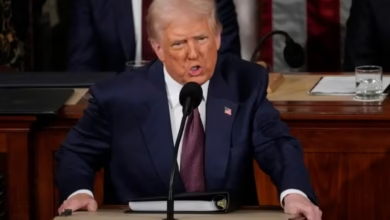
Trump Confirms Major Combat Operations as US and Israel Launch Strikes on Iran, Vowing to Destroy Missile Industry, Triggering Retaliation Across the Middle East, Raising Global Tensions, Civilian Casualties, Political Fallout, and Fears of a Wider Regional War as Leaders Warn the Conflict Could Last Weeks and Escalate Further.

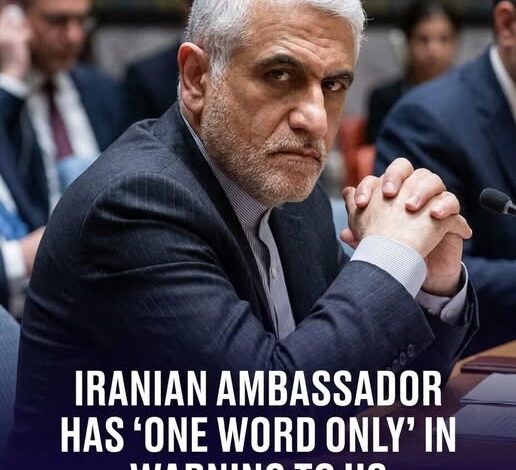
What began as a targeted military operation against missile infrastructure has quickly expanded into something far larger—an unfolding confrontation defined by political determination, national identity, and the fragile balance of global stability. What was initially framed as a precise and necessary security action now carries implications that extend far beyond the original strike. Each passing day brings new statements, new warnings, and new calculations from leaders who understand that the next move could either calm tensions or push them into dangerous territory.
In Washington and Jerusalem, officials continue to defend the operation as a preventative measure designed to neutralize what they describe as a growing strategic threat. Military planners emphasize that the objective was limited: to weaken capabilities that could destabilize the region if left unchecked. Supporters of the decision argue that waiting longer might have allowed those systems to become more entrenched and harder to stop. From their perspective, the strike was not about escalation but about preventing a future crisis.
In Tehran, however, the interpretation is entirely different. Leaders there have described the attack as a deliberate violation of sovereignty and a public humiliation that cannot go unanswered. Officials speak not only of retaliation but of restoring national dignity, framing the event as part of a broader pattern of pressure and confrontation. The language coming from Iranian media and political figures reflects a mixture of anger, defiance, and strategic messaging intended both for domestic audiences and for observers abroad.
Between these competing narratives lies a narrow and uncertain space where misunderstanding can carry enormous consequences. Military forces across the region are now on heightened alert, radar systems scanning the skies more carefully than usual, intelligence agencies dissecting every intercepted signal and movement. In such an atmosphere, even small incidents—an unexpected aircraft movement, a misread radar signature, or an ambiguous message—could be interpreted as hostile intent. The risk is not always deliberate escalation; sometimes it is simple miscalculation.
Diplomatic channels, many of which had been strained or dormant for years, are suddenly being reactivated with urgency. Behind closed doors, envoys and intermediaries are attempting to rebuild lines of communication that might prevent the situation from spiraling further. Quiet conversations are taking place in embassies, international organizations, and neutral capitals as negotiators search for ways to slow the pace of confrontation. These efforts rarely make headlines, yet they often represent the most important work being done in moments like this.
Meanwhile, military analysts and political observers around the world are carefully studying each development. Governments far from the region are assessing how the situation might affect global security, energy markets, and diplomatic alliances. The interconnected nature of modern geopolitics means that a conflict in one region can ripple outward quickly, influencing economic stability and political decision-making across continents.
For ordinary people living near the center of the tension, however, the situation is not an abstract geopolitical debate. It is something far more immediate and personal. Sirens echo through cities at night, reminding residents that the calm of daily life can vanish in seconds. Families watch the news with growing anxiety, wondering whether the next update will bring reassurance or further uncertainty. In some communities, store shelves empty more quickly than usual as people quietly prepare for disruptions.
Long lines form at gas stations as drivers fill their tanks, unsure what tomorrow might bring. Parents discuss contingency plans with their children, balancing honesty with the desire to shield them from fear. Conversations that once focused on routine matters—school schedules, work deadlines, weekend plans—now circle back to the same uneasy question: how far might this crisis go?
Across the region, the psychological weight of uncertainty is becoming just as significant as the physical threat itself. Markets react nervously, travel plans are reconsidered, and communities become more attentive to rumors and updates. Even those who live far from potential military targets feel the atmosphere shifting, as though the rhythm of daily life has been interrupted by a distant but unmistakable rumble.
International leaders are increasingly aware that time plays a crucial role in moments like this. The longer tensions remain elevated, the greater the chance that pressure, pride, or misinterpretation will lead to actions that are difficult to reverse. Calls for restraint are growing louder in diplomatic circles, accompanied by appeals for dialogue and de-escalation.
Yet politics, especially in times of crisis, rarely moves in simple or predictable directions. National pride, domestic expectations, and strategic calculations all influence how governments respond. Leaders must weigh the need to appear strong against the risks of pushing events beyond their control. The challenge lies in finding a path that satisfies political realities without triggering consequences that no one truly wants.
The world now watches closely as the situation evolves. News outlets analyze each development, experts debate possible outcomes, and citizens across the globe follow updates with cautious attention. The region stands on a delicate edge where restraint and retaliation compete for influence.
For now, the hope shared by many observers is that diplomacy can regain its footing before events move too quickly. History has shown that crises like this often hinge on moments of careful judgment—decisions made quietly behind closed doors that determine whether tension subsides or accelerates.
Until then, millions of people continue their daily lives beneath the shadow of uncertainty. They go to work, care for their families, and try to maintain normal routines while listening for signals that the storm may either pass or grow stronger.
In that fragile space between action and response, the future remains unwritten. And for a world watching from afar, the greatest hope is that caution, patience, and dialogue will ultimately prove stronger than anger and revenge.