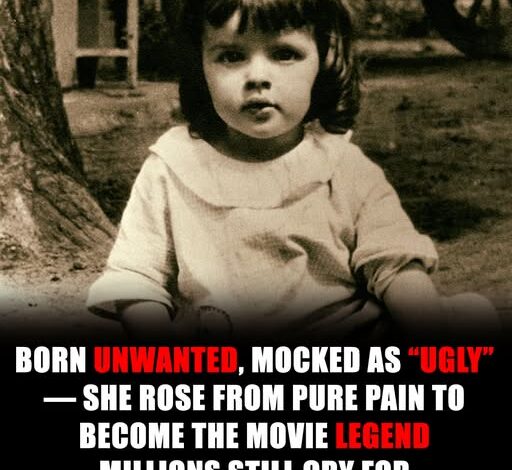
She began as Frances Gumm, a little girl with a clear, open voice and a longing so ordinary it should have been protected: she wanted to be loved for who she was, not for what she could perform, produce, or earn. Before the world knew her as Judy Garland, before the ruby slippers and the soundstages and the applause that seemed to shake the walls, she was a child standing under bright lights, learning far too early that affection could be tied to usefulness.
Hollywood answered that longing not with care, but with contracts, cruelty, and control. The studios did not see a frightened girl growing up too fast. They saw a product, a phenomenon, a voice that could sell tickets and fill theaters. Executives measured her waistline more closely than her well-being. They watched her face, her body, her schedule, her habits, and her appetite, shaping her into an image they believed America wanted. Her youth was treated not as something sacred, but as something to be managed.
The pressure came from every direction. Her mother pushed her toward the stage with a force that left little room for hesitation. The studio system tightened around her with impossible demands, endless workdays, and punishments disguised as discipline. She was told what to eat, how to look, when to sleep, when to wake, and how much of herself she was allowed to show. The message was brutal, and it sank deep: love was conditional, approval had to be earned, and applause was not simply praise — it was survival.
Behind the dazzling image of the girl next door was a child being asked to carry adult burdens. She was expected to smile through exhaustion, sing through fear, and charm audiences even when her own life felt increasingly out of her control. The public saw talent; the industry saw profit. Few seemed willing to see the person caught in between.
And yet, from inside that machinery, Judy Garland created something heartbreakingly human. Her voice was never merely beautiful. It trembled with feeling. It cracked open rooms. It carried joy, grief, hope, loneliness, and longing all at once. When she sang, there was a truth in it that no studio could manufacture. The same system that tried to polish away her pain could not erase the emotional honesty that made her unforgettable.
That was the paradox of Judy Garland: she became beloved because she sounded so deeply alive, even as the world around her kept demanding that she sacrifice pieces of herself. She gave audiences comfort while often being denied it herself. She became a symbol of wonder while living through circumstances that were anything but magical. She was made into everyone’s dream, yet so often seemed unable to fully claim a dream of her own.
Her life was marked by struggle, but it should not be reduced only to tragedy. She fought. She returned. She tried again and again, even when the odds were cruel, even when her body and spirit had been pushed far beyond what anyone should have endured. There was courage in her survival, and there was dignity in the way she continued reaching for connection despite everything that had taught her not to trust it.
Judy Garland’s story endures because it is more than the story of a star. It is the story of a child consumed by an industry that praised her gift while neglecting the person who carried it. It is the story of how fame can look like love from a distance, while feeling like captivity up close. It is the story of a voice that gave the world beauty, even as the world failed to give her safety.
She remains both a wound and a lighthouse. A wound, because her childhood was taken in the name of entertainment. A lighthouse, because her artistry still reaches across generations, reminding people who feel broken, unseen, or overused that their pain does not erase their worth. Her legacy asks us to look more carefully at the cost of the performances we celebrate, and to remember that no applause, no contract, no role, and no masterpiece is worth the destruction of a child.
Frances Gumm became Judy Garland, and Judy Garland became immortal. But beneath the legend was always a girl who wanted to be loved without having to earn it. That is the ache at the center of her story — and the reason it still matters.