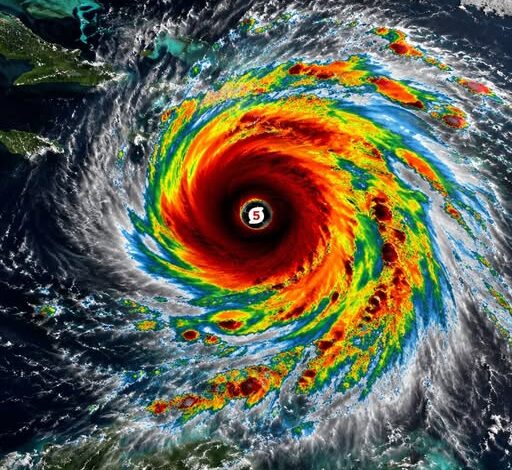
Hurricane Melissa remains a dangerous and powerful Category 3 storm as it tracks north toward eastern Cuba, after already leaving a trail of destruction across parts of the Caribbean. With destructive winds, relentless rainfall, dangerous storm surge, and a wide area of impact, the storm has become one of the most serious weather threats to affect the region in recent years.
The system has already caused major damage in several countries, but Jamaica appears to have suffered some of the most severe impacts so far. Across parts of the island, violent winds tore roofs from homes, brought down trees, damaged power lines, and destroyed vulnerable buildings. Torrential rain quickly overwhelmed roads, neighborhoods, and drainage systems, turning streets into rivers and leaving some communities cut off from help.
Emergency crews have been working under extremely difficult conditions. Flooded roads, fallen debris, and continuing dangerous weather have slowed rescue and recovery efforts. In some areas, authorities have struggled to reach isolated residents, raising concerns that the full extent of the damage may not be known for some time.
At least seven deaths have been confirmed across the region, including three in Jamaica, three in Haiti, and one in the Dominican Republic. Officials have warned that the number could rise as emergency teams gain access to harder-hit areas and as reports continue to come in from communities affected by flooding, landslides, and wind damage.
In Jamaica, the government declared a national disaster as the storm knocked out power to more than 500,000 residents. The widespread outages have created serious concerns for hospitals, water systems, communication networks, and other critical services. Many facilities are now relying on generators, but officials warn that fuel supplies, access issues, and prolonged disruptions could create additional risks in the days ahead.
The damage has extended beyond homes and roads. Agriculture, small businesses, schools, clinics, and public infrastructure are all expected to face significant losses. In rural areas, where access can already be difficult under normal conditions, blocked roads and damaged bridges may complicate recovery for days or even weeks.
Now, attention is shifting toward Cuba, where authorities are preparing for Melissa’s arrival. More than 735,000 people have been evacuated from coastal communities, low-lying areas, and flood-prone regions. Officials are urging residents to take the threat seriously and follow all evacuation and safety instructions before conditions worsen.
Forecasters are warning that parts of eastern Cuba could face winds near 120 mph, rainfall totals as high as 25 inches, and storm surge reaching up to 12 feet in vulnerable coastal zones. These conditions could produce catastrophic flooding, major structural damage, landslides, and severe impacts to agriculture and transportation networks.
The combination of heavy rain and mountainous terrain is especially concerning. Even after the storm’s center moves away, runoff could continue to trigger flash flooding and landslides. Officials are warning that the danger will not end when the winds begin to weaken.
Haiti and the Dominican Republic have already felt the effects of Melissa’s outer bands. Heavy rain has triggered flooding and landslides, damaging roads and homes while complicating emergency response efforts. In Haiti, where infrastructure is fragile and many communities are already vulnerable, the storm has added another layer of hardship to an already difficult humanitarian situation.
Authorities across the region are urging residents to avoid flooded roads, stay away from downed power lines, conserve clean water, and rely only on official updates. Emergency officials have emphasized that even areas outside the direct path of the storm can experience life-threatening conditions, including sudden flooding, mudslides, dangerous surf, and prolonged power outages.
Relief agencies and government responders are preparing for a long recovery. Immediate priorities include search and rescue, medical support, shelter, food distribution, clean water, and restoring communication in affected areas. However, the full scope of the disaster may take days to assess, especially in remote communities where access remains limited.
For families across Jamaica, Haiti, the Dominican Republic, and Cuba, Hurricane Melissa is more than a weather event. It is a crisis that has disrupted homes, livelihoods, and communities. Many residents are now facing the painful uncertainty of not knowing when power will return, whether damaged homes can be repaired, or how quickly help will arrive.
As Melissa continues its path through the Caribbean, officials are warning that preparedness remains critical. The storm’s strength, size, and rainfall potential make it a serious threat even as its track evolves. Residents in projected impact zones are being urged to complete preparations immediately, move to safe shelter when instructed, and avoid taking unnecessary risks.
Even after the worst of the storm passes, hazards are expected to remain. Floodwaters may be contaminated. Roads may be unstable or blocked. Power lines may still be live. Damaged buildings may be unsafe to enter. Public health officials are also concerned about waterborne illness, limited medical access, and shortages of essential supplies in heavily affected areas.
Hurricane Melissa has already left deep scars across the Caribbean, and its next chapter is now unfolding as Cuba braces for impact. For emergency responders, the focus remains saving lives. For survivors, the coming days will bring the difficult work of assessing damage, finding safety, and beginning the long process of recovery.
The storm is a reminder of how quickly conditions can turn life-threatening and how important early warnings, evacuations, and community preparedness can be. As Melissa moves forward, the region remains on alert, hoping to limit further loss while preparing for the difficult aftermath that is almost certain to follow.