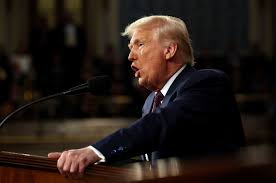
For countless viewers, seeing Donald Trump on the verge of tears was nothing short of disorienting. The man long known for relentless defiance, sharp-tongued rebuttals, and an almost constant posture of control suddenly appeared human in a way few had witnessed before. The usual cadence—forceful, rehearsed, commanding—gave way to pauses, stammers, and a voice that quivered with emotion. In that instant, the carefully cultivated armor of decades seemed to crack, revealing a vulnerability so stark that it cut across politics, ideology, and media narratives. Those who had cheered him for his unyielding strength now glimpsed the toll of maintaining it; even his harshest critics felt the weight of a private struggle laid bare in public.
The moment didn’t end with his words. It lingered, rippling outward through living rooms, offices, and social media feeds, forcing a country already accustomed to polarized reactions to pause. Conversations shifted from policy debates to something far more personal. Among supporters, discussions turned to loyalty, empathy, and renewed determination to stand by a leader whose resilience had always been celebrated—but whose fragility had rarely been visible. Critics, while still dissecting the content of his statements, couldn’t ignore the human element: the strain, the stress, and the raw honesty of someone confronting their own emotions on a national stage.
As the hours passed, the event carved a new, emotional fault line in public perception. Analysts debated whether this display would change political calculations or simply deepen existing loyalties, but the emotional resonance was undeniable. News cycles replayed the trembling voice, the brief pauses, the glimmers of tears, turning a fleeting human moment into a defining scene in the broader narrative of his career. It became less about what policies were being announced and more about the human cost of leadership itself—the weight of expectation, the isolation that power can create, and the unavoidable vulnerability that comes with being in the public eye at all times.
Beyond partisanship, the moment became a profound study in the duality of public life. Donald Trump, for all his bravado, showed that persona and personhood are not the same. Leadership, fame, and the constant scrutiny of millions create an unrelenting pressure, and even the most commanding figures carry private battles no one sees. For those watching, it was a reminder that power is not synonymous with invulnerability; even those who seem untouchable live with fears, regrets, and burdens that shape every decision.
When the final call for resilience, unity, and perseverance echoed across the hall, it left a haunting afterimage. The room’s applause and cheers captured relief, admiration, and hope—but also a quiet recognition that nothing would feel the same again. Supporters felt renewed purpose; opponents felt a reluctant acknowledgment of humanity; the undecided, who had perhaps only watched for spectacle, found themselves confronted with something they hadn’t anticipated: the emotional cost of carrying a role larger than life itself.
In the days that followed, commentators described it as “humanizing” and “shocking,” but for many viewers, it went deeper than mere optics. It was a moment of reflection about the nature of leadership, the fragility beneath the surface, and the undeniable truth that public figures, however powerful, are still subject to the vulnerabilities of being human. That tremor, brief and fleeting as it was, became an indelible marker in the memory of a nation—a moment that would be revisited in discussions, analyses, and personal conversations for years to come.
Even after the cameras turned off, after the speeches ended and the applause faded, the echo of that human moment lingered. It reminded the country that strength is not the absence of emotion, and courage is not the absence of fear. Donald Trump had, for just a few minutes, let the world see him in a way he rarely allows: not as the icon, the politician, or the symbol—but as a person grappling with everything the role demands. That glimpse changed something intangible in the national consciousness: the understanding that power is inseparable from the humanity that sustains it—and sometimes, the bravest act is to let the world see the vulnerability underneath.