Emergency Landing of a B-1B Lancer Near Edwards Air Force Base! What Happened and Why It Matters

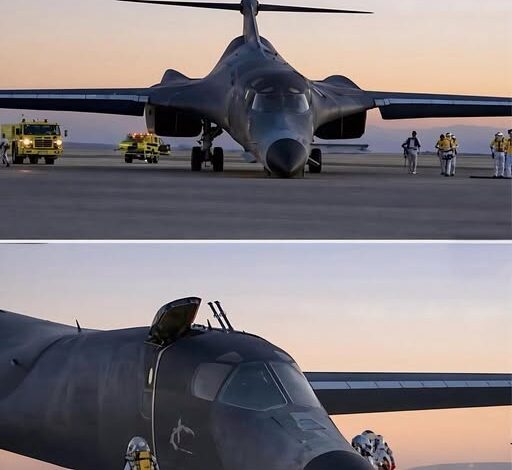
Emergency Landing Highlights Skill and Precision in Military Aviation
Military aviation operates in an environment where advanced engineering meets constant operational risk. Even with sophisticated systems and highly trained crews, the complexity of modern aircraft means that mechanical issues can occasionally arise. On March 5, 2026, one such situation unfolded when a U.S. Air Force B-1B Lancer encountered a serious nose landing gear malfunction near Edwards Air Force Base in California.
What could have developed into a dangerous accident instead became a powerful demonstration of aviation safety procedures. Through careful coordination between the flight crew and ground support teams, the aircraft was brought down safely, showcasing the effectiveness of emergency training and infrastructure designed for such scenarios.
The Legacy of the B-1B Lancer
The B-1B Lancer—often nicknamed the “Bone”—has been a key component of the U.S. Air Force bomber fleet since its introduction in the 1980s. Originally developed during the Cold War as a high-speed platform capable of delivering nuclear payloads at low altitude, the aircraft has since transitioned primarily to conventional missions.
One of the bomber’s most distinctive engineering features is its variable-sweep wing design. This mechanism allows the wings to adjust their angle depending on flight conditions. With wings extended, the aircraft can maintain efficient cruising performance, while swept-back wings enable higher-speed flight.
While this design provides impressive versatility, it also introduces a high level of mechanical complexity. Systems supporting the aircraft’s heavy takeoff and landing weight—including hydraulic assemblies and landing gear components—require precise operation and continuous maintenance.
Detecting a Landing Gear Problem
During a routine mission, the crew detected an irregularity involving the aircraft’s nose landing gear. In modern aviation, landing gear systems include multiple mechanical and electronic elements that must work together seamlessly. Sensors confirm whether the gear is fully deployed and locked into position before landing.
When cockpit indicators fail to verify that the gear is properly secured, it immediately triggers emergency procedures. Rather than rushing to land, the crew followed established checklists and coordinated closely with air traffic controllers to determine the safest possible recovery plan.
Their decision ultimately involved diverting the landing to Edwards Air Force Base, an installation uniquely equipped to handle aircraft emergencies.
Why Edwards Air Force Base Was Ideal
Edwards Air Force Base, located in California’s Mojave Desert, is widely known as one of the most capable flight test centers in the world. The facility features exceptionally long runways designed for experimental aircraft testing.
Equally important is the nearby Rogers Dry Lake bed—a vast natural surface of hardened desert soil. The lake bed provides miles of flat terrain, creating an ideal environment for aircraft experiencing landing gear issues.
By choosing this location, the pilots ensured they would have the maximum possible space to slow the aircraft safely while minimizing structural stress.
The Technique Behind a Nose Gear Landing
When an aircraft cannot rely on its nose gear, pilots must perform a specialized landing procedure.
The B-1B first touched down on its main landing gear while the pilots carefully held the nose of the aircraft elevated. Maintaining this nose-up attitude allows aerodynamic forces to slow the aircraft gradually.
As the bomber lost speed, the nose eventually lowered until the front portion of the fuselage made contact with the ground. This moment often produces sparks caused by friction between metal components and the surface. While visually dramatic, the effect is anticipated in controlled nose-gear recovery procedures.
The key objective is to allow the aircraft to settle gradually rather than allowing the nose to drop suddenly, which could risk structural damage or loss of control.
Ground Teams Prepared for Rapid Response
While the pilots managed the landing in the air, a coordinated effort was already underway on the ground.
Emergency response teams at Edwards quickly mobilized specialized equipment, including fire suppression vehicles, medical units, and hazardous material response crews. These teams positioned themselves along the expected landing path before the aircraft touched down.
Their role was to respond immediately if sparks ignited fuel vapors or if structural damage created additional hazards. Edwards personnel routinely train for such scenarios, and their experience recovering experimental aircraft provides them with exceptional expertise in handling emergencies.
Investigating the Cause
After the aircraft and its crew were safely secured, standard safety protocols were initiated.
Military aviation incidents trigger detailed investigations designed to identify the underlying cause of mechanical failures. Specialists review flight data recordings, inspect damaged components, and analyze maintenance histories to determine whether the issue resulted from a single component malfunction or a broader mechanical concern.
These investigations play a critical role in ensuring that similar problems do not affect other aircraft within the fleet.
Challenges of Maintaining an Aging Fleet
The B-1B Lancer fleet has been in service for decades, and maintaining aging aircraft presents ongoing challenges for the Air Force.
Routine inspections, component replacements, and structural evaluations are essential to keeping the aircraft operational. While much attention often focuses on the advanced capabilities of military aircraft, the extensive maintenance work performed by technicians and engineers is equally vital.
This behind-the-scenes effort ensures that even when unexpected malfunctions occur, aircraft systems and crews are prepared to manage them safely.
Lessons for the Future Bomber Force
The incident also highlights the transitional period currently facing the U.S. bomber fleet. The B-1B is expected to remain in service until the next-generation B-21 Raider gradually takes over strategic missions in the coming years.
Events like this provide valuable data that can inform maintenance practices, training procedures, and aircraft design improvements for future platforms.
A Demonstration of Aviation Safety in Action
Ultimately, the safe recovery of the B-1B near Edwards Air Force Base illustrates how structured procedures, disciplined training, and advanced facilities combine to manage unexpected challenges in aviation.
Safety in military flight operations does not depend on preventing every malfunction. Instead, it relies on systems designed to handle problems effectively when they arise.
The professionalism shown by the aircrew and ground teams during the March 5 incident demonstrates the strength of those systems. Their coordinated response transformed a potentially dangerous situation into a successful outcome—one that reinforces the enduring importance of preparation, teamwork, and technical expertise in military aviation.