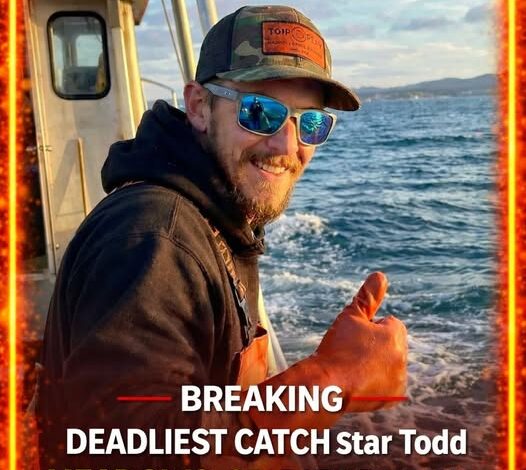
Out aboard the F/V Aleutian Lady, Todd Meadows wasn’t simply another deckhand appearing on a television series. To the people who knew him, he represented something much bigger than the cameras ever showed. Beneath the harsh lights of reality TV and the brutal conditions of the Bering Sea, Todd carried with him a purpose that reached far beyond the deck—he was working for the family waiting anxiously at home, counting the days until he returned.
Fellow crewmates recall that Todd approached every shift with a quiet determination and a smile that seemed almost out of place against the unforgiving environment surrounding them. The Bering Sea is not known for kindness. The wind can slice through layers of clothing like shards of glass, waves slam against steel hulls without warning, and the deck beneath a fisherman’s boots can turn treacherous in seconds. Yet Todd showed up each time ready to work, ready to learn, and ready to prove himself in one of the most dangerous professions on earth.
He was the newcomer on the crew, but he worked with the intensity of someone who had spent his entire life on the rail. In commercial crab fishing, reputation matters more than titles. Respect is not freely given—it is earned through long hours, frozen hands, and the willingness to push through exhaustion when everyone else is already spent. Todd understood that from the start. Instead of asking for easier tasks or stepping back when the weather worsened, he leaned into the grind, hauling gear, clearing lines, and standing shoulder-to-shoulder with seasoned fishermen who had spent decades battling the sea.
What made him stand out, according to the crew, wasn’t just his work ethic. It was the energy he brought with him. Even during the longest shifts—when darkness seemed endless and the cold soaked into bone—Todd kept conversations going, cracking jokes, and reminding everyone why they were there. He spoke often about his wife and his three children. Their photos, their stories, their future—those were the things that fueled him through every storm and sleepless night.
For Todd, the dangers of the job weren’t something to fear; they were something to overcome. Like many fishermen before him, he saw the ocean as both a risk and an opportunity. Every haul, every trip, every long stretch away from home was another step toward building a better life for the people he loved most.
Now, that familiar presence on deck is gone, and the silence left behind is deeply felt by those who worked beside him. The world of the Aleutian Lady—a place once filled with the constant noise of machinery, crashing waves, and crew banter—feels different without him.
Captain Rick Shelford, visibly shaken in his tribute, struggled to find the right words. His voice carried the weight of both grief and pride as he spoke about the young fisherman who had quickly become part of the crew’s family. Rick described Todd as someone who never stopped talking about home, someone who viewed every dangerous shift not as a burden but as a chance to provide for the people who depended on him.
“He was doing it all for them,” the captain said, recalling how Todd’s thoughts always circled back to his wife and children. “Everything he did out here was for that family.”
Discovery Channel, the network behind Deadliest Catch, released a statement honoring Todd’s dedication and acknowledging the tragedy felt throughout the fishing community. But even heartfelt words from a network cannot fully capture the space left behind by someone who shared the risks, laughter, and hardship of life at sea.
In the days following the news, support has poured in from every corner of the fishing world. Messages from fellow fishermen, fans of the show, and strangers who understand the sacrifices behind the industry have flooded social media. Donations have begun flowing toward Todd’s family, helping create a small but meaningful safety net for the people he worked so hard to support.
In fishing towns and ports scattered across Alaska and the Pacific Northwest, Todd’s story has become another reminder of the reality behind the profession. For every dramatic moment seen on television, there are countless unseen risks taken by the men and women who make their living on the water.
And in living rooms around the world—where Deadliest Catch has been watched for nearly two decades—viewers are being reminded that the stories unfolding on screen are not scripted adventures. They are real lives, real families, and real dangers faced every time a boat leaves harbor.
Todd Meadows may have been one of the newest faces on the rail, but the impact he left on those around him runs far deeper than the time he spent there. To his crew, he will always be remembered as the hardworking deckhand who refused to quit, the man who carried his family with him into every storm, and the friend whose presence made the harshest days at sea just a little easier to face.
Now, his name joins the long and solemn history of fishermen who gave everything in pursuit of a better future. And for the crews who continue to head out into the cold, dark waters of the Bering Sea, Todd’s story stands as a powerful reminder of what each trip can truly cost—and why the bond between those who work the deck is unlike anything else in the world.