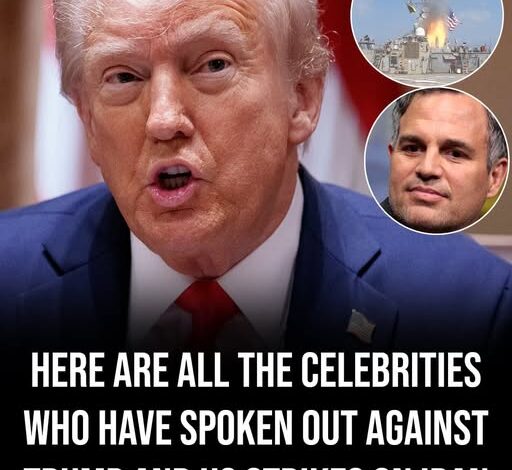
In the tense opening months of 2026, international politics and popular culture have collided in an unusually visible way. The recent joint airstrikes carried out by the United States and Israel against targets linked to Iran’s military and industrial infrastructure have not only reshaped diplomatic relations but also sparked a wave of public reaction from prominent cultural figures. Musicians, actors, and writers quickly took to social media and interviews to voice concern about the rapidly escalating conflict and its potential consequences.
As news of explosions and retaliatory threats spread across global media, many artists framed the moment as a turning point that extends beyond traditional geopolitical strategy. For them, the issue is not only about military objectives but also about the human cost of armed conflict. They argue that decisions made by political leaders can have profound effects on civilians and communities far from the centers of power where those decisions originate.
Musician Jack White was among the first well-known figures to publicly question the direction of the administration’s foreign policy. He raised concerns about what he described as a sudden shift toward a more aggressive military posture and called for greater transparency regarding the reasoning behind the strikes.
Comedian and television personality Rosie O’Donnell echoed similar concerns, suggesting that the escalation appeared inconsistent with earlier political messaging that emphasized restraint and diplomacy. Her comments reflected frustration shared by some observers who believe the situation has changed faster than the public was prepared for.
Actor John Cusack added another layer to the discussion by speculating about the political timing of the operation. Referencing the phrase “wag the dog,” he suggested that major military actions sometimes coincide with domestic political pressures—a claim that sparked further debate across social media.
Meanwhile, author Stephen King focused on constitutional issues, pointing to the long-standing debate about the role of Congress in authorizing the use of military force. His remarks reignited conversations about how decisions related to war powers should be handled within the U.S. political system.
Other actors, including Carrie Coon and Mark Ruffalo, emphasized the humanitarian dimension of the crisis. Coon spoke about the risks faced by civilians in conflict zones, while Ruffalo warned that continued escalation could increase the likelihood of a wider regional war.
Not everyone shares these criticisms. Supporters of the administration argue that the strikes were intended to counter perceived security threats and strengthen deterrence. From their perspective, decisive military action may help prevent future attacks and protect allies in the region.
The sharp divide illustrates how foreign policy decisions increasingly spill into cultural and public spaces. Social media platforms have accelerated this process, allowing celebrities and ordinary citizens alike to respond instantly to global events. As a result, debates that once unfolded slowly through opinion columns and televised interviews now happen in real time across millions of digital conversations.
Beneath the heated rhetoric lies a broader question about how democratic societies balance national security concerns with humanitarian considerations. Military planners often speak in terms of strategy and deterrence, while critics highlight the human consequences of conflict and the need for caution.
Whether one agrees with the celebrity reactions or not, their comments demonstrate how global crises resonate far beyond diplomatic negotiations and military briefings. Cultural figures increasingly act as informal commentators on world events, reflecting the fears, doubts, and moral questions felt by many people watching from afar.
As tensions continue to unfold in 2026, the debate surrounding the strikes shows no sign of fading. For supporters, the operation represents strength and protection. For critics, it is a warning about the dangers of escalation. And for much of the public, it remains a reminder that decisions made on the world stage inevitably ripple through societies everywhere.