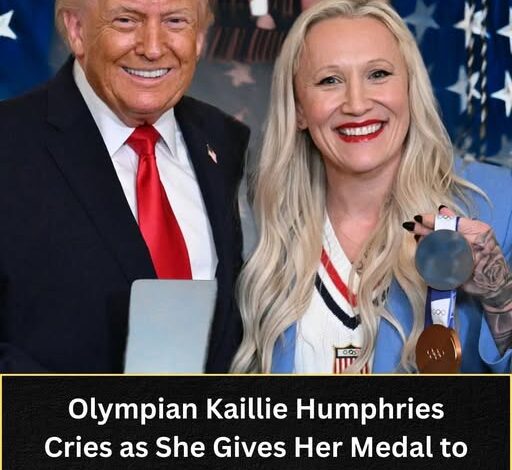
Inside the softly lit East Room of the White House, a moment unfolded that blended personal testimony, sports history, and political symbolism in an unexpected way. Standing before an audience of officials, athletes, and invited guests, Kaillie Humphries—the Canadian-born bobsled champion who later became a U.S. citizen—shared a deeply personal story that stretched far beyond the icy tracks where she built her career. Known for her Olympic achievements, including multiple medals representing both Canada and the United States at the Winter Olympics, Humphries used the stage not to recount races or podium finishes, but to describe the difficult path she traveled to become a mother.
Her voice reportedly trembled as she spoke about the emotional and physical toll of a 2½-year journey through in-vitro fertilization, a process that demanded persistence, patience, and resilience—qualities she said mirrored the determination required of elite athletes. Through tears, she reflected on the uncertainty and hope that defined those years, explaining how the experience reshaped her understanding of perseverance in ways even Olympic competition never had. In describing herself as a “legal immigrant” who found opportunity and stability in the United States, Humphries connected her personal story to the broader national narrative of immigration and family building.
The moment took an unusual turn when Humphries presented then-President Donald Trump with the Order of Ikkos—a rarely bestowed medal traditionally given by Olympic athletes to the coaches, trainers, or mentors who helped them reach the podium. The award, created within the Olympic tradition to honor those who work behind the scenes, had never before been presented to a sitting U.S. president. By offering it during the ceremony, Humphries transformed what is usually a private gesture of gratitude into a public symbol of appreciation tied to national policy and political leadership.
In her remarks, she credited Trump’s policies with supporting families seeking fertility treatment and praised efforts she believed protected fairness in women’s athletics. Specifically, she referenced measures aimed at preserving what supporters describe as competitive equity by restricting transgender women from participating in certain women’s sports categories, while also highlighting administrative initiatives intended to reduce costs associated with IVF treatment. For Humphries, these policies intersected with both her athletic identity and her personal experience with infertility, making the issue feel deeply personal rather than purely political.
The gesture immediately drew attention far beyond the room where it occurred. Supporters saw Humphries’ tribute as a heartfelt acknowledgment of policies they believe strengthen families and preserve women’s sports. Critics, however, argued that the moment reflected broader cultural and political divisions in the United States—particularly debates surrounding gender identity, reproductive health, and the boundaries of fairness in athletic competition.
By merging her story of motherhood with a political commendation, Humphries created a scene that captured the complicated intersection of sports, identity, and national policy. In a single act—the presentation of a medal meant to honor unseen contributors to athletic success—she reframed a deeply personal struggle as part of a much larger national conversation about who receives support, how fairness is defined in sports, and how political leadership can shape the lives of families pursuing dreams both on and off the Olympic stage.