HIGH SEAS SHOWDOWN US Army Intercepts Mysterious Vessel In Sensitive Waters Triggering Global Security Alert

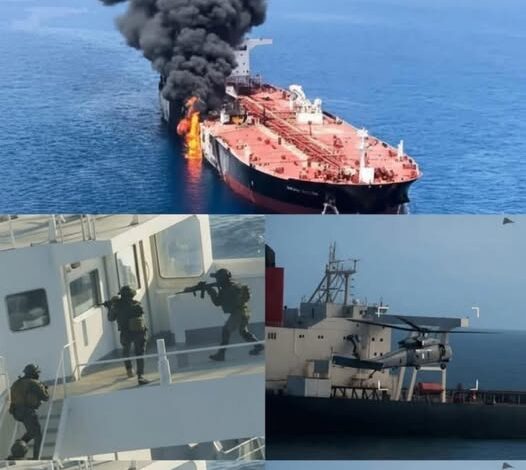
The world’s oceans—vast, unpredictable, and often ungoverned—have once again become the backdrop for a tense international incident. U.S. military forces recently intercepted and secured a vessel deemed suspicious during a high-level maritime security operation, drawing attention from defense analysts and governments around the globe. In a time when international waters are increasingly contested by both rogue actors and rival nations, the event underscores just how fragile stability at sea has become.
According to defense officials, the mission was anything but routine in execution. Though precise details remain classified, the operation took place in a region widely recognized as vital to global trade and strategic military movement. This was not a chance encounter. Advanced surveillance systems and intelligence coordination led to the vessel being tracked, approached, and ultimately boarded by U.S. personnel. The speed and precision of the response suggest a high level of concern about the ship’s purpose long before it was stopped.
In the hours following the interception, speculation spread rapidly across online platforms. Some theories pointed to illegal weapons transport, while others suggested espionage or the movement of restricted materials tied to international sanctions. Official statements, however, have remained deliberately restrained. U.S. defense representatives emphasized that the operation aligns with ongoing efforts to secure key shipping routes and maintain regional balance, framing it as part of broader maritime oversight rather than a reaction to a single alarming threat.
Still, the scale of the response hints at deeper implications. Coordinating such an operation requires collaboration across multiple military and intelligence units, indicating that the vessel likely triggered significant concern. In recent years, attention has increasingly focused on ships operating outside standard tracking systems—so-called “ghost vessels”—which often attempt to evade detection for covert or unlawful purposes. Intercepting one successfully demonstrates both technological reach and operational readiness.
As investigations continue, officials are urging caution. Determining the vessel’s origin, verifying its cargo, and understanding the intentions behind its journey require time and precision. Premature conclusions risk not only spreading misinformation but also complicating sensitive diplomatic dynamics, particularly in regions where territorial claims overlap or political tensions already run high. In these areas, even a single military action can carry consequences far beyond the immediate event.
The broader context makes the situation even more significant. Global commerce depends heavily on maritime routes, with the vast majority of trade moving across oceans. Any disruption—even the perception of instability—can ripple through economies worldwide. At the same time, the seas have become a stage for indirect conflict, where nations and non-state actors test boundaries without crossing into open warfare. Operations like this serve as both enforcement and deterrence, reinforcing the message that international waters are monitored and regulated.
There is also a human dimension that remains largely unseen. The individuals aboard such vessels are often far removed from the larger forces at play, sometimes unaware of the full nature of their mission. Untangling the networks behind these operations—shell companies, intermediaries, and possible state connections—will take extensive analysis. Investigators will work backward from the ship itself, attempting to uncover who organized the journey and why.
For now, the intercepted vessel remains under close watch as experts analyze every detail. While the specifics will eventually come to light, the larger meaning of the event is already clear. It reflects the constant vigilance required to manage modern maritime security and highlights the reality that even in the open expanse of the ocean, few actions go unnoticed.
As patrols continue and attention remains fixed on the region, this incident serves as a reminder: the oceans may be vast, but they are not beyond reach. Order at sea depends on persistent oversight, and as this operation demonstrates, that responsibility is actively being upheld—even in the most remote and contested waters.