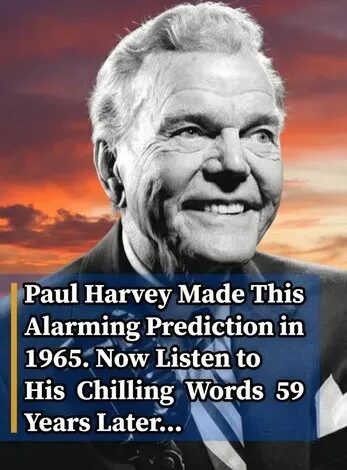
His 1965 monologue endures not simply because it criticized the direction of the times, but because it exposed a quieter, more unsettling process: the way a culture can drift without realizing it. He did not describe collapse as dramatic or immediate. Instead, he painted it as gradual—built from small, everyday compromises that feel reasonable in the moment. Standards soften, expectations lower, and what once seemed unacceptable becomes routine, not through force, but through repetition and indifference.
In his view, cultural decline is rarely announced. It happens in the background of ordinary life. Families grow more distant, institutions lose their moral weight, and public discourse shifts from thoughtful engagement to passive consumption. Entertainment begins to replace reflection, not because people consciously reject depth, but because distraction is easier, more comfortable, and endlessly available.
What made his message powerful, however, was that it did not settle into cynicism. He did not argue that decline was inevitable or irreversible. Instead, he emphasized that awareness itself is a form of resistance. The ability to recognize these patterns—to question what we accept, what we consume, and what we ignore—is where individual agency begins.
He suggested that responsibility does not belong solely to leaders, institutions, or systems, but to ordinary people making daily choices. Strengthening families, engaging thoughtfully with ideas, and refusing to drift passively are not grand gestures, but they are meaningful ones. Culture, in this sense, is not something imposed from above—it is shaped continuously from within.
Whether or not one agrees with his specific moral framework, the deeper challenge of his words remains relevant. Each generation is confronted with the same uneasy question: are we actively shaping the world around us, or quietly adapting to it without reflection?
The persistence of that question is what gives his monologue its lasting weight. It resists easy answers. It reminds us that cultural direction is never fixed, never finished—and never entirely out of our hands.