I always believed I understood my life completely.
Not in a vague or hopeful way—but in a structured, certain way, like a story I had already read and memorized.
I knew who I was. I knew where I came from. I knew the shape of my past.
At least, I thought I did.
My name is Evan, and I am 22 years old.
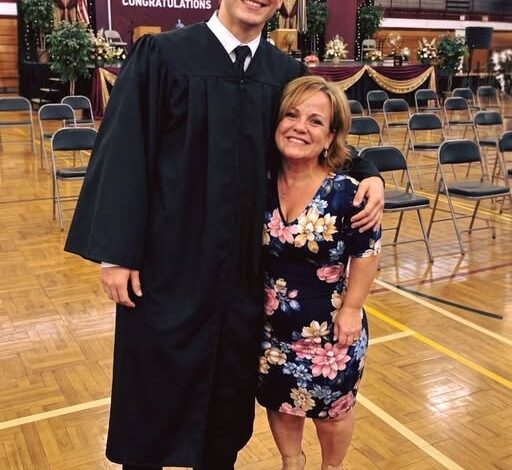
I had just graduated from college—a moment that was supposed to feel like arrival. A milestone that marked stability, achievement, and the start of something new.
Instead, it became the day everything I believed about my life quietly began to unravel.
The Life I Thought I Knew
I was raised by my mother, Laura, who did everything alone from the moment I was born.
She worked long hours. She managed every responsibility. She carried the weight of our small world without ever letting it show on her face.
Growing up, I saw her as both parent and protector. She was my entire foundation.
There was never a sense that something was missing—at least not one I could name at the time.
She told me I was born when she was young, still in college, and that she had to learn how to balance motherhood with education all at once. She spoke about it casually, as if it were a closed chapter in a book she had already put away.
There was never anger in her voice when she mentioned my father. Only distance.
He simply wasn’t involved, she said.
That was all.
And over time, that explanation became the only truth I knew.
As a child, I asked a few questions here and there, but never deeply. My mother’s answers were always calm, consistent, and final in a way that discouraged further curiosity.
Eventually, I stopped asking altogether.
Not because I didn’t care.
But because I believed I already had the answer.
The Graduation Day That Changed Everything
College became my world for years—assignments, deadlines, friendships, failures, and growth all blending into something that slowly shaped who I was becoming.
Graduation felt like the payoff.
A clean ending to one chapter and the beginning of another.
My mother arrived early that morning, as she always did for important moments. She looked proud in a way that didn’t need words. Emotional. Steady. Present.
When my name was called, I walked across the stage and scanned the crowd.
I found her immediately.
Standing. Clapping. Crying.
Completely focused on me, as she had always been.
For a brief moment, everything felt complete. Simple. Right.
I remember thinking that this was what life was supposed to feel like when you did everything correctly.
The Man in the Crowd
After the ceremony, the outside world took over—families taking photos, laughter echoing through the campus, the chaotic energy of celebration.
My mother insisted on capturing everything.
“One more picture,” she kept saying, adjusting my cap, laughing at how impatient I was becoming.
I remember feeling embarrassed, but happy.
Normal.
Safe.
Then I noticed him.
A man standing slightly apart from the crowd.
Alone.
Watching.
Not in a casual way—but with focus. With weight behind his expression.
At first, I assumed he was just another relative waiting for someone, but something about his stillness made me uneasy.
And then he started walking toward me.
The Truth I Wasn’t Prepared For
He stopped in front of me and said my name.
When I answered, he introduced himself simply:
Mark.
And then he said something that made the world around me feel suddenly unstable.
He told me he was my father.
For a moment, I actually laughed.
Not because it was funny—but because my mind refused to accept it.
My mother went completely still beside me.
I felt the air shift.
Mark continued, saying he had been searching for me for years. That he had only recently discovered I existed. That he had been told I never made it into the world.
That he had believed I was gone.
And that everything he thought he knew had been wrong.
Competing Versions of the Past
The conversation that followed did not belong in the middle of a graduation celebration.
It was fractured, emotional, and chaotic.
Mark insisted he hadn’t abandoned me—that he had been misled, told there had been a miscarriage, and only recently learned the truth.
My mother’s response was immediate and shaken. She denied his simplified version of events, explaining that what happened back then was shaped by fear, pressure, and circumstances that weren’t easy to explain in a single sentence.
Neither voice felt like a complete story.
Both felt like fragments.
We eventually moved away from the crowd, searching for space where the noise wouldn’t swallow the conversation.
But silence didn’t make it easier.
It only made everything clearer.
Or more complicated.
A Past Built on Fear and Missing Pieces
Mark spoke about being young, unprepared, and overwhelmed. About believing he had been cut out of a future he never got to understand.
My mother spoke about fear—about feeling cornered, alone, and forced into decisions she didn’t feel safe explaining even years later.
As they spoke, something became painfully obvious:
This wasn’t a story with a single villain or a single truth.
It was a collision of fear, misunderstanding, timing, and silence.
And I was standing in the center of it.
After the Crowd Disappeared
Mark eventually stepped back.
He left a business card in my hand and said he would wait—if I ever wanted answers directly from him.
Then he walked away.
Just like that.
The celebration around us continued, but it no longer felt connected to me. It felt distant, like I had stepped outside of my own life and was watching it from somewhere else.
That night, my mother and I went home in silence.
The apartment felt heavier than usual, as if the walls themselves had absorbed everything that happened.
We sat at the kitchen table for a long time without speaking.
Eventually, she began to talk.
Not defensively.
Not carefully.
But honestly, in a way I had never heard before.
She spoke about fear. About pressure. About being young and overwhelmed and making decisions she believed were the only way to survive the moment she was in.
And for the first time, I didn’t see her as someone hiding the truth.
I saw her as someone who had been carrying it alone for far too long.
The Space Between Two Truths
In the weeks that followed, nothing resolved quickly.
There were no sudden answers. No perfect reconciliation. No dramatic clarity.
Just time.
And uncertainty.
I eventually reached out to Mark.
Not because I was ready.
But because avoiding him felt like avoiding part of myself.
Our conversations started slowly—small details, simple questions, careful explanations. Over time, they became more open, more human.
I didn’t gain a replacement father.
And I didn’t lose the life I had known.
I simply began to understand that both could exist in the same story.
What Didn’t Change
Through all of it, my relationship with my mother remained.
Not unchanged—but real in a different way.
We talked more. Listened more. Said things we had avoided for years.
It wasn’t easy. It wasn’t clean.
But it was honest.
And honesty, I realized, doesn’t erase the past.
It simply changes how you carry it.
What I Finally Understood
In the end, I learned that identity isn’t built from a single version of the truth.
It’s built from everything you learn when that truth starts to shift.
My life didn’t suddenly change in one dramatic moment.
It changed slowly—through conversations, silence, confusion, and understanding.
And maybe that’s what growing up really is.
Not having all the answers.
But learning what to do when the answers you believed in are no longer complete.