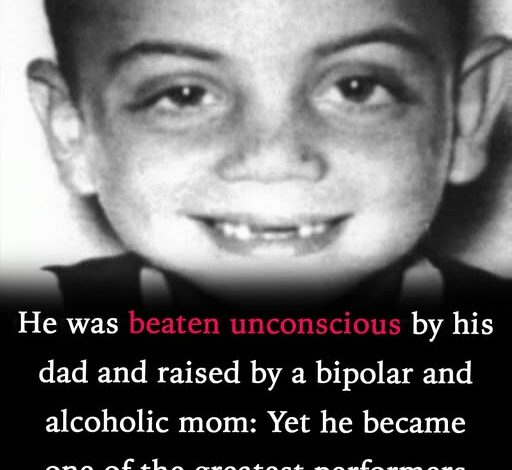
Behind the sold-out arenas, the familiar piano openings, and the songs generations can sing from memory, there is another Billy Joel story.
Not the legend.
Not the Piano Man seated beneath stage lights while thousands of voices rise around him.
But the boy behind the music — the one who learned early that love could be complicated, that home could feel unstable, and that survival sometimes meant adapting before you fully understood what you were surviving.
Long before he became one of America’s most enduring songwriters, Billy Joel grew up surrounded by absence, tension, and emotional uncertainty. His father had escaped Nazi Germany, carrying with him the trauma of displacement and survival. But later, that same father left the family home, creating another kind of rupture — one less visible to history, but deeply felt by a child trying to understand why people he needed could disappear.
That loss became part of the emotional weather of Joel’s childhood.
So did poverty.
So did shame.
So did the private chaos that often lives behind closed doors while the outside world assumes a family is simply getting by.
Music entered his life not as decoration, but as refuge. Yet even that refuge was not untouched by pain. One piano lesson ended with violence so severe that it reportedly knocked him unconscious, a moment that revealed how easily discipline, ambition, and frustration could become something frightening in the hands of adults.
His mother, too, was a figure of deep contradiction.
She loved him fiercely.
She believed in his talent when belief itself required sacrifice. She scraped together money for lessons even when there was little money to spare. She insisted that his gift mattered, that the music in him was worth protecting, shaping, and developing.
But her love existed alongside loneliness, alcohol, and untreated mental illness. She could be devoted and unstable, encouraging and wounded, protective and overwhelmed by forces she could not fully control. For a child, that kind of love can be both saving and scarring.
Billy Joel’s early life was not built from ease.
It was built from pressure.
Financial hardship.
Family fracture.
Emotional volatility.
The ache of abandonment.
The burden of being talented before knowing whether talent would save him or simply make him more visible.
Those experiences did not disappear when success arrived. They became part of the emotional language of his songs. Beneath the catchy melodies and piano-driven hooks lived loneliness, longing, bitterness, humor, regret, and the restless hunger of someone who had spent years trying to turn pain into sound.
That is why his music connected so deeply.
Billy Joel did not only write songs people liked.
He wrote songs people recognized themselves inside.
The working-class frustration.
The romantic disappointment.
The stubborn pride.
The exhaustion of trying to keep going.
The private sadness hidden behind public confidence.
His voice carried the sound of someone who had lived close to disappointment and learned how to make it sing.
But survival did not become simple after fame.
Success brought money, applause, awards, and cultural permanence, but it did not erase depression. It did not erase addiction. It did not protect him from betrayal, broken relationships, public scrutiny, or the internal battles that followed him long after childhood ended.
If anything, fame often sharpened those struggles.
The world hears the anthem and assumes the man behind it must be whole. But sometimes the person creating the music is using the music to hold himself together.
Joel’s life has often seemed like a long argument between collapse and comeback.
He has endured professional setbacks, painful personal chapters, health struggles, and the emotional cost of being treated not simply as a person, but as a cultural institution. Yet again and again, he returned to the piano — not as a symbol of perfection, but as a place where broken things could still become beautiful.
Now, as he faces the frightening reality of a brain disorder, that lifelong fight has taken on new meaning.
Normal pressure hydrocephalus, or NPH, threatens the very things that performers depend on: balance, movement, memory, stamina, confidence, and the body’s ability to obey the mind. For someone whose life has been shaped by rhythm, timing, and physical presence, such a diagnosis carries a particular cruelty.
It is not only a medical challenge.
It is an emotional one.
Because for Billy Joel, music has never been merely a career. It has been identity, refuge, language, and survival. To face a condition that interferes with his ability to perform is to confront something much deeper than canceled concerts or delayed appearances.
It is to confront the possibility that the body may interrupt the very art that once helped save him.
And yet, even here, surrender does not seem to be the final note.
Supported by his daughters, former wives, close family, friends, medical professionals, and millions of fans who continue to hold him in affection, Joel has entered another season of recovery and resilience. Therapy, weight loss, treatment, and patience have become part of the work now. The stage may look different. The battle may be quieter. But the instinct remains familiar.
Keep going.
That has always been part of Billy Joel’s story.
He kept going after childhood wounds.
He kept going after abandonment.
He kept going through depression.
He kept going through addiction and heartbreak.
He kept going when fame became heavy.
He kept going when the music industry shifted around him.
And now, facing a condition that could have easily been framed as an ending, he appears determined not to let illness write the final verse for him.
That determination matters because Billy Joel’s legacy has never rested only on perfection. It rests on endurance. On the ability to turn human messiness into melody. On the strange miracle of taking private pain and making it communal enough for strangers to sing back in unison.
Every comeback in his life has carried that same emotional structure.
A fall.
A silence.
A reckoning.
Then music again.
For fans, the concern surrounding his health is not only about whether he will return to the stage exactly as before. It is about gratitude for everything he has already given, and hope that the man behind those songs can find peace, healing, and strength beyond performance.
Because the music will remain.
The opening notes.
The lyrics shouted in cars.
The songs played at weddings, bars, funerals, graduations, and lonely nights when someone needed to feel less alone.
But behind all of it is a man who has spent a lifetime fighting to be heard — first as a wounded child, then as a struggling musician, then as a superstar, and now as an aging artist facing vulnerability with the same stubborn spirit that carried him from the beginning.
Billy Joel’s story was never only about fame.
It was about survival finding a melody.
And if his life has taught anything, it is that even after pain, abandonment, illness, and fear, another chorus may still be waiting.