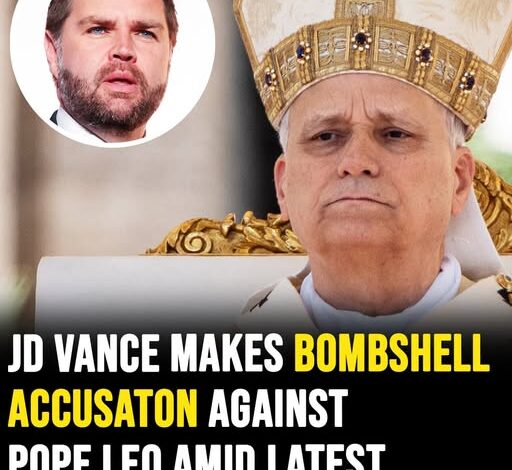
The tension between Donald Trump and Pope Leo has grown into something more than a simple disagreement—it reflects two fundamentally different ways of understanding power, responsibility, and moral leadership. On one side is a political vision that emphasizes strength through decisive action, national security, and firm control of borders. On the other is a spiritual perspective that argues true authority is measured by restraint, compassion, and the protection of human life, even in the most complex global conflicts.
When Pope Leo speaks out against war—particularly the suffering it brings to civilians—his message goes beyond criticizing a single policy. He is questioning a broader narrative: the idea that power must always be demonstrated through force. In doing so, he challenges not only political leaders, but also the public to reconsider how justice is defined and whose voices are centered in those decisions.
The response from figures like JD Vance adds another layer to the debate. His argument—that religious leaders should focus on moral teaching while governments handle policy—reflects a long-standing tension between faith and state. But the pope’s position suggests that the two cannot be fully separated. If policies directly affect human lives, then moral questions inevitably follow. Decisions about war, peace, and human dignity are not just strategic—they are ethical at their core.
This clash highlights a deeper question that extends beyond any individual figure. It asks whether moral guidance should influence political action, and if so, to what extent. It also raises the issue of how societies balance national interests with universal principles like compassion and the value of human life.
In the end, the disagreement is less about personalities and more about priorities. It brings into focus an enduring dilemma: when political goals and moral convictions pull in different directions, which one takes precedence? For many, the answer is not simple—but the conversation itself reveals how closely intertwined belief, leadership, and responsibility truly are.