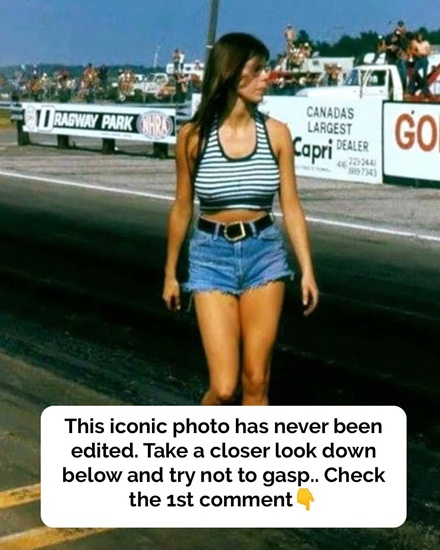
Jungle Pam Hardy remains one of the most memorable and recognizable figures from the golden age of American drag racing. Although her time in the sport was relatively brief, her presence during the 1970s left a lasting mark on fans, photographers, and the racing community. She became associated with an era when drag racing was loud, unpredictable, colorful, and deeply personal—an era driven not only by horsepower, but by charisma, showmanship, and larger-than-life personalities.
At a time when motorsport was still raw and highly theatrical, Jungle Pam stood out immediately. Drag racing in the 1970s was not the polished, heavily computerized world it would later become. It was a sport of roaring engines, smoking tires, crowded tracks, handmade adjustments, and teams that often relied on instinct, experience, and nerve. Drivers were not just competitors; they were entertainers. Fans came not only to watch cars race down the strip, but to see personalities perform.
It was in this setting that Pam Hardy became part of drag racing history.
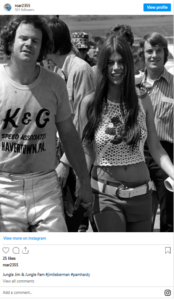
Her story became closely linked with Jim Liberman, better known to fans as “Jungle Jim.” Liberman was already one of the most exciting and flamboyant figures in the sport. Known for his bold driving style, crowd-pleasing personality, and fearless approach to racing, he understood that drag racing was as much about spectacle as speed. When Pam joined him on the racing circuit, the two quickly became one of the most talked-about partnerships in the sport.
Pam’s introduction to drag racing came in the early 1970s, when she met Liberman shortly before finishing high school. At that point, her future could have followed a much more conventional path. She had plans for higher education and a life far removed from the noise and danger of racetracks. But her meeting with Liberman changed everything. Their connection developed quickly, and before long, she chose to travel with him and become part of his racing world.
That decision placed her in the middle of one of the most exciting periods in American drag racing.
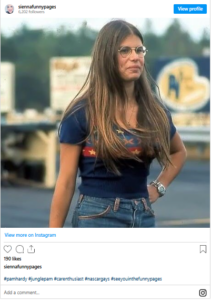
On the racing circuit, Pam became known for her visible role at events, especially near the starting line. She assisted with staging the car, helping guide it into position before runs. She also became involved in the practical side of race preparation, helping with tasks connected to the vehicle and supporting the rhythm of the team’s work. Her role was not simply decorative; she was part of the performance, part of the preparation, and part of the atmosphere that made Jungle Jim’s team so unforgettable.
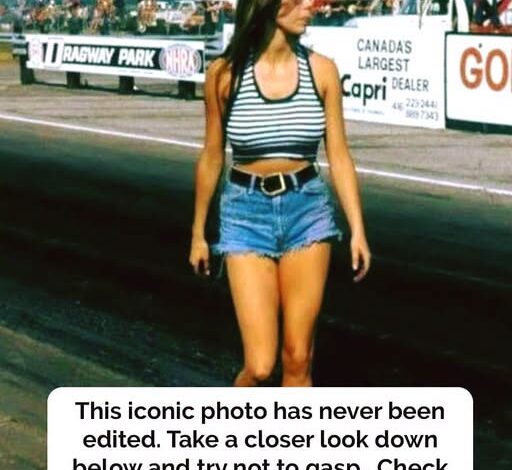
Still, there is no denying that her appearance and style helped make her a sensation. With her distinctive look and confident presence, Pam quickly became a favorite subject for photographers. Images of her at tracks across the country appeared in magazines, racing publications, and fan collections. Her presence helped draw attention to Liberman’s team and added another layer of excitement to their appearances.
But what made Jungle Pam so memorable was not appearance alone.
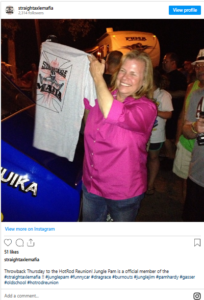
It was the combination of personality, timing, and cultural energy. She arrived in drag racing at a moment when the sport was becoming increasingly tied to entertainment and spectacle. Fans wanted speed, but they also wanted stories. They wanted heroes, rivalries, attitude, and unforgettable characters. Jungle Jim and Jungle Pam delivered all of that. Together, they created a visual and emotional identity that fans remembered long after individual races ended.
Their partnership became one of the defining images of 1970s drag racing.
Liberman brought the danger, skill, and showmanship behind the wheel. Pam brought presence, energy, and a recognizable image that helped complete the team’s public identity. At racing events, they were not just another driver and crew member. They were a team people came to see. They represented a time when drag racing was intimate, theatrical, and deeply connected to its fans.
As Pam’s popularity grew, she became one of the most photographed women in drag racing. Her image became tied to the excitement of the sport itself. For many fans of that era, seeing Jungle Pam near the starting line was part of the experience. She became a symbol of the period’s style, confidence, and spectacle.
Yet despite the attention she received, Pam often spoke of her role as part of a team effort. She understood that the success of their appearances came from the chemistry between everyone involved. Liberman’s driving talent, the crew’s mechanical work, the energy of the crowd, and the public presence she helped create all contributed to the overall impact. In that sense, her legacy belongs not only to celebrity, but to the collaborative spirit of drag racing during that era.
Jim Liberman’s career was marked by boldness and showmanship. He was known as a driver who knew how to excite a crowd, both with his car and with his personality. He was daring, unpredictable, and charismatic—qualities that made him one of the most beloved figures in the sport. With Pam at his side, his team became even more distinctive, blending racing performance with entertainment in a way that helped define the era.
Tragically, that chapter came to an end in 1977 when Jim Liberman died in a fatal accident. His death shocked the drag racing world and devastated those who had known and admired him. For fans, it marked the loss of one of the sport’s great showmen. For Pam, it was a deeply personal loss that changed her relationship with racing forever.
Following Liberman’s death, Pam stepped away from active involvement in the sport. She chose not to continue in the same role with another driver, a decision that reflected the depth of her connection to Liberman and to the unique partnership they had shared. The magic of that era, for her, could not simply be recreated with someone else.
In the years that followed, Jungle Pam Hardy remained connected to the memory of Jim Liberman and the racing world they had once traveled together. She occasionally appeared at events honoring his legacy and the history of classic drag racing. Though she moved forward with her personal life, her name remained inseparable from one of the most iconic periods in motorsport culture.
Over time, old photographs, magazine features, interviews, and racing footage helped preserve her image for new generations of fans. People who never saw Jungle Jim race in person came to know the era through its surviving images, and Jungle Pam became one of the most vivid symbols of that world. Her presence in those photographs captures more than one person’s story. It captures the spirit of a time when drag racing felt wild, personal, colorful, and larger than life.
Pam Hardy’s legacy is often discussed in terms of what she brought to the sport’s public identity. She was not a race car driver herself, but she became part of the show, part of the memory, and part of the culture surrounding drag racing. Her visibility helped bring attention to the team and contributed to the excitement fans felt when Jungle Jim’s car appeared at an event.
In that way, her influence extended beyond a traditional crew role.
She became a cultural figure within motorsport.
She represented the showmanship of the 1970s racing scene, when teams understood that the fan experience mattered. The cars were the center of the action, but the people around them helped create the legends. Pam’s presence made events more memorable, photographs more striking, and the Jungle Jim team more recognizable.
Today, Jungle Pam Hardy is remembered as a distinctive figure from a defining chapter in American drag racing history. Her story reflects an era when the sport was built on speed, risk, personality, and spectacle. She remains closely associated with Jim Liberman, but her own place in racing history is secure because of the impression she made on fans and the way she helped shape the identity of one of drag racing’s most famous teams.
Her legacy is not simply about nostalgia.
It is about the power of personality in sport.
It is about how certain figures, even without long careers, can become lasting symbols of an entire era. Jungle Pam Hardy’s time in drag racing may have been brief, but it was unforgettable. Decades later, fans still remember her because she was part of something bigger than a racing team. She was part of the atmosphere, energy, and mythology of 1970s drag racing.
In a sport defined by speed, Jungle Pam became a lasting image.
In an era filled with bold personalities, she stood out.
And in the history of American drag racing, her name remains tied to one of its most colorful, exciting, and unforgettable chapters.