My Uncle Raised Me After My Parents Died – Until His Death Revealed the Truth He’d Hidden for Years

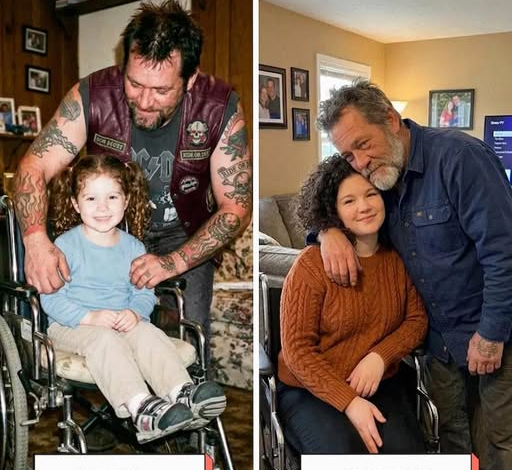
I was 26 when my uncle died and left me a letter that began, “I’ve been lying to you your whole life.”
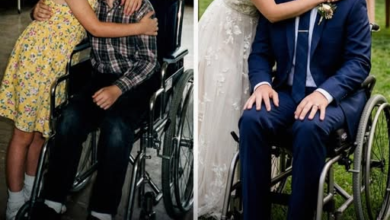
I hadn’t walked since I was four.
Most people assume my life started in a hospital bed—but it didn’t. I had a “before.”
I don’t remember the crash. But I remember my mom, Lena, singing too loudly in the kitchen. My dad, Mark, always smelled like motor oil and peppermint gum. I had light-up sneakers, a purple sippy cup, and more opinions than a toddler should.
All my life, I was told the same story: there was an accident, my parents died, and I survived—but my spine didn’t.
After that, the state started talking about “placements.”
Then my mom’s brother showed up.
“We’ll find a loving home,” the social worker said.
“No,” he replied. “She’s coming with me.”
Ray looked like he’d been carved out of stone—big hands, rough edges, always serious. He didn’t have kids. No partner. No experience.
But he learned.
He watched nurses carefully, wrote everything down, and copied it at home. How to lift me without hurting me. How to check for pressure sores. How to roll me gently in the night.
The first night, his alarm went off every two hours.
“Pancake time,” he’d mutter, carefully turning me.
He built a ramp out of plywood so I could get in and out of the house. It was ugly—but it worked.
He fought insurance companies like it was war.
“No, she can’t ‘make do’ without proper equipment,” he’d snap. “You want to tell her that yourself?”
They never did.
He took me to the park, even when people stared.
One day, a girl asked me, “Why can’t you walk?”
I froze.
Ray crouched beside me. “Her legs don’t listen to her brain. But she can beat you at cards.”
That girl was Zoe—my first real friend.
Ray handled awkwardness like that all the time. He stepped in, softened it, made it manageable.
When I was ten, I caught him trying to learn how to braid hair using yarn taped to a chair.
That night, he tried on me. It was terrible.
I loved it.
When I hit puberty, he showed up with a plastic bag and a red face.
“I bought… things,” he muttered, refusing to make eye contact.
Pads, deodorant, cheap makeup.
“You watched YouTube, didn’t you?” I asked.
“Those girls talk too fast,” he grumbled.
We didn’t have much, but I never felt like a burden.
He washed my hair in the kitchen sink, one hand steady under my neck.
“I got you,” he’d say quietly.
Whenever I broke down—because I’d never dance, never stand in a crowd—he’d sit beside me.
“You’re not less,” he’d insist. “You hear me? Not less.”
By my teens, it was clear there wouldn’t be a miracle.
So Ray made my world bigger in other ways.
He rearranged my room so everything was within reach. Built a tablet stand in the garage. For my 21st birthday, he made a planter box so I could grow herbs by the window.
“I know you yell at cooking shows,” he said. “Figured you’d want your own basil.”
I cried like it was the best gift in the world.
Then he started slowing down.
At first, it was small things—pausing on the stairs, forgetting keys, burning dinner.
“I’m fine,” he insisted. “Just getting old.”
He was 53.
Eventually, he saw a doctor.
“Stage four,” he said later, sitting at the kitchen table. “It’s everywhere.”
Hospice came soon after.
Machines filled the living room. A nurse named Jamie helped organize everything.
The night before he died, he sent everyone away and came into my room.
“Hey, kiddo,” he said, sitting beside me.
I was already crying.
He took my hand. “You know you’re the best thing that ever happened to me, right?”
“That’s kind of sad,” I joked weakly.
“Still true,” he said.
“I don’t know how to do this without you.”
“You’re gonna live,” he told me. “You hear me? You’re gonna live.”
“I’m scared.”
“Me too.”
He hesitated, like there was more he wanted to say.
“I’m sorry,” he finally whispered. “For things I should’ve told you.”
He kissed my forehead and told me to sleep.
He died the next morning.
After the funeral, the house felt wrong. His boots by the door. His mug in the sink. The basil plant drooping in the window.
That afternoon, Mrs. Patel came by with an envelope.
“Your uncle wanted you to have this,” she said softly. “And… he said he was sorry.”
Inside was a letter.
The first line:
“Hannah, I’ve been lying to you your whole life.”
He told me the truth about the crash.
My parents hadn’t been on a normal drive.
They were leaving.
They had brought my overnight bag to Ray’s house and said they were starting over somewhere else—without me.
He lost his temper.
Called them selfish. Said they were abandoning me. Said things he couldn’t take back.
He knew my dad had been drinking.
He could’ve taken the keys. Called a cab. Stopped them.
He didn’t.
“They drove away angry,” he wrote. “Because I wanted to win.”
Twenty minutes later, the police called.
They were gone.
I wasn’t.
At first, he said, he looked at me and saw punishment—for his pride, his anger.
He admitted something that broke me:
Sometimes, in the beginning, he resented me—not because of anything I did, but because I reminded him of what he’d caused.
But he took me home anyway.
“Everything after that,” he wrote, “was me trying to pay a debt I can’t repay.”
He also told me about money I never knew existed.
Life insurance from my parents. Overtime he’d worked for years.
He’d put it all into a trust for me.
“I sold the house,” he wrote. “So you can have access to real rehab, real help. Your life doesn’t have to stay that small.”
At the end, he wrote:
“If you can forgive me, do it for yourself. If you can’t, I understand. I love you either way.”
I didn’t know what to feel.
Part of me was furious.
He had played a role in ruining my life.
But he had also spent every day after trying to rebuild it.
A month later, I checked into a rehab center.
“This is going to be hard,” my therapist said.
“I know,” I replied. “I’m not wasting this.”
They strapped me into a harness over a treadmill.
For the first time in decades, I tried to stand.
My legs shook. My muscles screamed.
“Again,” I said.
We kept going.
Last week, I stood on my own for a few seconds.
It wasn’t graceful. I was trembling and crying.
But I was upright.
I could feel the ground beneath me.
Do I forgive him?
Some days, no.
Some days, yes—little by little.
Because the truth is, he didn’t run from what he did.
He faced it every single day.
Through sleepless nights. Through arguments with insurance. Through learning how to braid hair badly and wash mine in a sink.
He couldn’t undo the past.
But he gave me love, stability, and a chance at something more.
He carried me as far as he could.
The rest… is mine.